

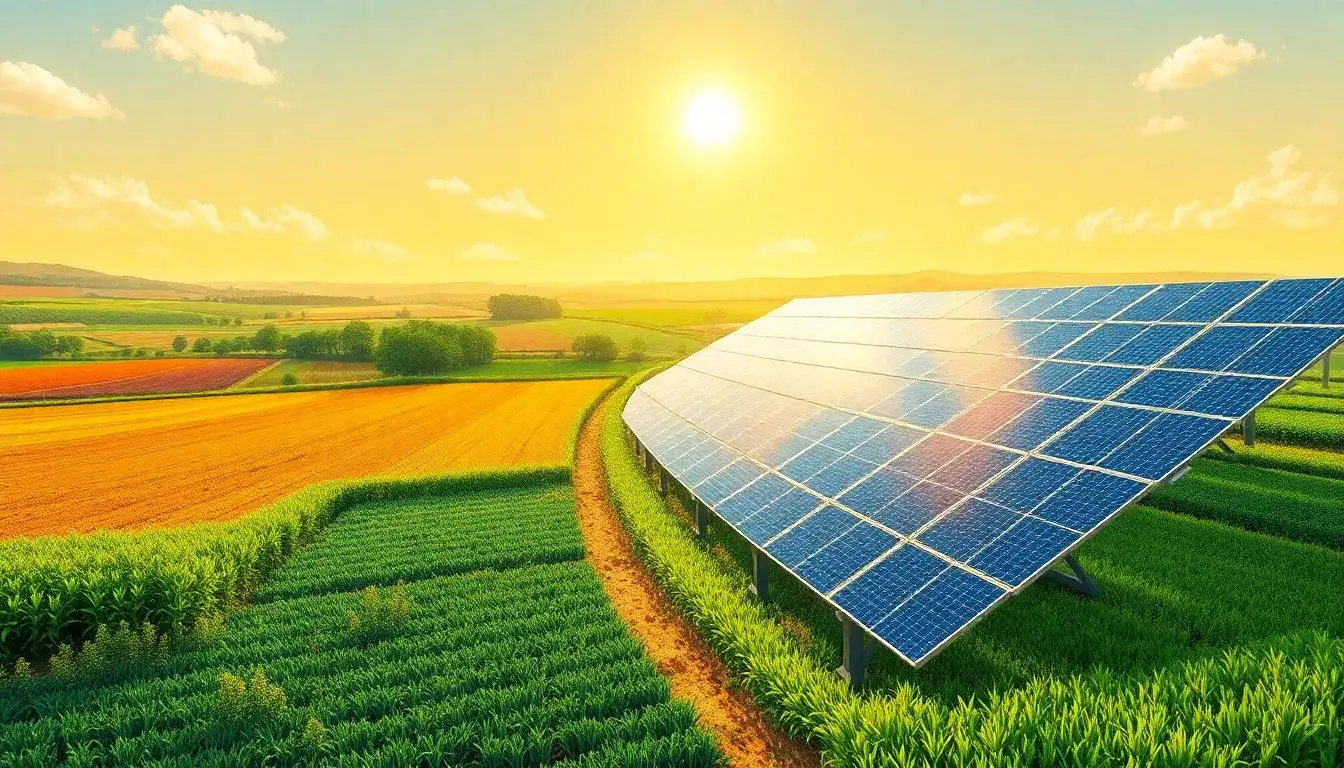
When solar farms are built on farmland, there are several notable economic implications for farmers:
Positive Economic Implications
- Diversification of Income: Farmers who own land can lease it to solar developers, generating a steady, often long-term income stream unrelated to agricultural yields or market volatility. This can provide significant financial stability and an additional revenue source alongside traditional farming.
- Maintaining Agricultural Activity: In many cases, solar farms are designed to coexist with agricultural production, allowing land to remain in some form of agricultural use, such as grazing or growing certain crops under solar panels. This can help farmers maintain productive use of their land while earning leasing income.
- Potential Community and Infrastructure Benefits: The development of solar farms can bring jobs, investments, and infrastructure improvements to rural areas, indirectly benefiting farmers and the local economy.
- Supporting Sustainability and Market Opportunities: Solar farms contribute to reducing fossil fuel dependence and can complement agricultural biofuel production, which uses crops like corn and soybeans for renewable energy. This synergy can help farmers tap into emerging renewable energy markets.
Challenges and Negative Economic Implications
- Rising Land Values and Rental Costs: As solar farms increase demand for land, land values and rental prices tend to rise significantly. While this benefits landowners leasing land for solar, it increases costs for farmer renters who make up more than half of cropland operators. Higher rental costs can squeeze farm operators’ profitability and create barriers for younger or tenant farmers aiming to enter or continue farming.
- Conversion of Prime Farmland: Large-scale solar projects can convert prime agricultural land to solar use, potentially reducing the acreage available for crop production. For example, in some counties, a substantial percentage of prime farmland is being contracted for solar development, changing land use patterns with long-term implications for agricultural output.
- Impact on Agricultural Production Balance: Solar farms help reduce overproduction issues in some agricultural sectors by taking land out of crop or dairy production, which can aid in stabilizing market prices and improving profitability for remaining farmers. However, this also means less land is available for agricultural commodity production.
Summary Table of Economic Implications for Farmers
| Implication | Positive Impact | Negative Impact |
|---|---|---|
| Income Diversification | Additional leasing income | Increased land rents for tenant farmers |
| Agricultural Production Use | Potential for dual-use agriculture | Loss of prime cropland to solar installations |
| Local Economic Benefits | Job creation, infrastructure | Potential social barriers for tenant/new farmers |
| Market and Sustainability | Support for renewable energy markets | Reduction in crop production acreage |
Overall, solar farms on farmland provide farmers who own land with new economic opportunities and income diversification, but they also can lead to increased land costs and challenges for tenant farmers, along with a reduction in active farm acreage dedicated to crops.
Original article by NenPower, If reposted, please credit the source: https://nenpower.com/blog/what-are-the-economic-implications-for-farmers-when-solar-farms-are-built-on-their-land/

