

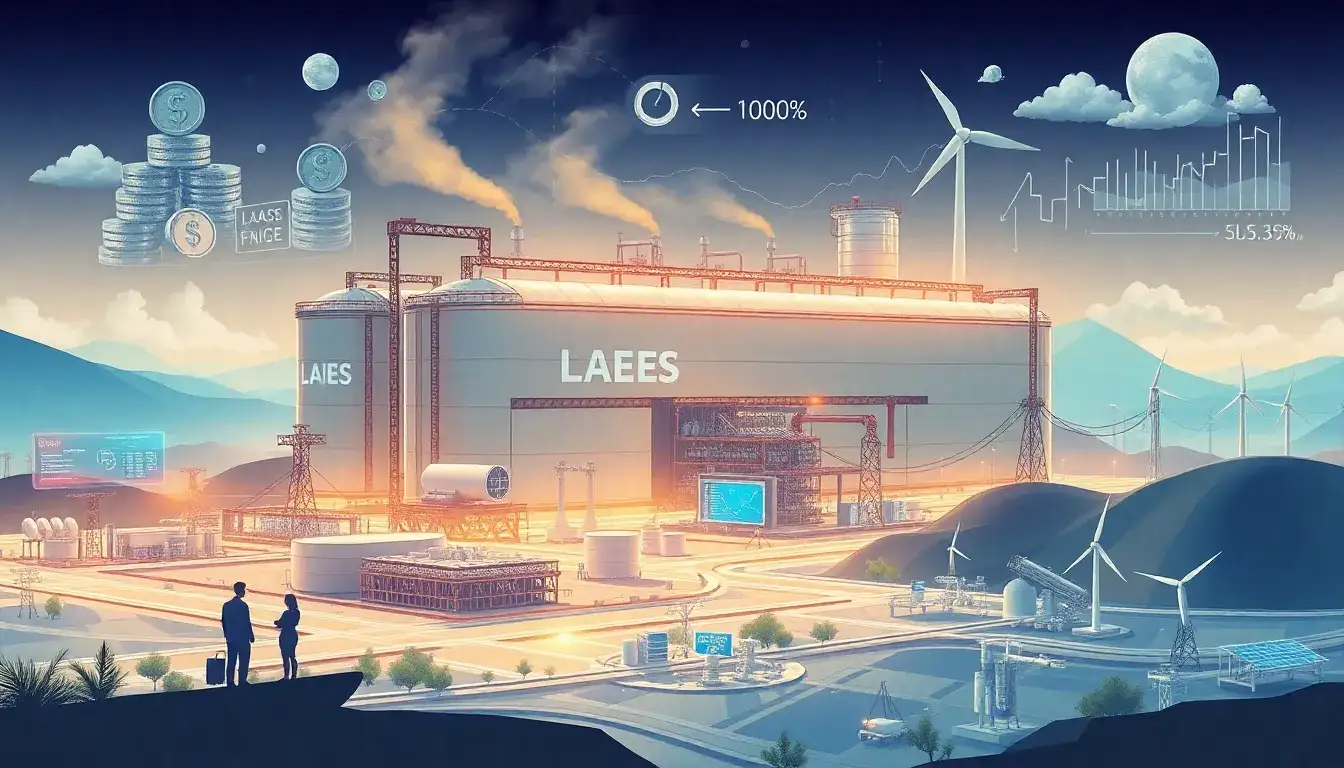
The economic challenges associated with Liquid Air Energy Storage (LAES) systems primarily revolve around their current low efficiency, high capital costs, extended payback periods, and dependency on electricity market conditions. Key points include:
- Low Efficiency and High Capital Costs: LAES systems typically have relatively low round-trip efficiency compared to other storage technologies, which impacts economic returns. The complexity and scale of equipment—such as compressors, expanders, and cryogenic storage tanks—lead to high capital expenditure (CAPEX), making initial investment substantial.
- Long Payback Periods: Due to significant upfront costs and moderate operational profits, LAES projects often face long payback times, which hamper investment attractiveness and slow commercialization efforts. This is exacerbated by the current lack of extensive, real-world, large-scale operational data to improve techno-economic modeling and investor confidence.
- Electricity Market Dependencies: The profitability of LAES highly depends on electricity price volatility and market structures. LAES systems earn revenue by charging during low-price periods (using excess or cheap electricity) and discharging during high-price peaks. Regions with significant peak-valley price differences create better financial incentives for LAES. Hence, economic viability is sensitive to market price fluctuations and the availability of suitable electricity tariff structures.
- Policy and Incentive Frameworks: Investment attractiveness is influenced considerably by governmental policies such as discharge subsidies, preferential taxation, and electricity pricing mechanisms. Evidence suggests that discharge subsidies can accelerate investment decisions and enhance profitability more effectively than investment subsidies or technology learning effects alone.
- Scale and Operation: System scale impacts economics substantially, with larger scale plants potentially benefiting from economies of scale. Also, the number of annual operating hours and pressure ratios in compressors affect both technical efficiency and cost-effectiveness, adding complexity to economic optimization.
In summary, the main economic challenges for LAES systems include overcoming high upfront costs, improving efficiency to increase profitability, navigating complex and variable electricity markets, and relying on supportive regulatory and market mechanisms to stimulate investment and adoption. Continued research, larger-scale projects, and targeted policy incentives are critical to address these economic constraints and advance LAES commercialization.
Original article by NenPower, If reposted, please credit the source: https://nenpower.com/blog/what-are-the-economic-challenges-associated-with-laes-systems/

