

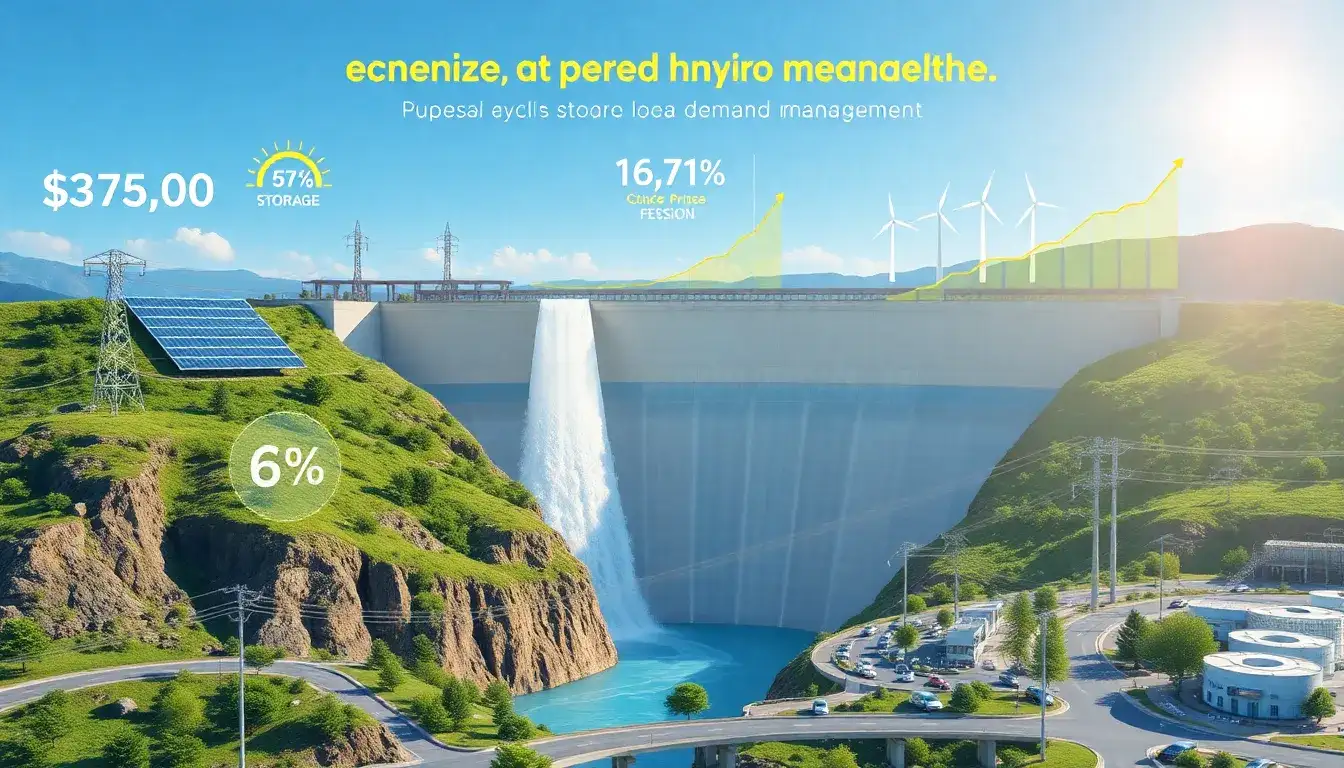
Pumped hydro storage (PHS) offers significant economic benefits for managing peak demand, primarily through grid efficiency and cost savings:
1. Grid Buffering and Efficiency
PHS acts as a “giant battery,” storing excess energy during low demand and releasing it during peaks. This reduces curtailment of renewable sources like wind and solar, enhancing grid efficiency and lowering the need for additional transmission infrastructure.
2. Consumer Cost Savings
By stabilizing energy supply and reducing reliance on fossil-fuel peaking plants, PHS lowers overall system costs. This translates to cheaper electricity prices for consumers over time.
3. Scalable Economic Impact
Studies project that expanded PHS capacity could generate £169 million in annual gross value added (GVA) and 3,710 jobs across the UK by 2050, with localized benefits including £42 million GVA and 650 jobs in energy-rich regions.
4. Long-Term Cost-Effectiveness
PHS systems have lifespans exceeding 50 years with low maintenance costs, offering durable infrastructure investments. NREL’s cost modeling tool helps optimize site-specific deployments to maximize these benefits.
5. Market Flexibility
PHS enables dynamic energy trading, selling stored power during high-price periods to capture market premiums, while providing essential grid services like frequency regulation.
Original article by NenPower, If reposted, please credit the source: https://nenpower.com/blog/what-are-the-economic-benefits-of-using-pumped-hydro-storage-for-peak-demand-management/

