

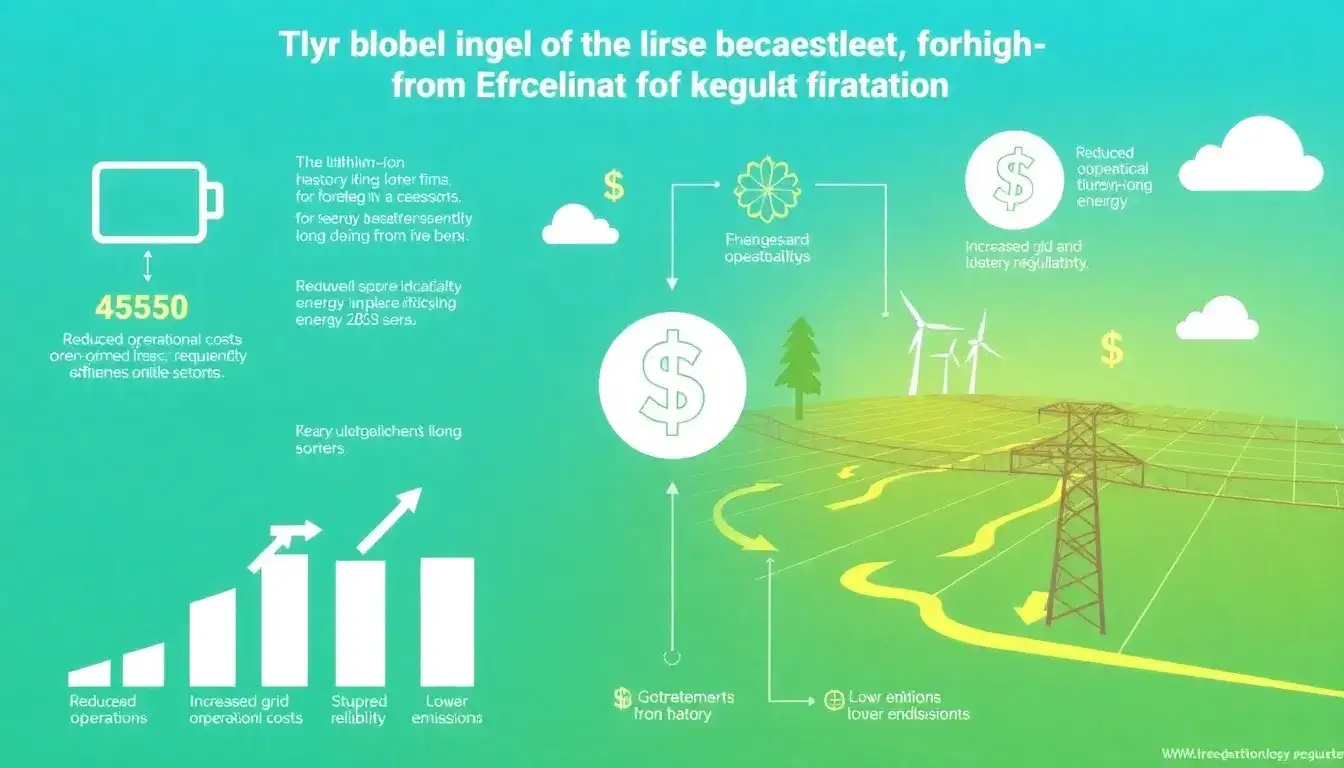
Economic Benefits
- Revenue Generation:
- Lithium-ion batteries can generate significant revenue through participation in frequency regulation markets. A study in the Midcontinent region of the U.S. indicates that batteries can earn substantial annual revenue, approximately $172,521, by providing frequency regulation services.
- Cost Savings:
- Charging during off-peak hours when electricity rates are lower and discharging during peak hours can save businesses and consumers considerable costs. The cost differential between peak and off-peak rates can be as high as 900%, making this strategy financially attractive.
- Operational Efficiency:
- Industries with high energy consumption can manage their energy costs more effectively by using energy storage systems, which helps in enhancing operational efficiency.
- Long-Term Economic Viability:
- While current costs might outweigh revenues in some regions, projected cost reductions could make lithium-ion batteries economically viable for frequency regulation on a stand-alone basis.
- Diversified Revenue Streams:
- Lithium-ion batteries can participate in multiple market segments, such as capacity markets, in addition to frequency regulation. This diversification can increase overall revenue potential.
Additional Considerations
- Technological Advancements:
- Newer battery chemistries like Lithium Iron Phosphate (LFP) offer improved safety features over traditional NMC (Nickel Manganese Cobalt) batteries, enhancing the long-term viability and reliability of lithium-ion technology.
- Degradation Management:
- Strategic control strategies for battery state-of-charge can help manage degradation while maintaining economic benefits, ensuring that batteries remain cost-effective over their lifespan.
Overall, lithium-ion batteries offer significant economic advantages for frequency regulation, primarily through participation in profitable energy markets and efficient cost management strategies.
Original article by NenPower, If reposted, please credit the source: https://nenpower.com/blog/what-are-the-economic-benefits-of-using-lithium-ion-batteries-for-frequency-regulation/

