

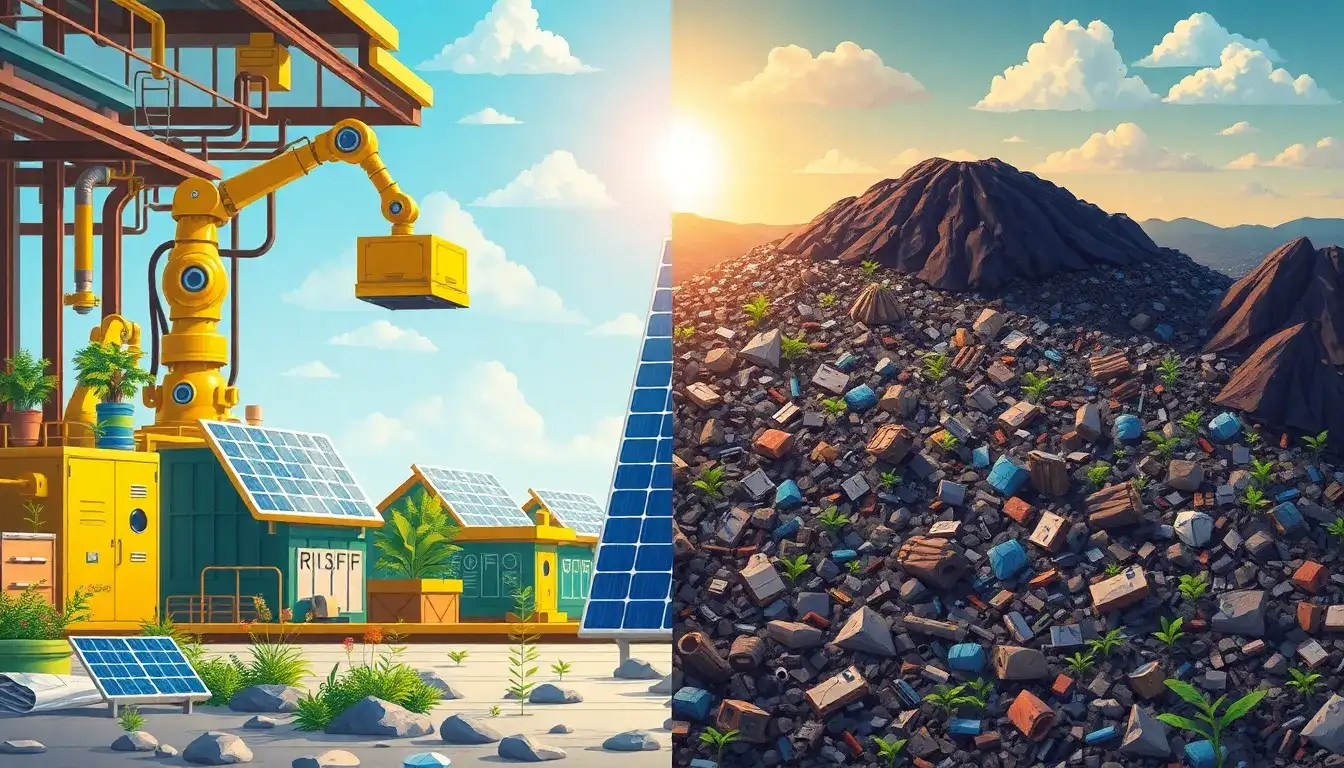
The economic benefits of recycling photovoltaic (PV) modules compared to landfill disposal are substantial and multifaceted, encompassing resource recovery, cost savings, job creation, and supply chain resilience.
Economic Benefits of Recycling PV Modules
1. Resource Recovery and Material Value
Recycling PV modules allows the recovery of valuable materials such as silicon, silver, aluminum, copper, and glass. These recovered materials can be reused in manufacturing new solar panels or sold as commodities, reducing the demand for virgin raw materials and lowering production costs for manufacturers. The International Renewable Energy Agency (IRENA) estimates the economic value of recoverable materials from solar panels could exceed $15 billion globally by 2050. In the U.S. alone, the recovered material value could represent a $60 million industry by 2030 and grow to $2 billion by 2050.
2. Cost Savings for Manufacturers
By using recycled materials, manufacturers can reduce expenditures on raw materials, which are often costly and subject to supply chain volatility. This contributes to overall cost efficiency and helps mitigate risks associated with dependency on imported materials.
3. Job Creation and Economic Growth
The development of PV module recycling infrastructure and services generates new employment opportunities across collection, processing, and material resale sectors. This growth stimulates local economies and supports green industry expansion.
4. Supply Chain Stability and Reduced Material Import Dependence
Recycling strengthens domestic supply chains by providing a sustainable source of critical materials, thereby reducing vulnerability to global market fluctuations and geopolitical risks. This enhances the resilience and security of the solar manufacturing sector.
5. Reduced Landfill Costs and Environmental Cleanup Liabilities
Disposing of PV modules in landfills incurs direct costs related to landfill tipping fees and environmental management. Moreover, landfilling modules poses long-term environmental risks from hazardous materials leaching into soil and groundwater, potentially causing costly remediation efforts. Recycling avoids these costs and liabilities by safely extracting and reusing materials.
Summary Table of Economic Benefits of Recycling PV Modules vs. Landfill Disposal
| Economic Aspect | Recycling PV Modules | Landfill Disposal |
|---|---|---|
| Resource Recovery | High-value materials recovered and reused | Materials lost, no resource recovery |
| Material Costs | Reduced raw material demand and cost savings | Full reliance on new raw materials |
| Job Creation | Increased employment in recycling and processing sectors | Minimal or no job creation |
| Supply Chain Stability | Enhanced through domestic material reuse | Vulnerable to supply chain disruptions |
| Environmental Cleanup Costs | Lower, due to reduced environmental contamination | Potential high costs from hazardous waste risks |
| Industry Economic Value | Significant, estimated billions in material value globally | No added economic value |
In conclusion, recycling PV modules offers clear economic advantages over landfill disposal by recovering valuable materials, reducing manufacturing costs, creating jobs, and enhancing supply chain stability, while also avoiding long-term environmental and financial liabilities associated with landfilling waste.
Original article by NenPower, If reposted, please credit the source: https://nenpower.com/blog/what-are-the-economic-benefits-of-recycling-pv-modules-compared-to-landfill-disposal/

