

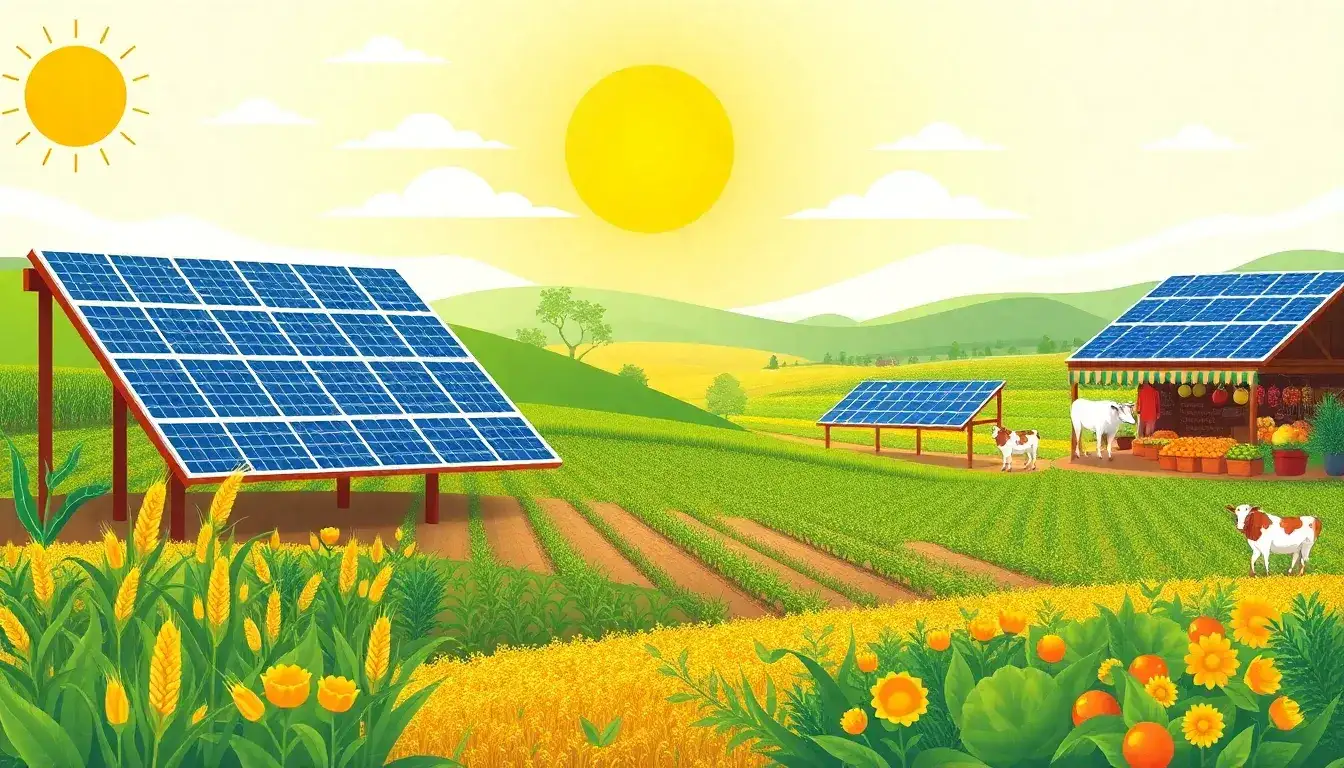
Economic Benefits of Solar Energy in Agriculture
1. Cost Reduction for Farmers
Solar energy can significantly reduce energy costs for farmers. By generating their own power, farmers can decrease their dependence on external energy sources such as diesel generators and grid electricity, which can be expensive and unreliable, especially in remote areas.
2. Increased Property Value
Installing solar panels can enhance the overall property value of a farm. This increased value can lead to financial gains when selling or leasing the farm, as buyers and renters are increasingly attracted to sustainable and cost-efficient properties.
3. Steady Income Through Net Metering
Solar energy systems can provide a steady income stream through net metering. This allows farmers to sell excess energy back to the grid, creating an additional revenue source.
4. Rural Development and Economic Growth
The widespread adoption of solar energy in agriculture can contribute to rural development by creating jobs in system operation, maintenance, and installation. This can boost regional economies, enhance community well-being, and support rural economic stability.
5. Tax Incentives and Grants
Solar power installations are often eligible for tax incentives and grants, which can help offset the initial investment costs and make solar energy more accessible to farmers.
6. Agrivoltaics and Diversified Income
Agrivoltaics—integrating agriculture with solar energy—can help farmers diversify their income streams by maintaining agricultural productivity while generating electricity. This approach can also improve crop yield and enhance environmental sustainability.
Each of these economic benefits can contribute to making solar energy an attractive and financially viable option for farmers.
Original article by NenPower, If reposted, please credit the source: https://nenpower.com/blog/what-are-the-economic-benefits-of-integrating-solar-energy-into-agriculture/

