

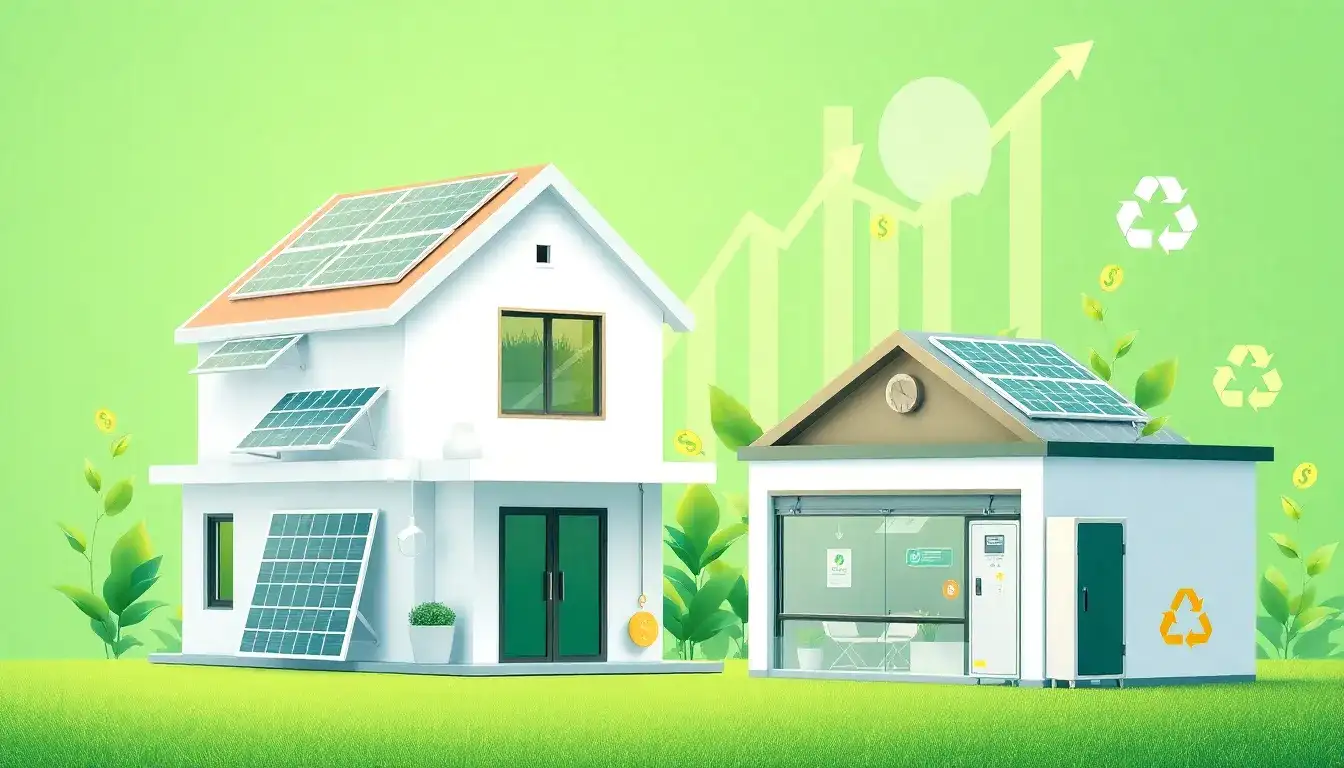
Energy storage systems offer significant economic benefits for both individuals and businesses through cost reduction, revenue generation, and market efficiency improvements.
For Individuals
- Lower electricity bills by charging during low-cost periods (e.g., overnight) and discharging during peak hours to avoid high rates.
- Backup power savings during outages, reducing reliance on costly backup generators or service interruptions.
- Potential revenue streams through residential storage programs, such as selling stored energy back to the grid during peak demand.
For Businesses
- Peak shaving reduces energy costs by avoiding expensive demand charges during high-usage periods.
- Grid service revenues from participating in frequency regulation or capacity markets, where storage provides rapid response to grid needs.
- Enhanced reliability minimizes operational downtime costs during outages.
Broader Economic Impact
- Market efficiency: Storage mitigates price volatility and reduces generator market power, lowering wholesale electricity costs.
- Job creation and investment: U.S. grid-scale storage represents $21 billion in capital investment, with $34 billion more in development, supporting local economies through tax revenues and lease payments.
- Renewable integration: Storage enables higher utilization of wind and solar, reducing curtailment costs and improving project economics.
By optimizing energy use and unlocking new revenue models, storage systems create direct savings and stimulate broader economic growth.
Original article by NenPower, If reposted, please credit the source: https://nenpower.com/blog/what-are-the-economic-benefits-of-energy-storage-for-individuals-and-businesses/

