

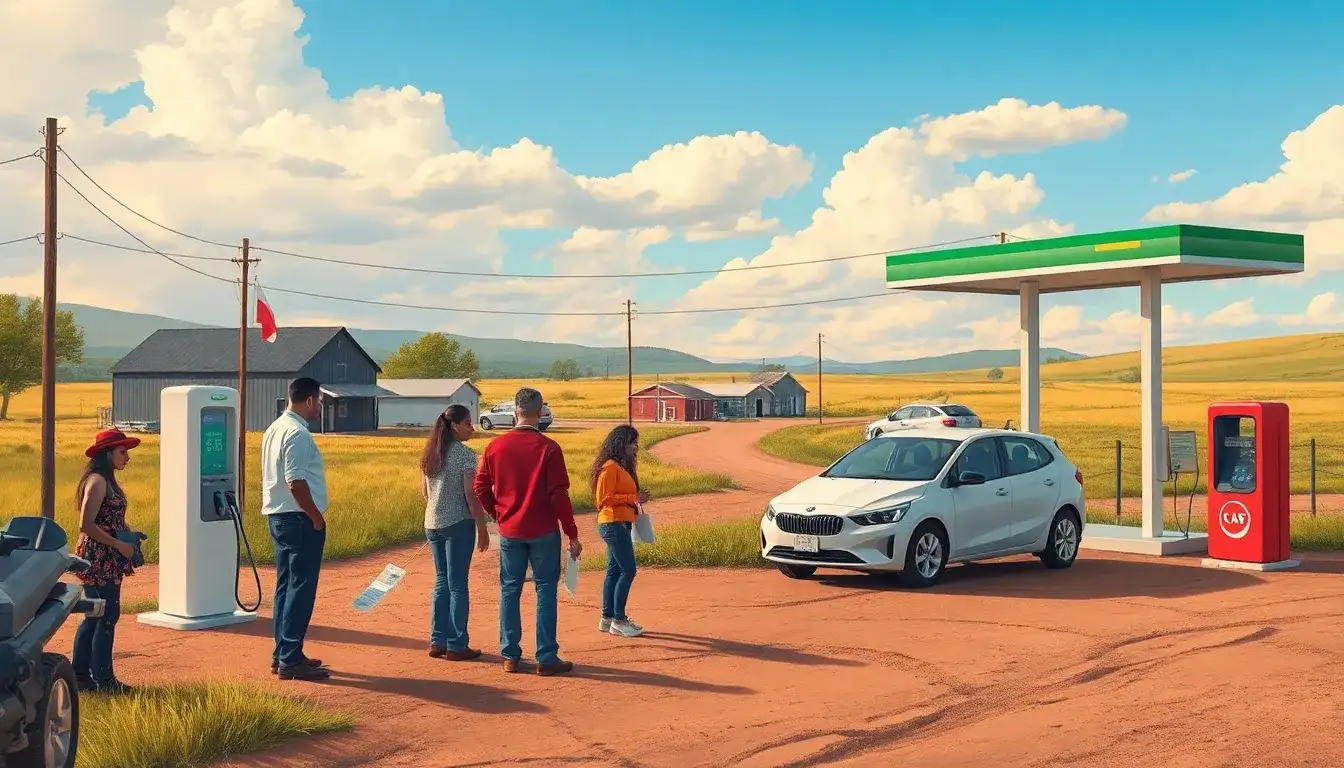
Economic Barriers to Rural EV Adoption
- Higher Upfront Costs: Electric vehicles are generally more expensive than their gasoline counterparts, making them less affordable for many rural residents who often have lower incomes.
- Limited Public Charging Infrastructure: The lack of public charging stations in rural areas, known as “charging deserts,” discourages EV ownership due to range anxiety and practical concerns. Installing charging infrastructure is less economically viable in these areas because of lower population density, which reduces the financial incentive for investment.
- Long-term Cost-Benefit Perception: While EVs are more economical in the long run due to lower maintenance and fuel costs, rural residents often focus on the initial purchase price rather than the long-term savings. This perception can hinder the adoption of EVs as people may not factor in future cost benefits.
- Lower Economic Viability for Charging Stations: The lower population density in rural areas makes it harder to justify the cost of building and maintaining public charging stations. This results in a cycle where fewer charging stations lead to lower EV adoption rates, and lower adoption rates discourage further investment in charging infrastructure.
- Limited Access to Public Transportation: In rural areas, limited or nonexistent public transportation increases reliance on personal vehicles. This reliance can exacerbate concerns about accessing charging stations, further deterring people from choosing EVs.
To overcome these barriers, strategies such as government incentives, updating zoning ordinances to attract infrastructure investment, and community-based initiatives can help promote EV adoption in rural areas.
Original article by NenPower, If reposted, please credit the source: https://nenpower.com/blog/what-are-the-economic-barriers-to-ev-adoption-in-rural-areas/

