

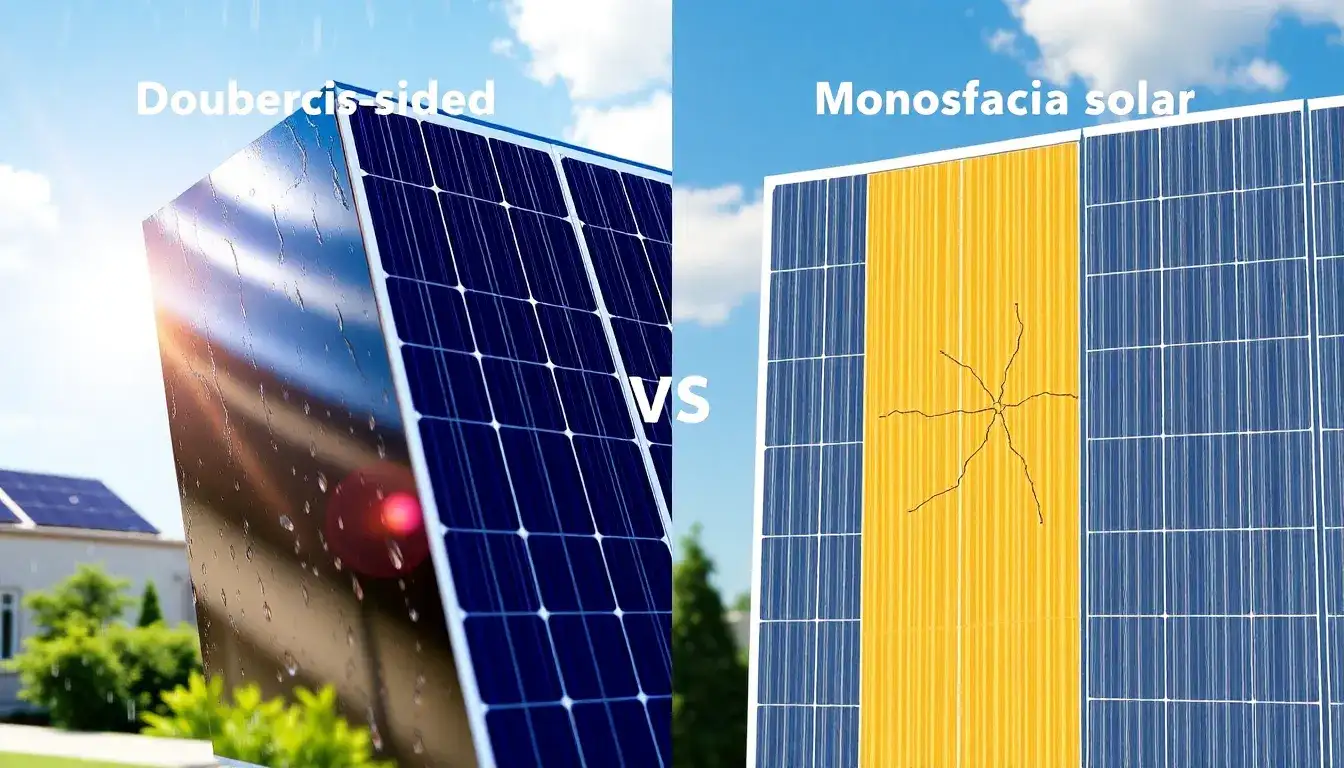
Construction & Durability Features
- Bifacial:
- Dual-glass design protects cells on both sides, offering superior resistance to moisture, UV radiation, and physical stressors like wind or snow.
- Longer lifespan due to reduced degradation rates and enhanced structural integrity.
- Higher weight and sturdier build make them less flexible but more resilient to environmental damage.
- Monofacial:
- Single-glass front with a polymer backsheet, which is less durable over time compared to dual-glass setups.
- Lighter and more flexible, but prone to faster backsheet degradation, especially in harsh climates.
Lifespan & Warranty
| Feature | Bifacial | Monofacial |
|---|---|---|
| Typical Warranty | Up to 30 years | 20–25 years |
| Durability | Better resistance to environmental stress | Adequate for standard conditions |
| Degradation Rate | Slower due to dual-glass protection | Slightly faster, especially backsheet wear |
Key Takeaways
- Bifacial panels excel in durability for large-scale or high-exposure installations (e.g., solar farms with reflective ground surfaces).
- Monofacial panels suffice for residential rooftops where cost and simplicity outweigh longevity concerns.
For long-term reliability in harsh environments, bifacial panels are preferable despite higher upfront costs.
Original article by NenPower, If reposted, please credit the source: https://nenpower.com/blog/what-are-the-durability-differences-between-bifacial-and-monofacial-solar-panels/

