Flexible solar panels offer distinct advantages such as lightweight, thin form factors and the ability to conform to curved or irregular surfaces. However, their durability raises several concerns compared to traditional rigid solar panels. The key durability issues with flexible solar panels include:
Durability Concerns with Flexible Solar Panels
- Shorter Lifespan:
Flexible solar panels typically last about 10 to 15 years, whereas rigid panels can last 25 years or more. Their thinner, plastic-based materials and lack of protective glass reduce longevity. - Fragility and Proneness to Damage:
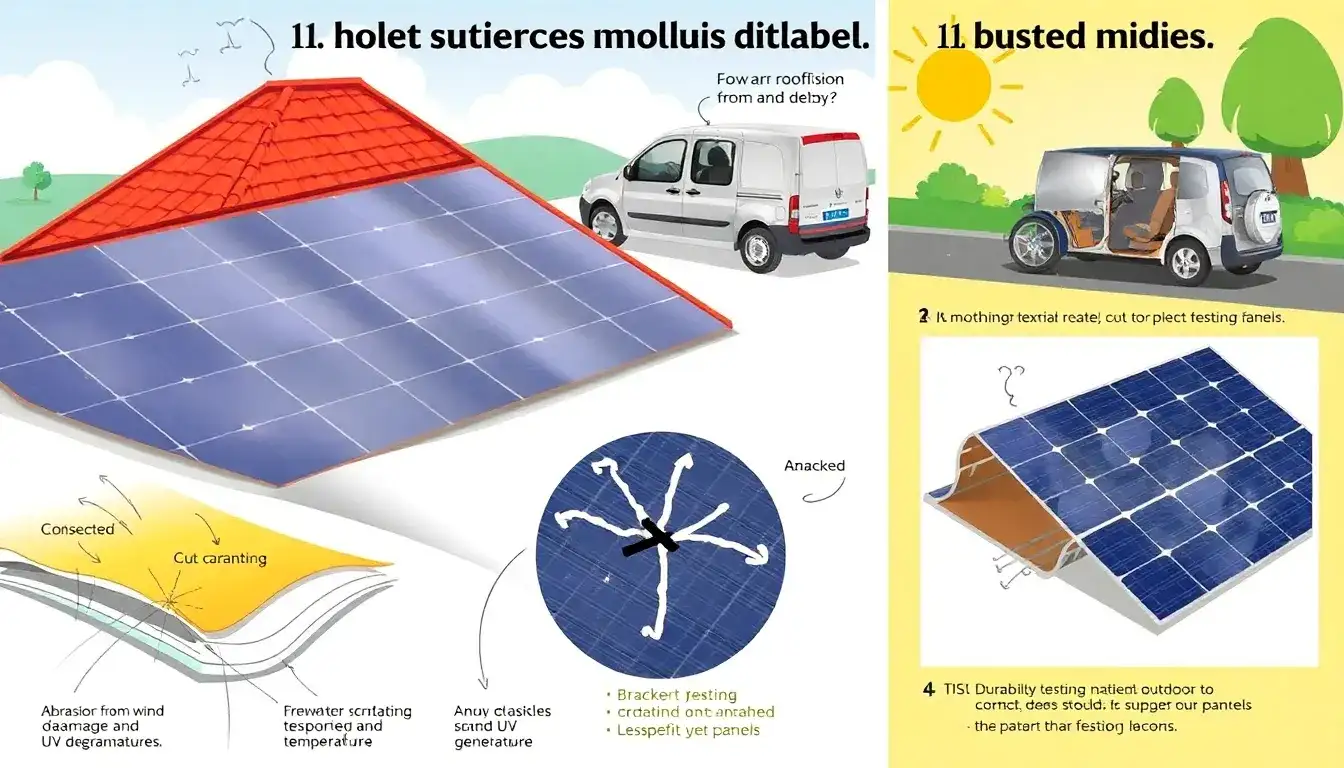
Despite their flexibility, excessive bending or folding can cause microcracks in the solar cells that reduce efficiency and can ultimately break the panel. Flexible panels usually can only bend around 30 degrees without damage, and beyond that, they may crack. - Susceptibility to Scratches and Environmental Damage:
The plastic surface of flexible panels can be scratched easily by branches, debris, or stones, especially if installed on vehicles or roofs, leading to damage of the solar cells underneath. Rigid panels have glass covers that protect better against such physical damage. - Lower Weather Resistance Compared to Rigid Panels:
While flexible panels are designed to be weather-resistant, they are less able to withstand extreme weather such as heavy storms or hail. They have protective coatings but lack the tough glass encasement that rigid panels have. - Overheating Issues:
Flexible panels often lie flat against the mounting surface without airflow beneath, leading to heat buildup. Excessive heat reduces efficiency, accelerates degradation, and may cause “hot spots” that permanently damage cells. Unlike rigid panels, which are raised allowing cooling airflow, flexible panels can overheat more easily. - UV Degradation and Delamination:
Prolonged exposure to UV rays can degrade the plastic laminate covering flexible panels, turning it yellow or cloudy, which blocks sunlight and lowers performance. Severe UV damage can cause delamination where the laminate detaches from the solar cells, effectively ruining the panel. This is more common in flexible panels made with cheaper plastics like PET rather than durable materials like ETFE. - Warranty and Replacement Costs:
Due to these durability concerns, flexible panels generally come with shorter warranties (15-20 years) compared to rigid panels (up to 25 years or more). Their shorter effective lifespan means more frequent replacement, increasing long-term costs despite a potentially higher upfront price.
Summary of Durability Challenges
| Durability Factor | Flexible Panels | Rigid Panels |
|---|---|---|
| Lifespan | ~10-15 years | 25+ years |
| Resistance to bending | Limited (typically ~30° max) | Not flexible, but structurally robust |
| Surface protection | Plastic surface, prone to scratches and cracks | Tough glass protects solar cells |
| Weather resistance | Good but less resistant to extreme weather | Highly resistant |
| Overheating | More prone due to flat mounting, heat buildup | Typically cooler due to raised mounts |
| UV degradation & delamination | Common if low-quality plastic used | Rare |
| Warranty | 15-20 years | 25+ years |
| Cost-effectiveness over time | Higher long-term costs due to shorter lifespan | Lower long-term replacement costs |
Recommendations to Mitigate Durability Issues
- Avoid excessive bending or folding during installation and use to prevent microcracks.
- Protect flexible panels from physical damage by careful placement and avoiding walking or standing on them.
- Choose high-quality flexible panels made with durable plastics like ETFE to reduce UV degradation and delamination risks.
- Implement cooling measures if possible, such as mounting with some airflow or thermally conductive layers, to reduce overheating and hot spots.
- Regularly clean and maintain the panels to prevent dirt and debris infiltration that can worsen damage.
In conclusion, flexible solar panels offer unique form-factor advantages but have inherent durability limitations resulting in shorter lifespans, vulnerability to physical and environmental damage, and overheating issues. Careful selection, installation, and maintenance are critical to maximizing their performance and longevity. For applications demanding high durability and long lifespan, traditional rigid panels remain superior.
Original article by NenPower, If reposted, please credit the source: https://nenpower.com/blog/what-are-the-durability-concerns-with-flexible-solar-panels/