

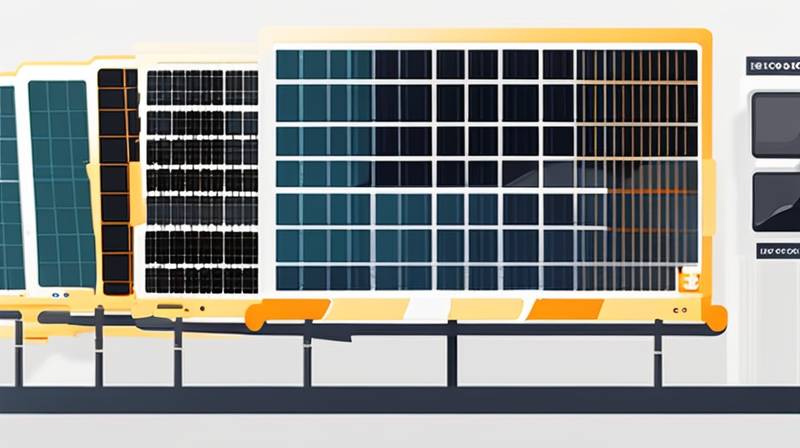
What are the different types of solar panels?
1. There are primarily three types of solar panels: Monocrystalline, Polycrystalline, and Thin-Film.
2. Each type has its unique characteristics that cater to different energy needs and installation circumstances.
3. Monocrystalline panels are recognized for their efficiency and longevity, making them a popular choice for residential and commercial applications.
4. Polycrystalline panels offer a more cost-effective alternative with decent performance but may require more space.
5. Thin-film panels, while generally less efficient, provide flexibility in installation and can be advantageous in specific settings where weight or space is a concern.
THE DIVERSE TYPES OF SOLAR PANELS
MONOCRYSTALLINE SOLAR PANELS
Monocrystalline solar panels stand as the most efficient type available on the market today. This category of solar energy technology is characterized by its uniform black appearance and is composed of high-purity silicon, which is manufactured through a complex process. The panels are constructed from single crystals of silicon, engendering a high degree of purity that contributes significantly to their operational efficiency, often exceeding 20%.
The efficiency offered by monocrystalline panels results in increased power output per square meter, making these panels particularly appealing for residential and commercial installations where space might be limited. Additionally, monocrystalline modules possess a longer lifespan than their counterparts, with warranties often extending up to 25 years, which adds to their attractiveness. The investment in this technology, despite a relatively higher initial cost, tends to yield significant long-term savings owing to their enhanced efficiency.
A critical aspect of monocrystalline panels is their performance in various weather conditions. They perform exceptionally well in low-light conditions—such as on cloudy days—compared to other types of solar panels. Their high tolerance to heat is another beneficial feature, which ensures that their performance remains relatively stable even in warmer climates. This inherent capability illustrates why these solar panels are often viewed as a premium product; they strike a remarkable balance of efficiency, aesthetics, and durability.
POLYCRYSTALLINE SOLAR PANELS
Polycrystalline solar panels, in contrast to their monocrystalline counterparts, are created using multiple silicon crystals. This manufacturing process results in a distinctive blue hue and a less uniform appearance, which some consumers may find less appealing. While the efficiency rates of polycrystalline panels are generally lower, typically around 15-20%, their performance is still more than adequate for many applications, making them a viable option for budget-conscious consumers.
The cost-factor plays a pivotal role in the popularity of polycrystalline panels. Compared to monocrystalline panels, they are relatively less expensive to produce due to the simpler manufacturing process. For homeowners and businesses looking to reduce upfront costs while still harnessing solar energy, polycrystalline panels become an attractive option. Despite the lower efficiency, they can deliver substantial energy production, especially in installations where space is not a limiting factor.
Another consideration with polycrystalline technology is its thermal performance. While they experience a marginal decrease in efficiency in extremely high temperatures, this characteristic can be mitigated with thoughtful installation practices. Furthermore, these panels usually have a robust lifespan, often warrantied for similar periods as monocrystalline panels, thus offering reliability over the long term despite a possibly lower energy yield.
THIN-FILM SOLAR PANELS
Thin-film solar panels represent a broader category that comprises various technologies, such as Cadmium Telluride (CdTe), Copper Indium Gallium Selenide (CIGS), and Amorphous Silicon (a-Si). This technology is distinguished by its lightweight and flexible substrates, allowing them to be integrated into a wider array of applications compared to traditional panel types. Despite their lower energy efficiency—even sitting around 10-12%—they provide unique advantages, particularly in specific market segments.
The flexibility of thin-film panels enables them to be used in unconventional installations where rigid panels may not be viable. For instance, they are an excellent choice for large-scale installations where weight considerations are paramount, such as rooftops of commercial buildings, or even innovatively designed homes. Their lightweight nature makes them remarkably adaptable, allowing for creative architectural applications without compromising the structural integrity of buildings.
In terms of cost, thin-film technology generally undercuts both monocrystalline and polycrystalline options, making it a strong candidate for organizations and projects with stringent budget constraints. Yet, it is essential to note that even though thin-film systems may have lower upfront costs, they often require larger areas to achieve the same power output as their more efficient counterparts. The trade-off, therefore, lies between efficiency and versatility—emphasizing the importance of assessing individual energy needs when choosing this type of panel.
COMPARATIVE ANALYSIS OF SOLAR PANEL TYPES
When considering the myriad types of solar panels, a comparative lens reveals the distinctive attributes and challenges inherent in each option. Efficiency, cost, aesthetic appeal, weather tolerance, and installation requirements are critical factors that should be analyzed comprehensively.
Using a decision matrix can facilitate the choice between these technologies. Monocrystalline panels offer superior efficiency and longevity, making them ideal for locations with limited installation space or for consumers wanting to maximize energy output. Polycrystalline panels, being less expensive, become ideal where economic factors are paramount, even if the efficiency is somewhat sacrificed.
Furthermore, thin-film technology appeals to those who require flexibility in installation without a pressing need for maximum energy output. As such, the choice becomes deeply individual, hinging on specific requirements and environmental contexts. Whether prioritizing cost, installation space, or efficiency, the journey to solar adoption requires a deliberate and informed approach.
FUTURE TRENDS IN SOLAR PANEL TECHNOLOGIES
The solar industry continuously evolves, striving for advancements that promise greater efficiency, lower costs, and innovative applications. Emerging technologies, such as bifacial panels—which illustrate a tendency to capture sunlight from both sides—are gaining traction, reconfiguring the landscape of solar energy. Another trend is the geographic diversification of solar products; thus countries with abundant sunlight are developing tailored technological advancements suited for their unique environments.
Research and development efforts also focus on improving solar cell materials to optimize efficiency while reducing production costs. Innovations such as perovskite solar cells showcase the potential to further revolutionize the industry by promising higher efficiency rates at a fraction of the cost. This path indicates a bright future for solar technology, potentially lowering the barrier for entry into solar energy markets, which in turn could expedite the transition to renewable energy sources globally.
Solar energy is not just a current trend but rather an integral component of sustainable development. The awareness of climate change and the necessity of reducing carbon footprints amplify the significance of effective solar technologies. By harnessing the sun, communities can foster energy independence and enhance energy security while contributing to the growing global vision of a sustainable future.
FREQUENTLY ASKED QUESTIONS
WHAT MAKES MONOCRYSTALLINE PANELS SO EFFICIENT?
Monocrystalline panels are often regarded as the most efficient solar technology available due to their construction from high-purity silicon. The manufacturing process ensures that the silicon atoms are aligned in a single crystal structure, which allows for better electron flow. This characteristic translates into higher energy conversion rates, as they capture and utilize more sunlight compared to other types. Additionally, their performance in low-light conditions makes them a preferred choice for areas with fluctuating weather. With efficiency ratings routinely exceeding 20%, monocrystalline panels are also space-efficient, generating more power from a smaller footprint. While their initial costs can be higher, the long-term energy savings solidify their value as a worthy investment.
HOW DO POLYCRYSTALLINE PANELS COMPARE IN TERMS OF COST AND INSTALLATION?
Polycrystalline panels are generally more affordable than monocrystalline options, making them an attractive choice for budget-conscious consumers. The production process for polycrystalline panels involves melting multiple silicon crystals together, a method that is less resource-intensive and hence reduces costs. However, while their efficiency is slightly lower, typically ranging from 15-20%, they still provide substantial power output, particularly in setups where space availability is not a concern. Installation of polycrystalline panels is relatively straightforward and often entails standard mounting equipment. They’re particularly advantageous for larger installations where upfront costs need to be contained, and they offer a good return on investment through reliable energy production over their lifespan.
WHAT ADVANTAGES DO THIN-FILM PANELS OFFER FOR UNIQUE INSTALLATIONS?
Thin-film solar panels present several unique advantages that make them ideal for specific applications where conventional panels may falter. Their lightweight nature grants them an unparalleled level of adaptability; they can be installed in unconventional or limited-space areas without risking structural integrity. This feature is particularly beneficial on roofs that cannot support heavier panels, as well as on vehicles or portable structures. Moreover, thin-film technology allows for flexibility in design, facilitating integration into the architecture of new and existing buildings. While their lower efficiency means that a larger area may be necessary to equate the power output of monocrystalline or polycrystalline options, their cost-effectiveness and installation versatility open avenues for widespread adoption in various sectors.
The emergence of diverse solar panel technologies reflects the evolving demands of users seeking renewable energy solutions tailored to specific needs. The primary varieties—monocrystalline, polycrystalline, and thin-film—each present distinct advantages that cater to different types of installations and budgets. Monocrystalline modules, with their superior efficiency and elegant aesthetics, dominate residential markets, while polycrystalline panels appeal to those who seek a cost-effective alternative with reasonable efficiency levels. On the other hand, thin-film technologies widen the potential applications of solar energy, allowing for flexible and lightweight solutions in a variety of contexts.
As the landscape of solar energy continues to evolve, advancements in technology and increasing affordability will likely enhance the accessibility of solar power for broader markets. The global shift toward sustainability emphasizes the need for energy independence and carbon footprint reduction, further driving innovation. Ultimately, the selection of the appropriate solar panel type should be rooted in a comprehensive appraisal of specific requirements, whether those be efficiency, cost, or installation flexibility. The future of solar energy appears bright, characterized by ongoing developments that will likely contribute to increased adoption and diversification within the renewable energy sector. In navigating these options, informed decisions will lead to maximized benefits for individuals, communities, and the environment at large.
Original article by NenPower, If reposted, please credit the source: https://nenpower.com/blog/what-are-the-different-types-of-solar-panels/

