

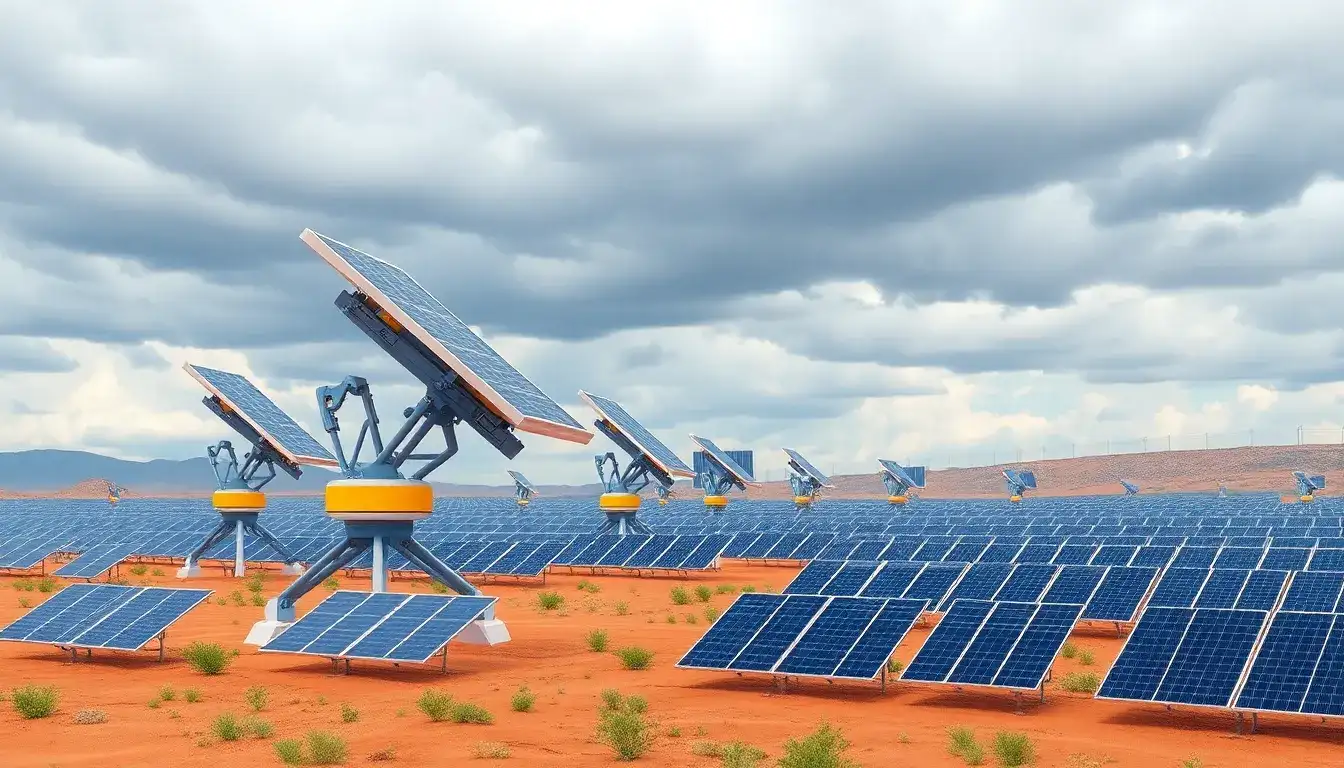
1. Wind Stow Strategy
- Purpose: Protects solar trackers from high wind speeds by moving the panels into a secure position.
- Functionality: Systems like the TBox use ultrasonic anemometers to detect wind speed and direction and command the trackers to move into the wind stow position. This action is also available manually through SCADA systems.
- Drawbacks: Older systems may face issues with slow transition times and directional wind forces, potentially compromising energy generation.
2. Passive Stow Technology
- Innovation: Introduced by companies like Array Technologies, passive stowing aims to minimize unnecessary energy production losses.
- Functionality: This technology uses tools to simulate different stow strategies and calculate energy losses using high-resolution wind data, enhancing system efficiency and durability.
3. Hail Stow Strategy
- Purpose: Protects the system from hail storms by moving trackers to a position that minimizes exposure to hail impacts.
- Functionality: The TBox can automatically detect hail events or be manually activated through SCADA to prevent damage.
4. Snow Stow Strategy
- Purpose: Essential in regions with frequent snowfall to prevent snow buildup on panels.
- Functionality: Automatically moves trackers to a maximum tilt position when snow is detected, reducing structural stress and maintaining energy production during winter.
These stow strategies are crucial for maintaining the integrity and efficiency of solar tracker systems in various environmental conditions.
Original article by NenPower, If reposted, please credit the source: https://nenpower.com/blog/what-are-the-different-stow-strategies-used-by-solar-trackers/

