

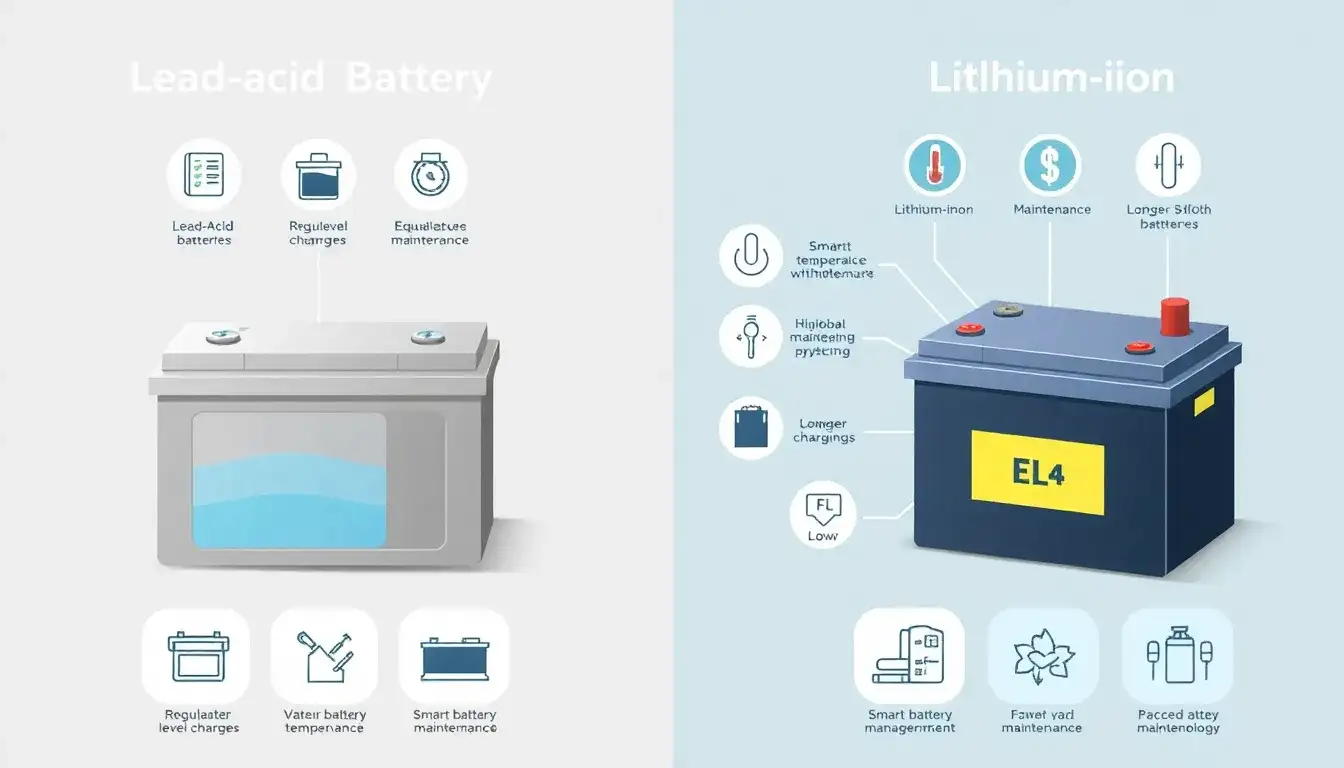
The maintenance requirements for lead-acid and lithium-ion batteries differ significantly:
Lead-Acid Batteries
- High Maintenance: Require regular checks and maintenance, including monitoring electrolyte levels, topping up with distilled water, and equalization charging to prevent sulfation.
- Infrastructure Costs: Need dedicated charging areas due to gas release during charging, which requires ventilation systems.
- Water Management: Frequent watering is necessary to replace evaporated water, adding to maintenance costs.
- Shorter Lifespan: Generally need more frequent replacements due to a shorter lifespan, typically between 500 to 2,000 cycles.
Lithium-Ion Batteries
- Low Maintenance: Virtually maintenance-free, as they do not require electrolyte level checks or water replenishment.
- No Infrastructure Costs: Do not release gases during charging, eliminating the need for special ventilation systems.
- Longer Lifespan: Have a longer lifespan, often lasting between 5,000 to 10,000 cycles, reducing replacement needs.
- Efficiency and Charging: Allow for fast and partial charging without damaging the battery, enhancing their efficiency and reducing energy costs.
Overall, lithium-ion batteries offer significant advantages in terms of reduced maintenance needs and longer lifespan compared to lead-acid batteries.
Original article by NenPower, If reposted, please credit the source: https://nenpower.com/blog/what-are-the-differences-in-maintenance-requirements-between-lead-acid-and-lithium-ion-batteries/

