

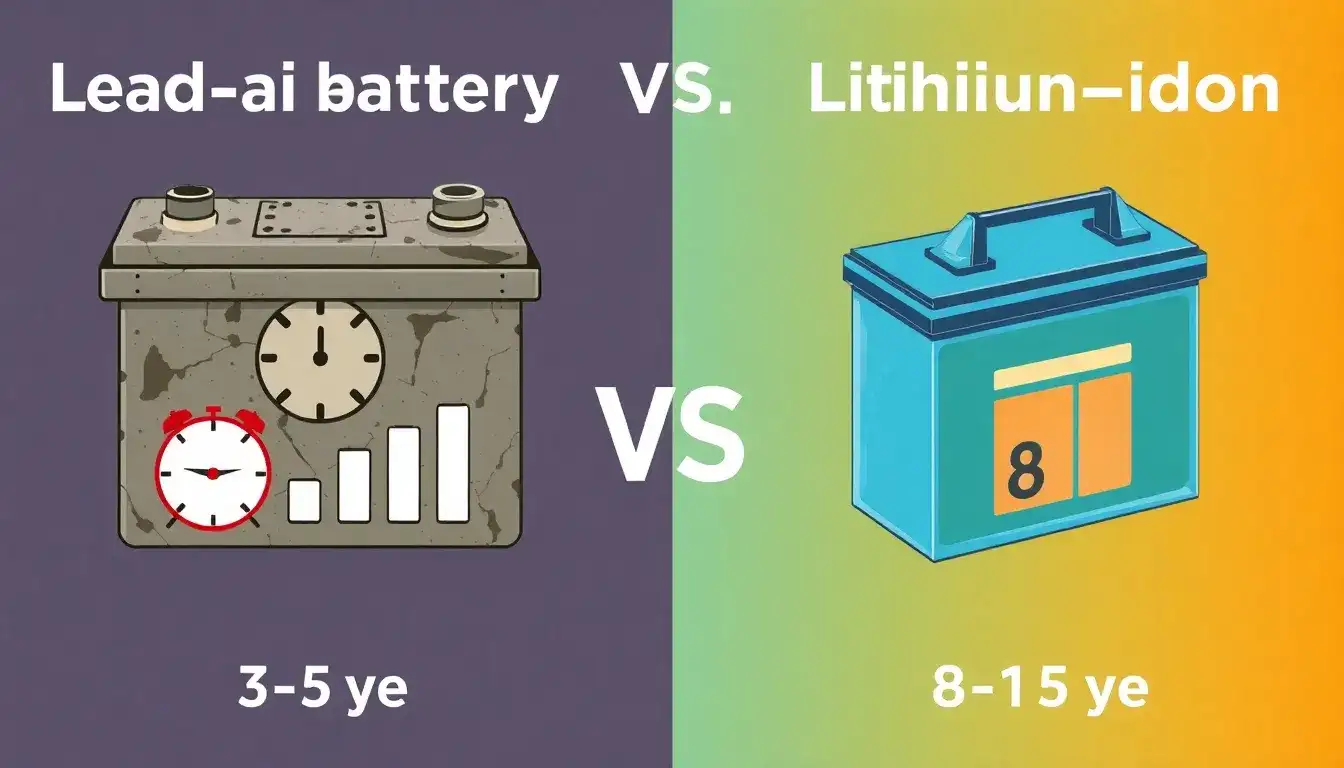
Lifespan Comparison
- Lead-Acid Batteries:
- Typically last for 200 to 500 cycles when discharged to 50% capacity.
- Their lifespan usually ranges from 2 to 6 years, depending on usage and conditions.
- They have lower usable capacity due to a lower depth of discharge, requiring more frequent recharging.
- Lithium-Ion Batteries:
- Can last for 2,000 to 5,000 cycles or more, with some lasting up to 5,000 cycles.
- Their lifespan is generally 10 to 20 years or more with proper maintenance.
- They have a higher usable capacity due to a deeper depth of discharge, reducing the need for frequent recharging.
Key Factors Affecting Lifespan
- Charge Cycles: Lithium-ion batteries handle more charge cycles, leading to a longer lifespan.
- Depth of Discharge: Lithium-ion batteries can safely be discharged to a lower capacity without harming their lifespan, unlike lead-acid batteries.
- Maintenance: Lithium-ion batteries require minimal maintenance compared to lead-acid, which need regular upkeep like water topping and terminal cleaning.
- Environmental Conditions: Lithium-ion batteries perform better in extreme temperatures and have reduced degradation over time compared to lead-acid batteries.
Overall, lithium-ion batteries significantly outlast lead-acid batteries, making them more suitable for applications requiring high durability and efficiency.
Original article by NenPower, If reposted, please credit the source: https://nenpower.com/blog/what-are-the-differences-in-lifespan-between-lead-acid-and-lithium-ion-batteries/

