

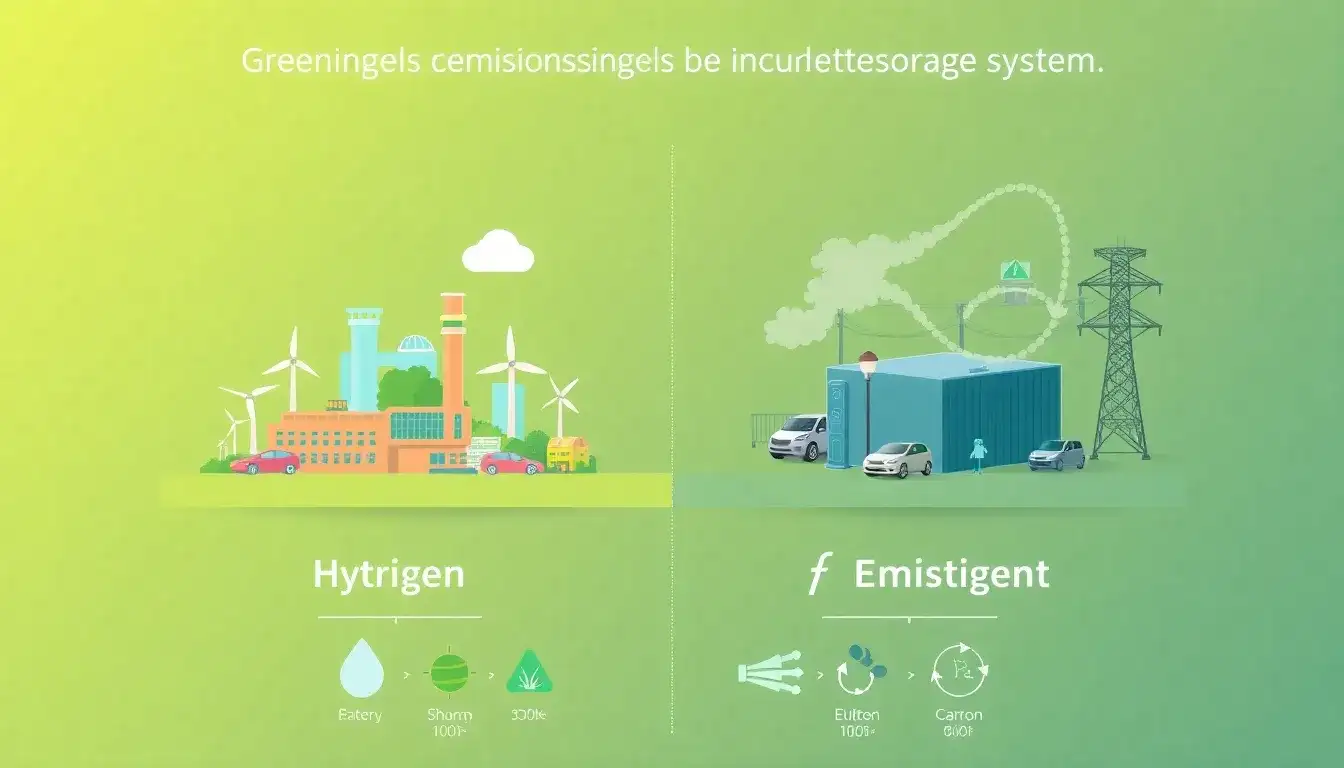
The differences in greenhouse gas (GHG) emissions between hydrogen and battery energy storage depend largely on how each is produced and utilized.
Hydrogen Energy Storage
- Production Emissions: Hydrogen production is a significant source of emissions, primarily because it is often produced from fossil fuels like natural gas and coal. Unabated natural gas reforming produces about 10-12 kg CO2-equivalent per kg of hydrogen, while coal gasification emits even more, around 22-26 kg CO2-equivalent per kg of hydrogen.
- Cleaner Production Methods: Using carbon capture and storage (CCS) can reduce emissions significantly, producing “blue hydrogen.” Alternatively, using renewable energy for electrolysis (“green hydrogen”) can largely eliminate production emissions. However, even green hydrogen may have some embedded emissions from the construction of renewable energy infrastructure.
- Usage Emissions: Since hydrogen burns to produce only water and heat, it emits no GHG emissions during use. However, the efficiency of hydrogen in energy storage is generally lower than batteries due to energy losses during conversion and storage.
Battery Energy Storage
- Production Emissions: Batteries have production emissions primarily from the mining of materials like lithium and cobalt, manufacturing processes, and end-of-life disposal. These emissions are generally not as high as those from fossil fuel-based hydrogen production but can vary based on energy sources used during manufacturing.
- Usage Emissions: Batteries emit no direct GHG emissions during use, making them a zero-emission form of energy storage.
- Efficiency and Durability: Batteries typically have higher round-trip efficiency and longer lifetimes compared to hydrogen storage, reducing the need for frequent replacement and minimizing the overall carbon footprint over their lifespan.
Comparison of Greenhouse Gas Emissions
- Overall Emissions: Hydrogen production can have high emissions if derived from fossil fuels but can be nearly emissions-free if produced using renewable electricity. Battery production has lower emissions compared to traditional hydrogen production methods, especially if manufactured with renewable energy.
- Usage Efficiency: Batteries are more efficient (higher round-trip efficiency) compared to hydrogen, which involves multiple conversion steps with significant energy losses.
- Potential for Decarbonization: Both hydrogen (especially green hydrogen) and batteries can play significant roles in decarbonizing energy systems, with hydrogen offering unique benefits in sectors difficult to electrify, like heavy industry and long-haul transport.
In summary, while both hydrogen and battery energy storage systems have potential as low-emission technologies, the emissions profile of hydrogen depends heavily on its production method, whereas batteries are inherently cleaner during operation but have production-related emissions.
Original article by NenPower, If reposted, please credit the source: https://nenpower.com/blog/what-are-the-differences-in-greenhouse-gas-emissions-between-hydrogen-and-battery-energy-storage/

