

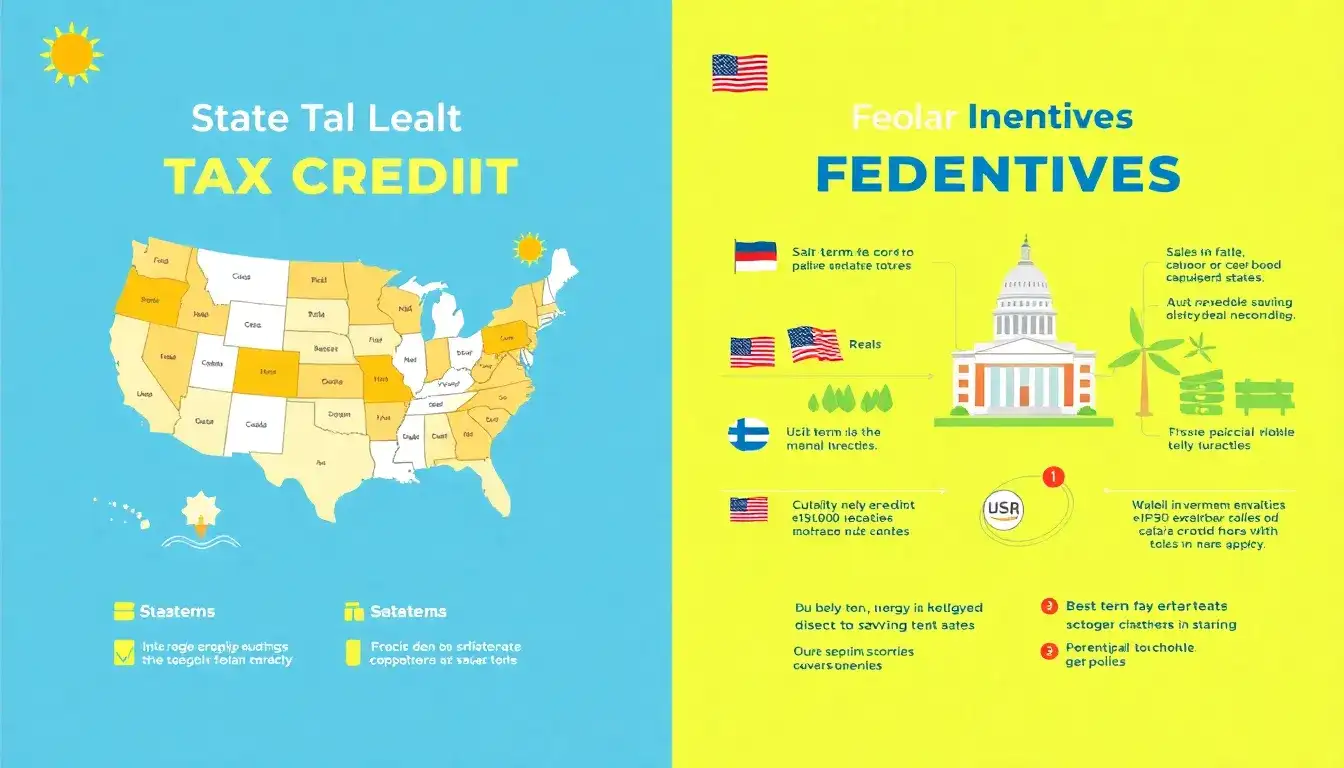
Differences Between State-Level Solar Tax Credits and Federal Incentives
1. Scope of Availability
- Federal Incentives: Available nationwide, offering a uniform benefit across the U.S. The main federal incentive is the Investment Tax Credit (ITC), which provides a 30% tax credit on solar system installations through 2032.
- State Incentives: Vary by state; some states offer significant incentives while others have limited or no programs. These can include tax credits, rebates, net metering policies, and property tax exemptions.
2. Types of Incentives
- Federal Incentives: Primarily a tax credit (ITC) that reduces federal tax liability, covering up to 30% of the system cost.
- State Incentives: Diverse, including:
- Tax Credits: Similar to federal credits but often with a lower percentage or capped amount.
- Rebates: Direct cash payments to offset installation costs.
- Net Metering: Allows homeowners to sell excess energy back to the grid, reducing utility bills.
- Property Tax Exemptions: Protects homeowners from increased property taxes due to solar installations.
3. Eligibility Criteria
- Federal Incentives: Eligibility includes owning a solar system installed between January 1, 2017, and December 31, 2034. Leasing is not eligible.
- State Incentives: Criteria vary by state, with some targeting specific populations like low-income residents.
4. Impact on Tax Liability
- Federal Incentives: Directly reduces federal income tax liability by the credit amount.
- State Incentives: Reduces state income tax liability or exempts solar systems from property tax increases, which may indirectly affect federal tax liability.
5. Duration and Changeability
- Federal Incentives: Phased out gradually; the 30% rate applies until 2032, then decreases.
- State Incentives: Programs can change frequently based on legislative actions and budget availability.
In summary, while both federal and state incentives aim to promote solar energy, the federal ITC is a standardized program available nationwide, whereas state-level incentives offer more varied and localized benefits. Combining both types can maximize savings for solar adopters.
Original article by NenPower, If reposted, please credit the source: https://nenpower.com/blog/what-are-the-differences-between-state-level-solar-tax-credits-and-federal-incentives/

