Differences Between PPAs and EPC Agreements for Energy Storage
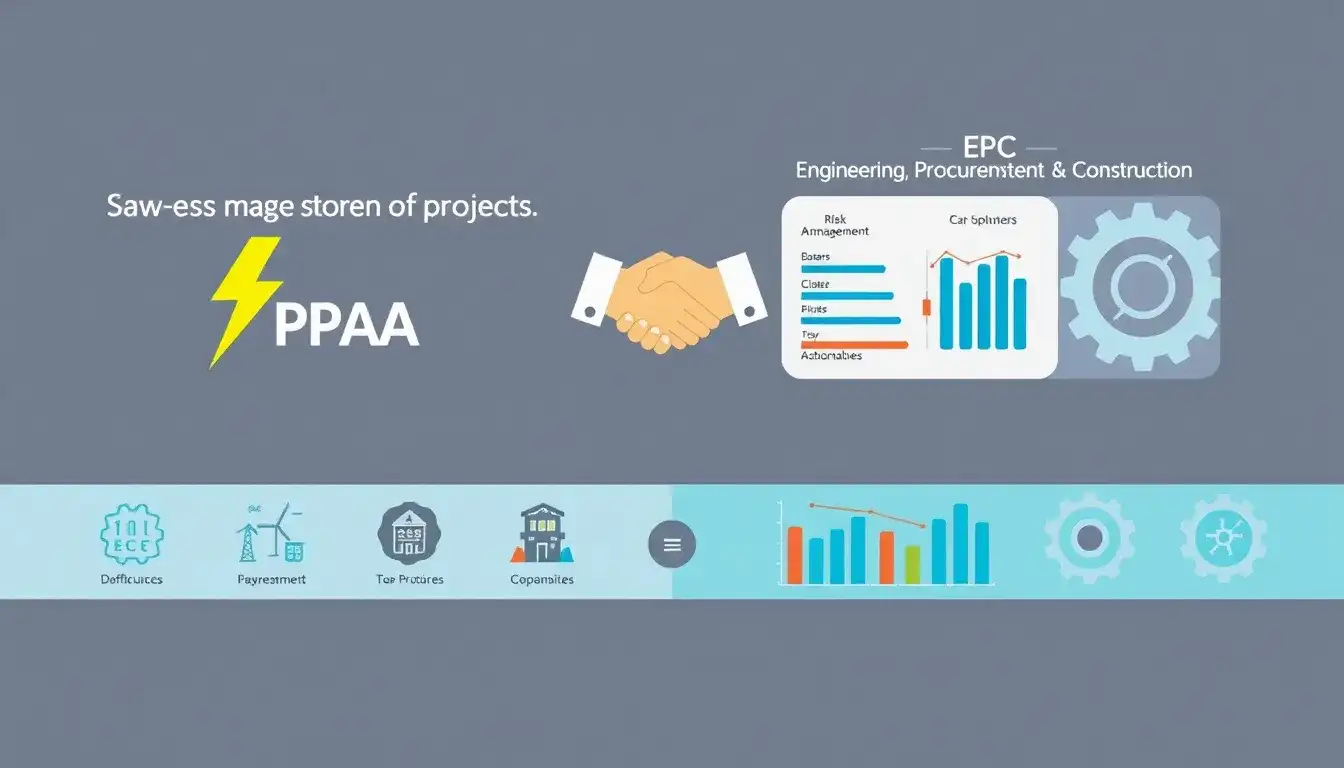
Power Purchase Agreements (PPAs) and Engineering, Procurement, and Construction (EPC) agreements serve distinct purposes in the energy storage sector. Here are the key differences between them:
1. Focus and Purpose
- Power Purchase Agreements (PPAs): PPAs are contracts between energy buyers (oftakers) and energy suppliers. In the context of energy storage, they specifically focus on the provision of storage services such as energy arbitrage, peak shaving, frequency regulation, and backup power. PPAs provide a financial framework for the sale of these services, ensuring revenue streams for storage providers while offering cost savings and risk management benefits for offtakers.
- EPC Agreements: EPC agreements concentrate on the construction, installation, and delivery of energy storage facilities. They are primarily concerned with building and transferring ownership of the facility to the client. This type of agreement focuses on the revenue generated from constructing and selling the infrastructure as a comprehensive package.
2. Contractual Structure and Risks
- PPAs: These agreements outline the terms for purchasing energy or storage services over a long-term period. They define pricing mechanisms, service delivery terms, and risk allocation between parties. PPAs typically include provisions for performance guarantees and maintenance responsibilities.
- EPC Agreements: In an EPC agreement, the contractor bears the risks associated with project execution (such as construction delays, cost overruns, and performance issues) until the project is completed and handed over to the client. Once the facility is transferred, the client assumes operational risks.
3. Financial Model
- PPAs: The financial model for PPAs is based on the sale of energy or storage services, providing a predictable revenue stream for the supplier. The focus is on operational costs and the pricing of services.
- EPC Agreements: The financial model for EPC agreements is based on a lump-sum payment for the construction and delivery of the facility. This model does not involve ongoing service sales but rather a one-time transfer of assets.
4. Client Involvement and Capital Expenditure
- PPAs: Clients typically do not need to invest upfront capital, as the provider handles ownership and maintenance of the storage system. This arrangement allows clients to avoid significant capital expenditures.
- EPC Agreements: In EPC agreements, clients usually bear the upfront capital costs for the construction of the facility. However, they gain full ownership and control over the facility post-completion.
In summary, PPAs serve as financial instruments to manage energy storage services, while EPC agreements are contractual vehicles for delivering constructed energy storage facilities. Each type addresses different needs and risks in the energy storage sector.
Original article by NenPower, If reposted, please credit the source: https://nenpower.com/blog/what-are-the-differences-between-ppas-and-epc-agreements-for-energy-storage/