

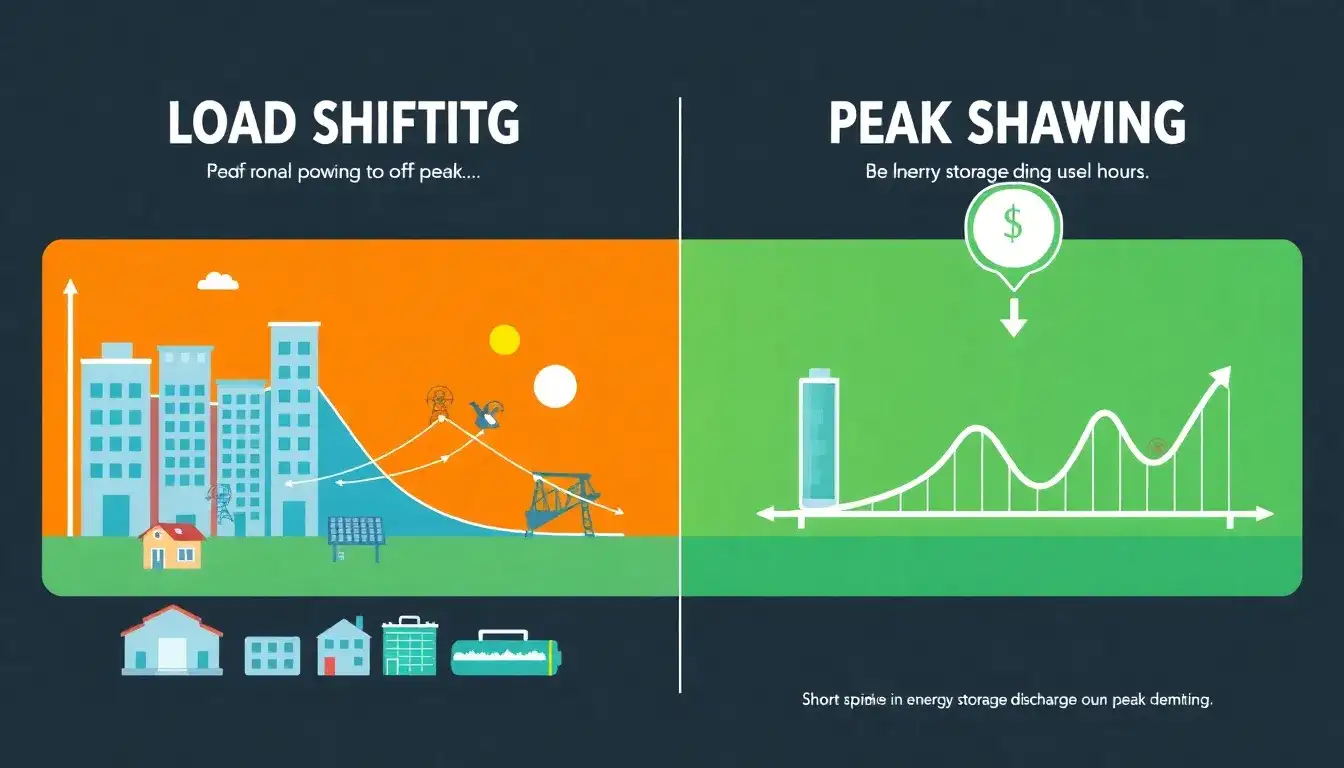
Differences Between Load Shifting and Peak Shaving in Energy Storage
Load Shifting and Peak Shaving are two energy management strategies that help optimize energy usage and alleviate stress on power grids. Here are their differences:
1. Objective
- Load Shifting: This strategy aims to move energy consumption from peak periods to off-peak hours. It focuses on optimizing the timing of energy usage to take advantage of lower electricity rates during off-peak times, without necessarily reducing the total amount of energy consumed.
- Peak Shaving: The main goal is to reduce energy consumption during peak demand periods by using alternative energy sources like batteries to “shave” off the peak energy demand. This reduces overall energy consumption from the grid during peak times, thereby lowering peak demand charges.
2. Timing and Energy Consumption
- Load Shifting: Energy is consumed in the same total quantity but shifted to different times. For example, in industrial settings, machines might be scheduled to run during less busy hours.
- Peak Shaving: Instead of shifting the timing of energy use, it involves reducing the peak demand by using stored energy or other sources during peak hours. This method doesn’t change the timing of energy use but rather reduces the amount of energy used from the grid during peaks.
3. Implementation and Tools
- Load Shifting: Commonly achieved through scheduling adjustments and energy storage systems that can charge during off-peak hours and discharge during peak times. This method is particularly useful in combining with time-of-use (TOU) pricing to optimize energy costs.
- Peak Shaving: Often involves the use of demand-side batteries or other alternative energy sources to supply energy during peak times, directly reducing peak demand from the grid. This strategy helps reduce heavy demand charges without altering operational schedules.
4. Impact on Grid
- Load Shifting: Helps distribute energy consumption more evenly across the day, reducing strain on the grid during peak hours and supporting the integration of renewable energy sources.
- Peak Shaving: Aims to reduce the peak demand directly, which helps maintain grid stability by relying less on expensive and often carbon-intensive peak power generation.
5. Operational Flexibility
- Load Shifting: Requires operational flexibility since it involves shifting tasks or energy-intensive activities to different times, which may not be feasible for all operations.
- Peak Shaving: Offers a solution for facilities that cannot adjust their operational schedules but still want to reduce peak demand charges.
In summary, while both strategies enhance energy efficiency, load shifting is about moving energy consumption to off-peak times, and peak shaving focuses on reducing peak demand from the grid by utilizing alternative energy sources during peak hours.
Original article by NenPower, If reposted, please credit the source: https://nenpower.com/blog/what-are-the-differences-between-load-shifting-and-peak-shaving-in-energy-storage/

