

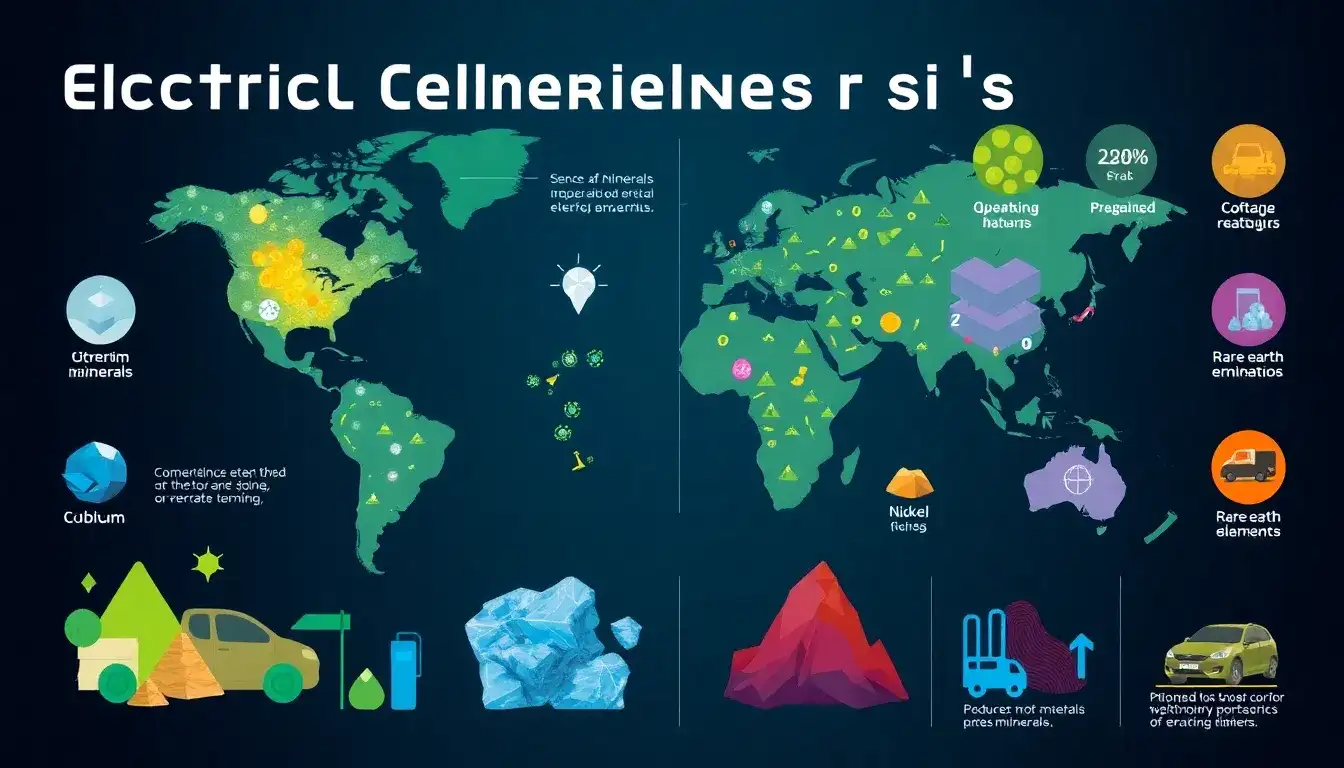
Critical Minerals Requirements for Electric Vehicles (EVs) and Hybrids
Overview of Critical Minerals
Electric vehicles (EVs), particularly those powered by battery electric technology, rely heavily on several critical minerals for their operation. These minerals are essential components of EV batteries and other systems. The critical minerals commonly associated with EVs include:
- Cobalt: Used in various lithium-ion battery chemistries, such as lithium cobalt oxide (LCO) and lithium nickel manganese cobalt oxide (NMC).
- Natural Graphite: Widely used as the anode material in lithium-ion batteries.
- Lithium: A key ingredient in lithium-ion battery technologies like lithium nickel cobalt aluminum oxide (NCA) and lithium iron phosphate (LFP).
- Manganese: Used in battery chemistries like lithium manganese oxide (LMO).
- Nickel: Essential for NMC and NCA battery chemistries.
- Rare Earth Elements: Though less common in EV batteries, these elements are used in certain components like electric motors.
Hybrid Vehicles
While hybrid vehicles also utilize some of these minerals, their demand is generally lower. Hybrids often employ smaller batteries compared to full EVs, which can reduce the mineral requirements. However, they still use critical minerals in their battery systems, albeit in smaller quantities.
Challenges and Considerations
- Demand Growth: The increasing global demand for these minerals is driven by the transition to clean energy technologies and EVs. Projections indicate a significant rise in demand by 2050.
- Supply Risks: The U.S. and other countries face challenges in securing stable domestic supplies of these minerals, with significant reliance on imports.
- Recycling and Innovation: Efforts to develop recycling technologies and new battery chemistries that reduce the dependence on these minerals are underway to mitigate supply risks.
Original article by NenPower, If reposted, please credit the source: https://nenpower.com/blog/what-are-the-critical-minerals-requirements-for-evs-and-hybrids/

