

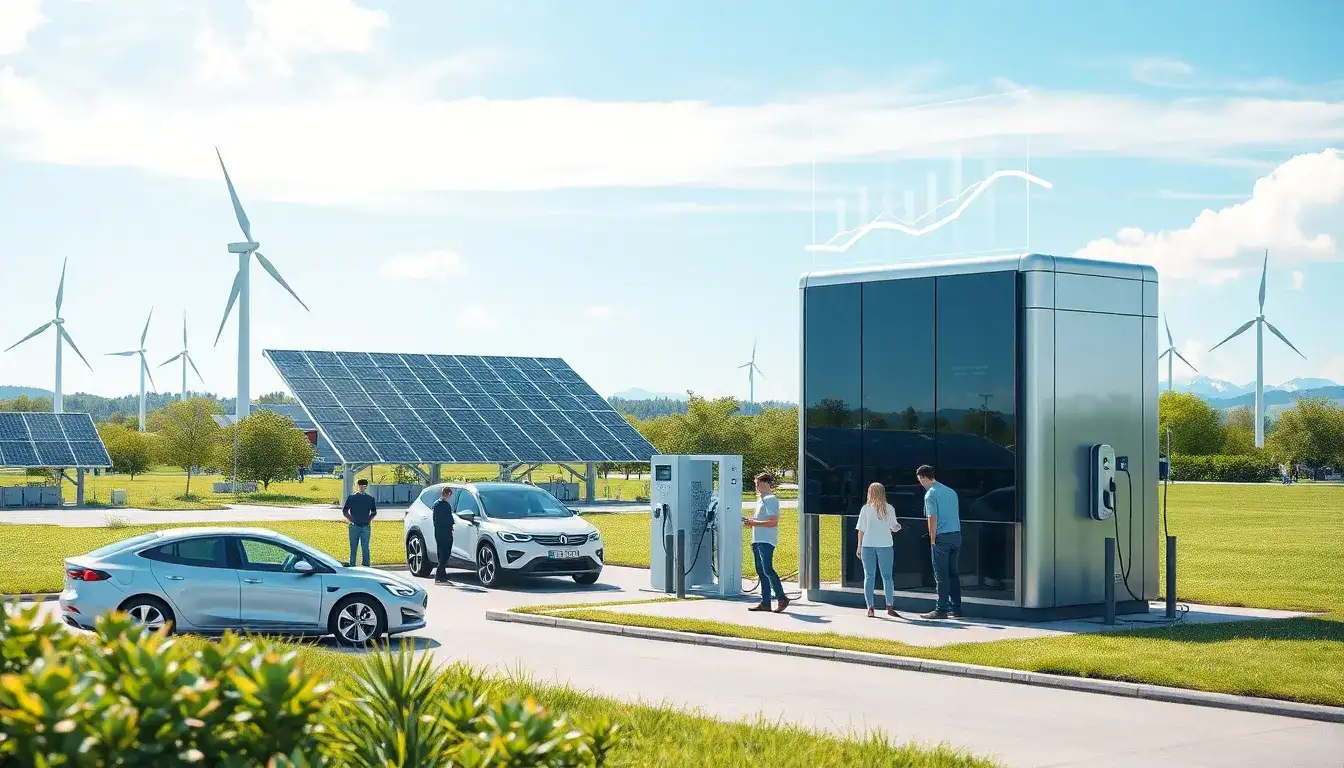
The cost savings associated with using battery energy storage for EV charging are multifaceted, addressing both operational expenses and capital expenditures. Here are the key benefits:
Cost Savings Benefits
- Peak Shaving and Demand Charge Reduction:
- Battery energy storage systems can reduce demand charges by ‘shaving’ peak power usage. This is achieved by storing energy during off-peak hours and releasing it when EV charging stations are in use, thus avoiding high demand charges.
- This approach significantly lowers the operational costs for EV charging stations, particularly those with high-power DC fast charging capabilities.
- Energy Cost Management:
- By charging batteries during off-peak hours when electricity rates are lower, EV owners and charging stations can save on energy costs. This stored energy is then used during peak hours, reducing the reliance on higher-priced electricity.
- This strategy is especially effective in regions with time-of-use pricing, where energy rates fluctuate based on demand.
- Capital Expenditure Savings:
- Integrating battery energy storage allows businesses to avoid costly grid upgrades. This is particularly relevant for areas with constrained grid capacities, where enabling high-power charging without infrastructure upgrades is a significant advantage.
- Battery-backed systems often require lower initial investments compared to grid upgrades, leading to substantial savings in capital expenditures.
- Efficiency and Loss Reduction:
- Battery energy storage can optimize energy usage by reducing transmission losses and improving the efficiency of the charging process.
- Local DC generation and transmission with solar and battery systems minimize AC/DC conversion losses, leading to further cost savings.
- Renewable Energy Integration:
- By storing excess renewable energy (e.g., from solar panels), battery storage supports a more sustainable and cost-effective charging solution. This reduces reliance on fossil fuels and grid electricity, helping to lower overall energy costs and environmental impact.
Overall, the combination of reduced energy costs, lower demand charges, and avoided grid upgrade expenditures provides significant economic benefits for both EV owners and charging infrastructure operators.
Original article by NenPower, If reposted, please credit the source: https://nenpower.com/blog/what-are-the-cost-savings-associated-with-using-battery-energy-storage-for-ev-charging/

