

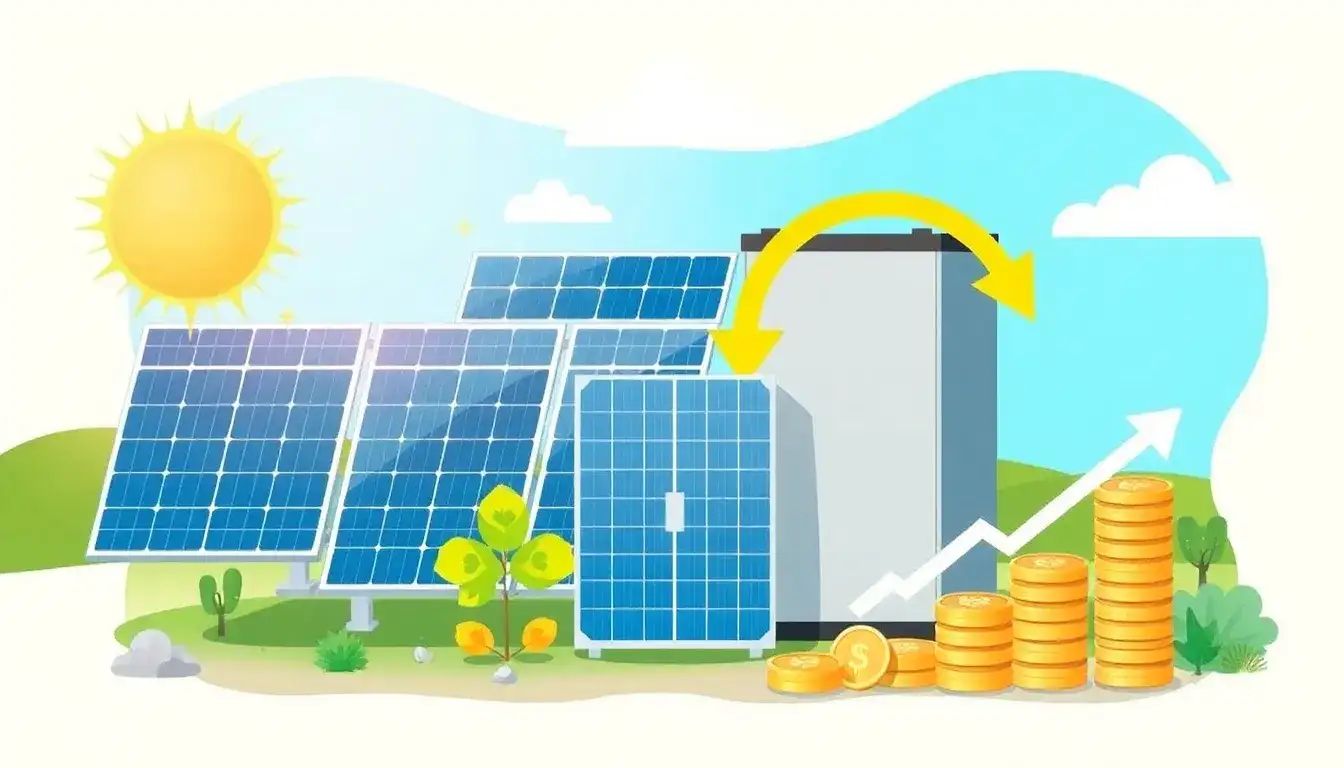
Integrating battery storage with solar energy offers significant cost savings primarily by increasing self-consumption of solar power and reducing reliance on grid electricity, especially during peak tariff hours.
Key Cost Savings from Solar + Battery Integration
- Reduction in Electricity Bills by 70-80%: A medium-sized home with solar panels (3.5 kWp generating ~2,800 kWh/year) and an 8 kWh battery can reduce its annual electricity bill by 70-80% by storing excess solar energy and using it during peak periods, leading to estimated savings of up to £600 per year, plus additional earnings from exporting surplus energy back to the grid (£50/year) via schemes like the Smart Export Guarantee.
- Daily Savings Through Time-of-Use Tariffs: By charging the battery during off-peak hours (when electricity is cheaper) and discharging during peak hours, households can save significantly on daily energy costs. For example, a user with a 10 kWh battery and favorable tariff plans saved approximately £2.25 per day, translating to more than £800 annually. Combined with solar generation reducing the need to charge batteries from the grid, total savings can approach £1,000 per year.
- Maximized Solar Self-Consumption: Without battery storage, excess solar energy produced during the day is often exported to the grid for a nominal credit. With a battery, this energy is stored and used later, enhancing the value of the solar investment by reducing grid purchases and increasing usage of free solar energy.
- Long-Term Electricity Cost Reduction: Battery storage provides greater control over energy use, enabling homeowners to shift consumption to times when solar energy or stored energy is available, thereby lowering long-term electricity expenses at home.
Considerations
- Initial Investment vs. Savings: Batteries add a significant upfront cost to a solar installation (often several thousand dollars/pounds), and the payback period depends on energy prices, tariff structures, and usage patterns. However, falling costs in 2025 (around $3/watt before tax credits) and improvements in technology are improving the economics of battery integration.
Overall, integrating battery storage with solar energy systems can lead to substantial cost savings by reducing electricity bills, optimizing energy use, and providing financial benefits from grid export schemes. The scale of savings depends on system size, local tariffs, and consumption behavior but can be several hundred to over a thousand pounds or dollars annually.
Original article by NenPower, If reposted, please credit the source: https://nenpower.com/blog/what-are-the-cost-savings-associated-with-integrating-battery-storage-with-solar-energy/

