

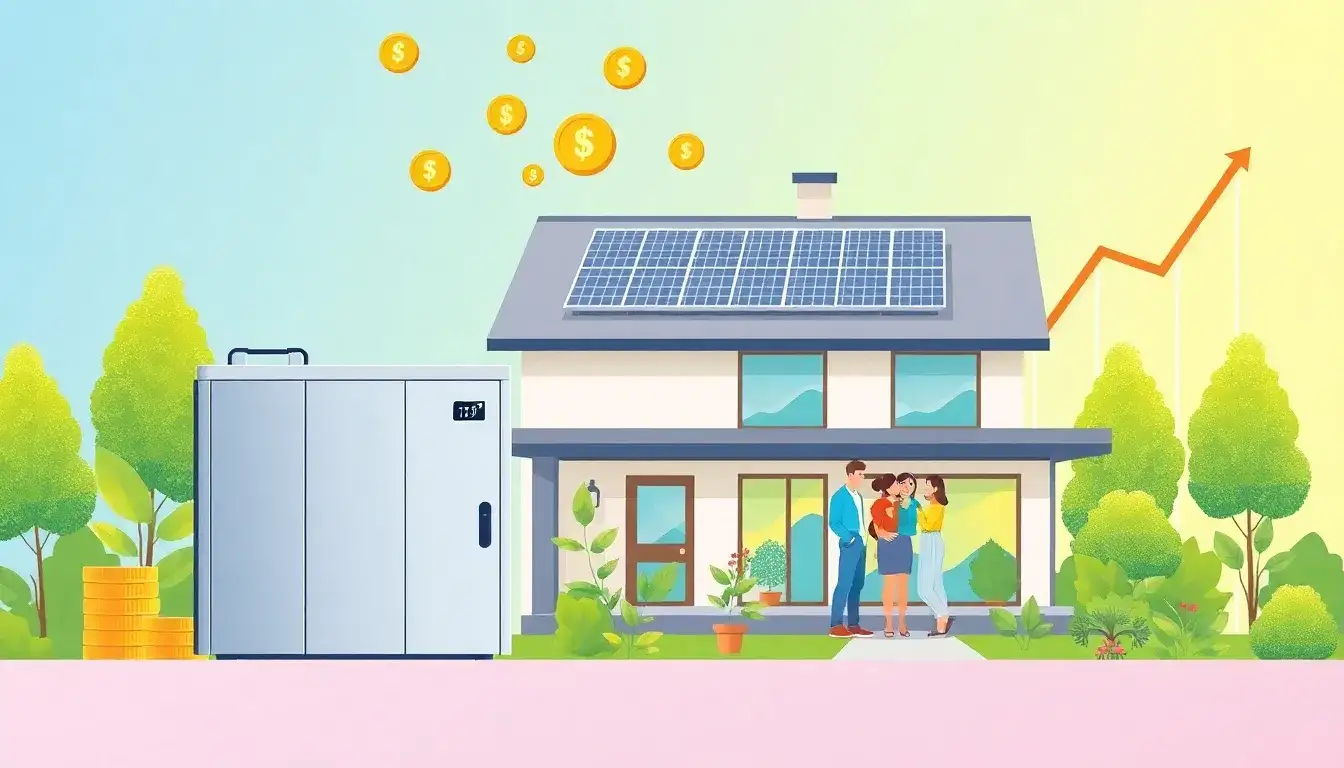
Energy storage systems in households provide several cost savings primarily by enabling smarter energy use and increasing self-consumption of renewable energy, especially solar power.
Key Cost Savings Associated with Household Energy Storage
- Reduced Electricity Bills through Time-of-Use Optimization
Home batteries allow storage of electricity during low-cost, off-peak hours, which can be used during peak hours when electricity prices are higher. This load shifting significantly lowers monthly electricity expenses by taking advantage of time-of-use (TOU) pricing plans, with savings reported up to 50% or more on energy bills under such plans. - Increased Use of Self-Generated Renewable Energy
Households with solar panels combined with a battery system can store excess solar power produced during the day and use it later, rather than buying electricity from the utility grid. This reduces purchases from the utility that include network charges and taxes, resulting in substantial savings. For example, a household with battery storage can replace grid electricity with stored solar power, which is cheaper over the system’s lifetime despite initial investment costs. - Incentives and Rebates
Many regions offer financial incentives, rebates, or tax credits to offset the upfront cost of installing home battery systems. These programs reduce the effective cost and improve the overall economics for homeowners, increasing the net cost savings. - Energy Independence and Backup Power
Although this is more of a reliability benefit than a direct financial saving, having stored energy provides uninterrupted power during outages, reducing potential costs related to spoiled goods or downtime.
Considerations on Cost and Savings
While lithium-ion battery prices have fallen considerably, a kilowatt-hour of storage still costs close to 1,000 euros, making the initial investment significant. Nonetheless, the ongoing savings on electricity bills, especially when paired with solar panels and time-of-use rates, make energy storage an economically attractive option for many households over time.
In summary, energy storage reduces household energy costs mainly by enabling the use of cheaper self-generated solar power and shifting electricity usage away from expensive peak periods. Combined with incentives, these savings can be substantial, potentially cutting household energy bills by up to half in favorable scenarios.
Original article by NenPower, If reposted, please credit the source: https://nenpower.com/blog/what-are-the-cost-savings-associated-with-energy-storage-for-households/

