

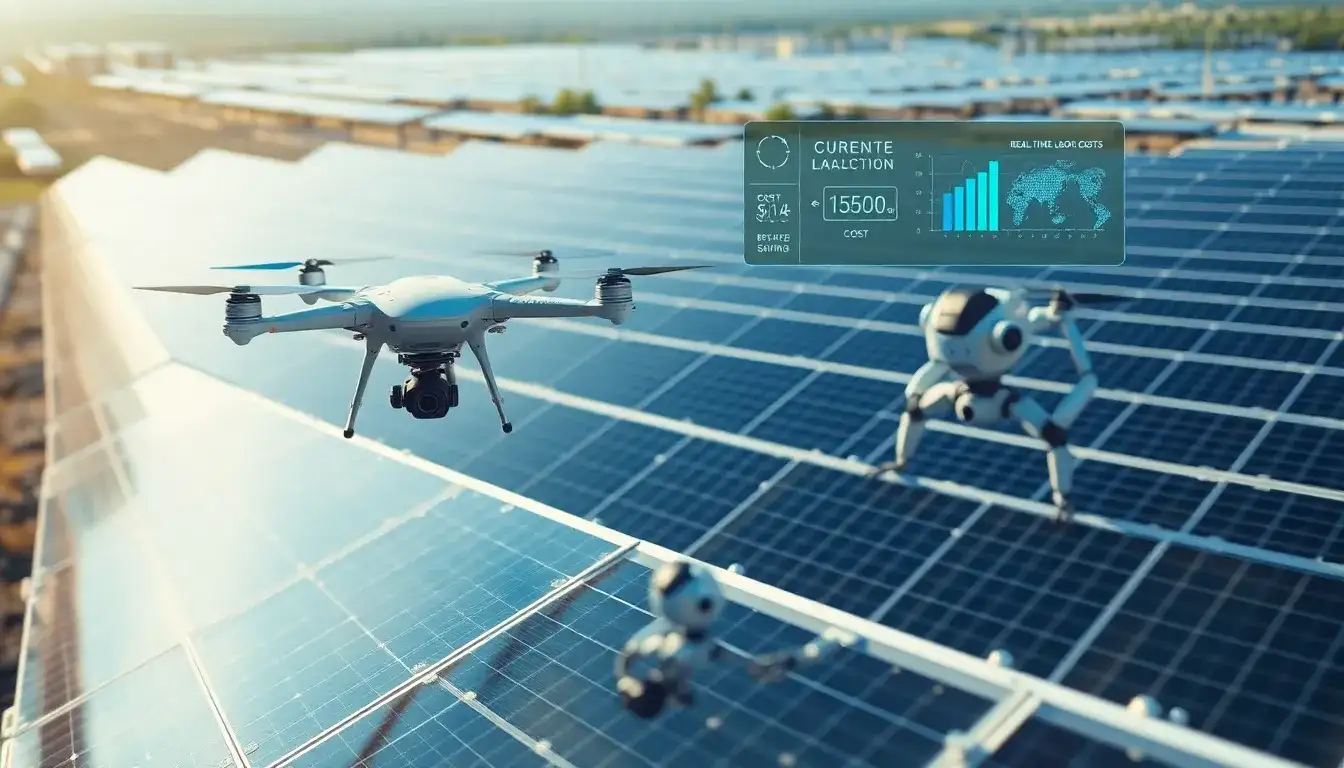
The cost savings associated with AI in solar maintenance come from multiple dimensions driven primarily by AI’s ability to shift maintenance from reactive to proactive management. Here are the key areas where AI delivers significant financial benefits:
Cost Savings and Efficiency Gains from AI in Solar Maintenance
- Lower Repair Costs: AI-based predictive maintenance identifies potential issues early by analyzing real-time sensor data (voltage, temperature, power output) compared with historical trends. This early detection prevents expensive system failures and extends the useful life of solar panels and inverters by allowing repairs before serious damage occurs.
- Reduced Labor Expenses: AI-powered robots and automated systems conduct panel cleaning and inspections, minimizing costly manual labor and reducing human error. Automation also speeds up maintenance scheduling and execution.
- Minimized Downtime: By forecasting failures and scheduling repairs proactively, AI reduces unexpected system outages. This keeps solar installations running longer and more consistently, which translates to higher energy generation and revenue.
- Increased Energy Output: AI optimizes maintenance and operational parameters (e.g., panel orientation, cleaning schedules) to enhance overall system efficiency. Higher energy yield improves return on investment and lowers cost per kilowatt-hour.
- Extended Equipment Lifespan: Predictive maintenance enabled by AI extends the operational lifetime of solar components by 5-7 years on average compared to traditional approaches. Longer-lasting equipment reduces capital expenses and replacement frequency.
Quantitative Impacts on Cost Savings
- Predictive maintenance can reduce maintenance costs by approximately 25-40% and decrease system failures by up to 70%, significantly cutting operational expenses.
- AI-driven maintenance has been reported to prevent 89% of potential failures in some cases, yielding estimated savings of over €2.3 million (~$2.5 million) over three years in commercial settings.
- Some commercial solar farms have experienced a 45% reduction in maintenance expenses and a 25% increase in system uptime within the first year of AI implementation.
- Overall productivity gains of around 25% and component lifetime increases of 15-30% are typical, further enhancing cost efficiency.
Additional Benefits Enhancing Cost Effectiveness
- AI integrates weather forecasting and environmental data to optimize maintenance timing, ensuring less impact on peak solar production and maximizing revenue.
- AI-driven real-time data analytics and chat-based querying speed up diagnostics and decision-making, reducing administrative overhead and improving operational efficiency.
- Improved grid integration and energy storage management through AI reduce costs related to intermittency and maximize usage of generated solar power.
In summary, AI-powered maintenance in solar energy systems delivers substantial cost savings by reducing repair and labor costs, minimizing downtime, increasing energy yield, and extending equipment lifespan. These benefits translate into millions saved over a solar asset’s life, making AI a financially transformative technology in solar farm operations and maintenance.
Original article by NenPower, If reposted, please credit the source: https://nenpower.com/blog/what-are-the-cost-savings-associated-with-ai-in-solar-maintenance/

