

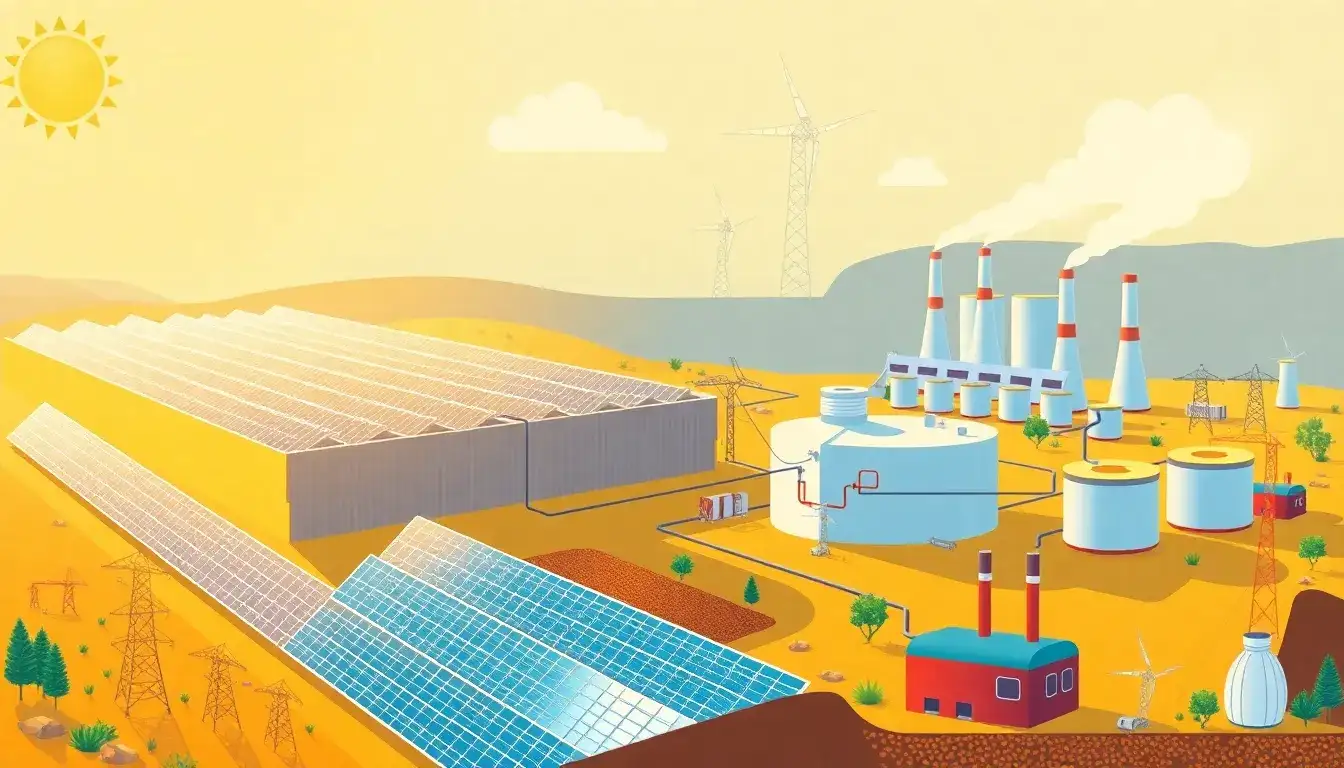
Cost Implications of Thermal Energy Storage in Solar Power Plants
Thermal Energy Storage (TES) in solar power plants, particularly Concentrating Solar Power (CSP) systems, has several cost implications:
1. Capital Costs
- Increased Capital Expenditure (CapEx): Implementing TES systems increases the initial capital costs of CSP plants. For example, estimates suggest costs of TES can range from $156.3 million for current systems to $117.6 million in the future, not including additional solar field costs.
- Storage Costs: The cost of TES can be estimated at around 13.5 cents per kWh for a 10% internal rate of return (IRR) with capex costs of approximately $350/kWh.
2. Operating and Maintenance Costs
- Reduced O&M Costs: While TES increases upfront costs, it can decrease annual operation and maintenance (O&M) expenses, particularly compared to systems relying on natural gas-fired heaters.
3. Levelized Cost of Energy (LCOE)
- Variable LCOE Impact: The integration of TES can increase LCOE for CSP plants, especially when combined with backup systems like natural gas heaters. However, for smaller storage capacities (1-4 hours), TES may offer slightly lower LCOE compared to natural gas backup systems.
- Optimization for Lower LCOE: The solar field area can be optimized to minimize LCOE, often resulting in increased field sizes to capture more energy for storage.
4. Economic Benefits
- Increased Capacity Factor: TES can significantly boost the capacity factor of CSP plants from around 30% without storage to up to 55% or even 65% with adequate storage.
- Improved Profitability: By shifting energy production to peak demand hours when electricity prices are higher, TES can enhance the profitability of CSP plants.
5. Competitiveness
- Versus Lithium-Ion Batteries: TES costs are projected to be about 35% lower than lithium-ion batteries, making them attractive for integrating renewables and avoiding curtailment.
- Versus Natural Gas: The competitiveness of TES versus natural gas depends on specific market conditions and pricing.
In summary, while Thermal Energy Storage increases upfront costs and may raise LCOE in some configurations, it offers significant operational benefits, improved capacity factors, and has the potential to be more cost-effective than certain other energy storage solutions.
Original article by NenPower, If reposted, please credit the source: https://nenpower.com/blog/what-are-the-cost-implications-of-using-thermal-energy-storage-in-solar-power-plants/

