

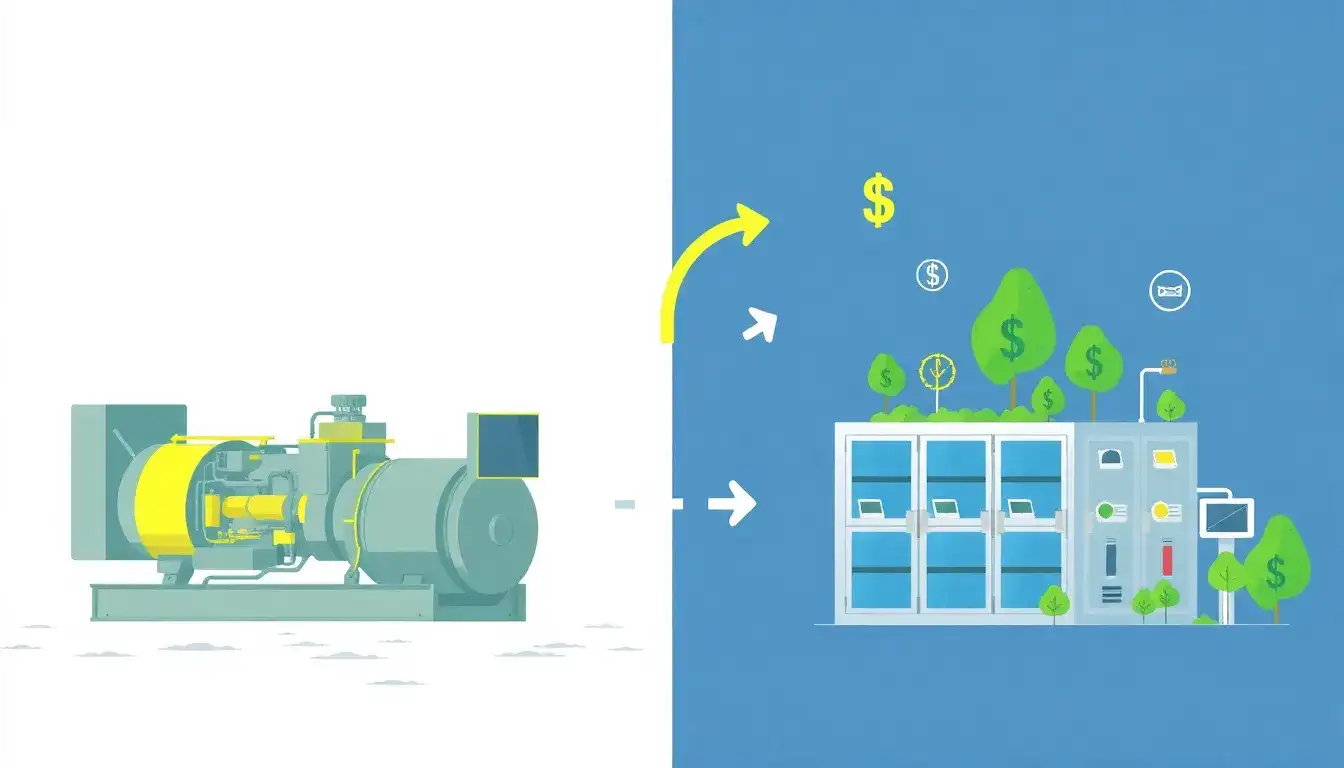
Transitioning from diesel generators to battery energy storage systems (BESS) involves several cost implications across initial investment, operational costs, maintenance, lifespan, and efficiency.
Initial Investment Costs
- Diesel generators typically have a lower upfront cost compared to battery storage systems. For example, a diesel generator with 5-10 kVA capacity costs approximately ₹200,000 to ₹500,000, and larger, 50+ kVA units cost ₹1,000,000 and above. In the U.S., standby gas generators average about $7,000.
- In contrast, home battery backup systems generally cost more initially. A 13.5 kWh home battery costs about $9,400 to $20,000 depending on capacity and features. For instance, a 12.5 kW lithium battery system paired with a 20 kVA inverter can exceed the cost of a comparable diesel generator.
Operating and Fuel Costs
- Diesel generators incur continuous fuel expenses and maintenance costs. Fuel prices around ₹90-100 per liter in India translate to significant ongoing expenses. Fuel costs for generators can range from $50 to $150 or more per day depending on usage and capacity.
- Battery energy storage systems have minimal operating costs beyond electricity for charging and occasional maintenance. They avoid fuel costs entirely, leading to lower long-term operational expenses.
Maintenance and Lifespan
- Diesel generators require regular maintenance such as oil changes and part replacements and generally last 15-20 years.
- Batteries degrade over time, with typical lifespans of 8-15 years depending on battery chemistry and usage. This necessitates eventual replacement at potentially high cost.
Efficiency and Environmental Costs
- Diesel generators operate at about 35-40% efficiency due to energy loss as heat.
- Battery systems are highly efficient, achieving 80-90% efficiency and produce zero emissions, supporting cleaner energy goals.
Noise and Integration
- Diesel generators are noisy and require fuel storage.
- Battery systems operate silently and can integrate with solar panels or the electrical grid for renewable energy use.
Summary Table
| Cost Aspect | Diesel Generator | Battery Energy Storage System |
|---|---|---|
| Initial Cost | Lower (₹2-10 lakhs or $7,000 approx.) | Higher ($9,400–20,000 depending on size) |
| Fuel Cost | High, ongoing (₹90-100/liter or $50-$150/day) | None (electricity cost only) |
| Maintenance | Frequent and costly | Minimal; battery replacements every 8-15 years |
| Lifespan | 15-20 years | 8-15 years (battery dependent) |
| Efficiency | ~35-40% | ~80-90% |
| Emissions | CO2, NOx, particulate matter | Zero |
| Noise | High | Silent |
| Integration | Standalone fuel-based | Can integrate with solar/grid |
In conclusion, while diesel generators have lower upfront costs, their high fuel and maintenance expenses, lower efficiency, and environmental impact make battery energy storage systems more cost-effective and sustainable in the longer term despite higher initial investment.
Original article by NenPower, If reposted, please credit the source: https://nenpower.com/blog/what-are-the-cost-implications-of-transitioning-from-diesel-generators-to-battery-energy-storage-systems/

