

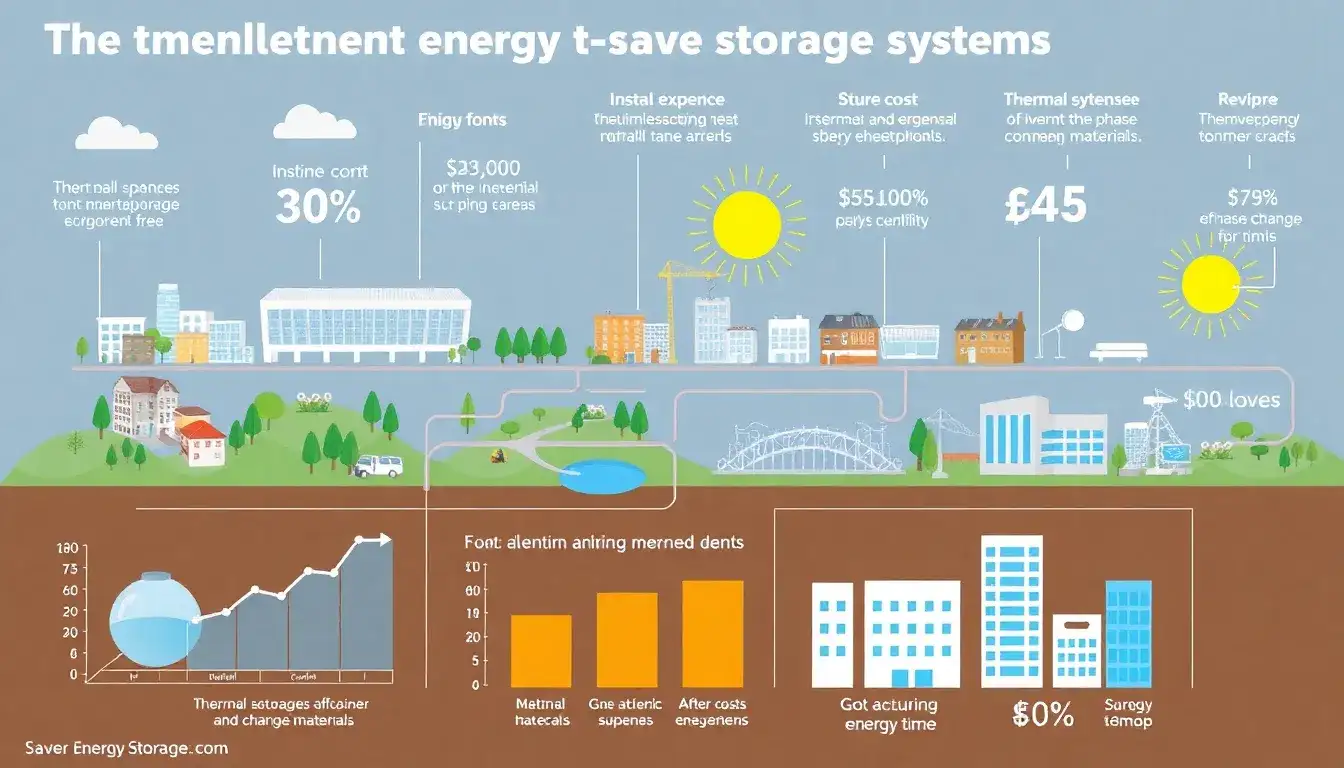
Implementing thermal energy storage (TES) systems in urban areas involves several cost implications, driven by technology advancements, policy incentives, and scalability factors:
1. Capital Costs
- Global averages: TES systems are currently among the cheapest long-duration storage options, with fully installed costs averaging $232/kWh globally (lower in China due to economies of scale).
- Regional variations: Outside China, TES costs are ~54% higher (e.g., ~$357/kWh) due to smaller project scales and less mature supply chains.
- Comparison with alternatives: TES is cheaper than lithium-ion batteries (<$304/kWh for 4-hour systems) for durations exceeding 8 hours. Pumped hydro ($263/kWh for 10-hour systems) and compressed air ($293/kWh) are cost-competitive alternatives, depending on duration and scale.
2. Policy-Driven Subsidies
The Inflation Reduction Act (IRA) reduces upfront costs by up to 50%, shortening return on investment (ROI) periods from 3–7 years to 3–5 years. Additional revenue streams from grid participation programs (e.g., demand response) further enhance ROI.
3. Operational Savings
- Peak shaving: By shifting air conditioning demand (50%+ of peak energy use in buildings) to off-peak hours, TES lowers electricity costs through time-of-use arbitrage.
- Grid incentives: Urban TES systems can earn compensation by discharging during peak loads, offsetting operational expenses.
4. Scalability and Retrofit Viability
Modern TES systems are modular, enabling retrofits in older buildings without major infrastructure upgrades. This reduces deployment barriers compared to lithium-ion batteries, which face fire-safety and regulatory challenges.
Cost Challenges
- Non-China markets: Higher unit costs and longer ROI periods persist due to fragmented supply chains and fewer gigawatt-scale projects.
- Technology limitations: While TES excels in cooling applications, its use cases for other energy needs (e.g., heating in colder climates) remain less proven.
In summary, TES offers urban areas a cost-effective pathway to manage energy demand, particularly for cooling, with subsidies and market reforms accelerating adoption. However, regional disparities in supply-chain maturity and project scale significantly influence cost outcomes.
Original article by NenPower, If reposted, please credit the source: https://nenpower.com/blog/what-are-the-cost-implications-of-implementing-thermal-energy-storage-systems-in-urban-areas/

