

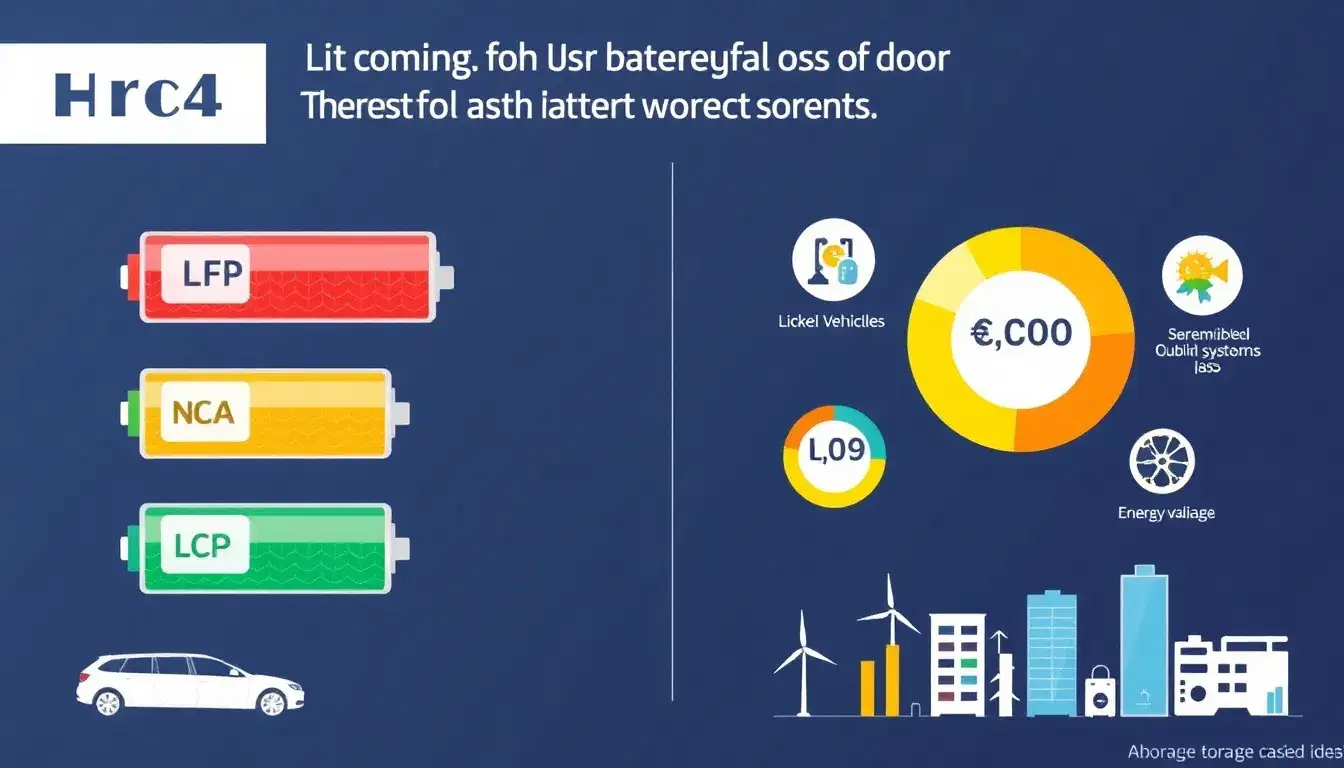
The cost differences between various lithium-ion battery chemistries, such as Nickel Manganese Cobalt (NMC), Nickel Cobalt Aluminum (NCA), and Lithium Iron Phosphate (LFP), are primarily influenced by the types and amounts of raw materials used. Here’s an overview of these differences:
1. Nickel Manganese Cobalt Oxide (NMC)
- Cost: Generally more expensive than LFP due to the use of cobalt, nickel, and manganese, which are costly metals.
- Application: Widely used in electric vehicles and consumer electronics due to their high energy density.
- Price Comparison: NMC cells are typically around 32% more expensive than LFP cells.
2. Lithium Iron Phosphate (LFP)
- Cost: Less expensive compared to NMC, primarily because it uses iron instead of nickel and cobalt, reducing material costs.
- Application: Commonly used in lower-cost applications and where safety is a priority, such as stationary storage systems and budget electric vehicles.
- Price Comparison: LFP cells had prices below $100/kWh in 2023, making them significantly cheaper than NMC cells.
3. Nickel Cobalt Aluminum (NCA)
- Cost: Similar to NMC in terms of cost due to the use of nickel and cobalt. However, it is less commonly compared directly to LFP in cost analyses.
- Application: Used predominantly by Tesla for their electric vehicles due to its high energy density.
4. Other Factors Affecting Cost
- Geography: Production costs vary significantly by region, with China offering lower manufacturing costs compared to Western countries.
- Economies of Scale and Technology: Improved manufacturing processes and economies of scale contribute to reduced costs over time.
- Raw Material Prices: Fluctuations in lithium, cobalt, and nickel prices significantly impact battery costs.
The choice of battery chemistry depends on factors like energy density requirements, cost constraints, and safety considerations. LFP is becoming increasingly popular due to its cost-effectiveness and safety benefits, while NMC remains prevalent in applications demanding higher energy density.
Original article by NenPower, If reposted, please credit the source: https://nenpower.com/blog/what-are-the-cost-differences-between-various-lithium-ion-battery-chemistries/

