

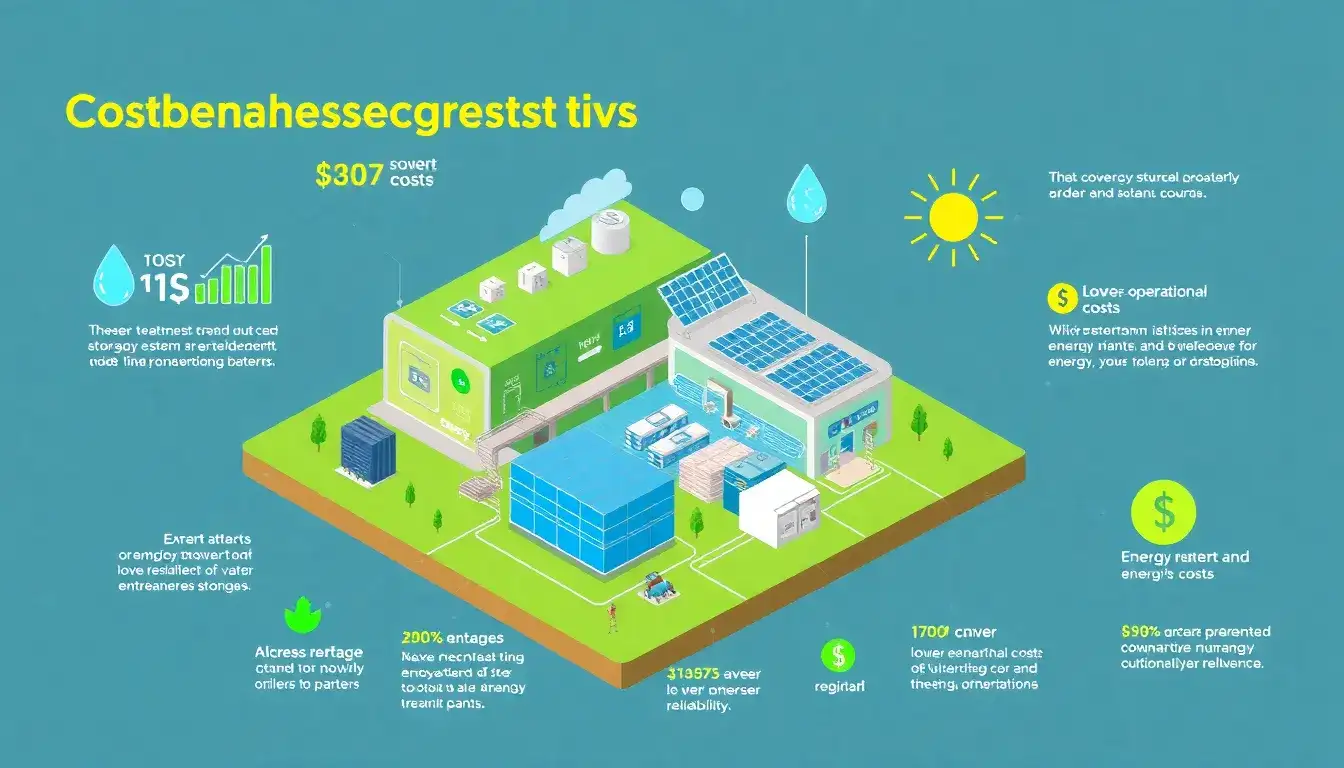
Cost Benefits of Energy Storage Systems in Water Treatment Plants
Energy storage systems, particularly battery storage, have become integral in enhancing the operational efficiency and cost-effectiveness of water treatment plants. Here are some key cost benefits associated with the use of energy storage systems in this context:
1. Reduced Operational Costs
- Peak Demand Management: Energy storage systems help manage peak energy demands by storing excess energy generated from renewable sources or during low-demand periods. This can significantly reduce the strain on the grid during peak hours, resulting in cost savings by avoiding higher-priced electricity.
- Biogas and Solar Integration: Combining biogas and solar power with energy storage can further optimize energy usage, reducing reliance on expensive grid electricity during peak times.
2. Increased Resiliency
- Backup Power: Energy storage provides critical backup power during power outages, ensuring continuous operation of water treatment plants and preventing costly disruptions and environmental damage.
3. Long-Term Savings
- Reduced Energy Consumption: By optimizing energy usage through storage, water treatment plants can reduce their overall energy consumption, leading to long-term savings on utility bills.
- Potential Revenue Streams: Excess energy stored can be sold back to the grid, generating additional revenue for the water treatment facility.
4. Cost Recovery and Grants
- Initial Investment Recovery: While initial investments in energy storage might seem high, costs can be recovered over time through reduced utility bills and potential incentives like tax credits or grants.
5. Environmental Benefits
- Carbon Emissions Reduction: Integrating energy storage with renewable energy sources helps reduce reliance on fossil fuels, leading to a decrease in carbon emissions and contributing to environmental sustainability.
6. Cost Effectiveness Compared to Alternatives
- Battery Storage vs. Traditional Peakers: Studies have shown that installing large-scale battery storage can be more cost-effective than using gas peaking plants for backup power.
In summary, using energy storage systems in water treatment plants offers significant cost benefits through reduced operational costs, increased resiliency, potential revenue generation, and environmental sustainability. As the costs of energy storage continue to decline, these benefits are becoming more accessible to a wider range of facilities.
Original article by NenPower, If reposted, please credit the source: https://nenpower.com/blog/what-are-the-cost-benefits-of-using-energy-storage-systems-in-water-treatment-plants/

