

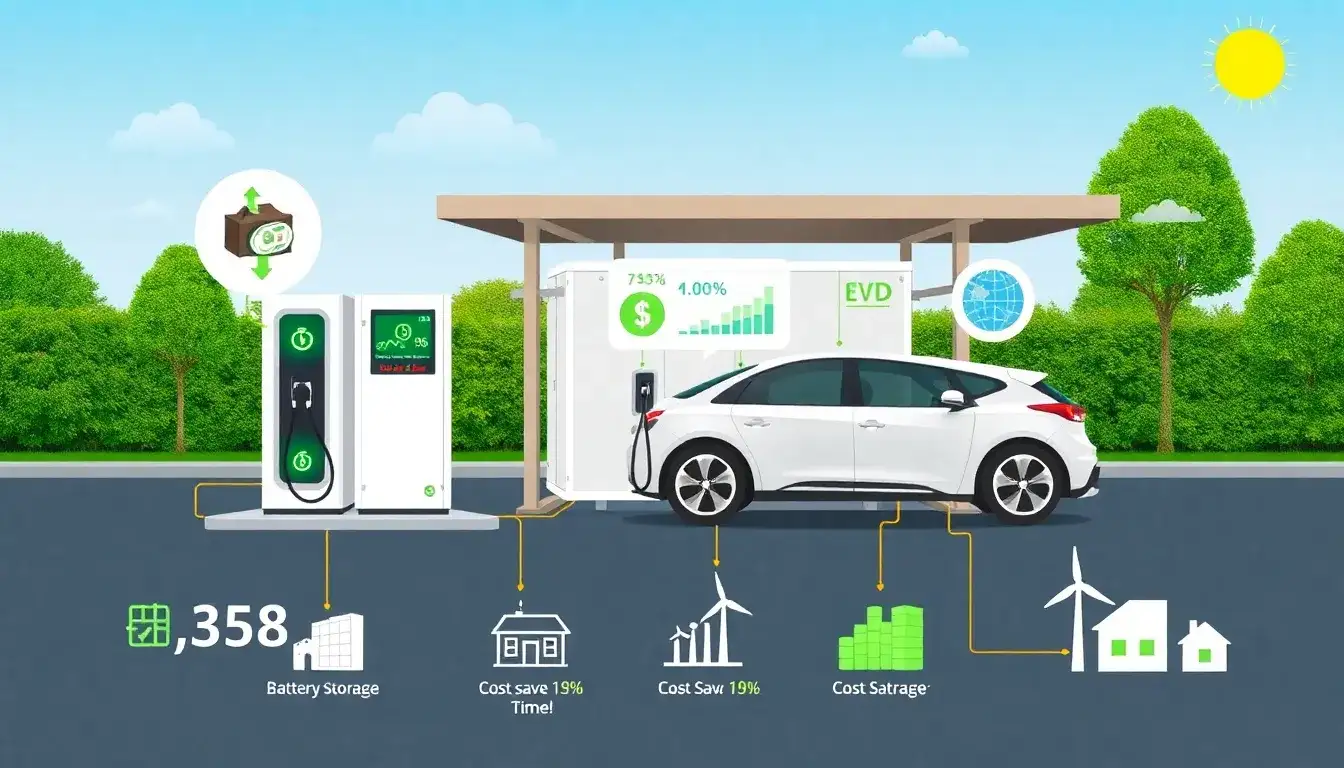
Integrating battery storage with EV charging offers several cost benefits:
-
Cost Savings Through Peak Shaving:
- Mechanism: Battery energy storage systems (BESS) allow for charging during off-peak hours when electricity is cheaper, and then use this stored energy during peak hours when electricity costs are higher.
- Outcome: This reduces the strain on the grid and significantly lowers energy costs for EV owners and charging stations.
-
Reduced Demand Charges:
- Mechanism: By storing energy during off-peak times and using it during peak demand periods, the need for high peak power from the grid is reduced.
- Outcome: This dramatically reduces demand charges, which are often extra fees for peak usage, leading to substantial savings.
-
Energy Arbitrage:
- Mechanism: Buying electricity at off-peak rates (when it is cheaper) and using or selling it back to the grid during peak hours (when it is more valuable).
- Outcome: This strategy maximizes cost savings and can even generate additional income.
-
Avoiding Grid Upgrades:
- Mechanism: Battery storage can absorb and release energy to match demand, mitigating the need for costly upgrades to increase grid capacity.
- Outcome: This reduces infrastructure costs for businesses and public charging stations, maintaining operational efficiency without significant investments in new grid infrastructure.
-
Integration with Renewable Energy:
- Mechanism: Storing excess renewable energy generated during sunny or windy periods for later use in EV charging.
- Outcome: This enhances the sustainability of EV charging by increasing the proportion of clean energy used, which can further lower energy costs if renewable sources are available at a lower cost.
Original article by NenPower, If reposted, please credit the source: https://nenpower.com/blog/what-are-the-cost-benefits-of-integrating-battery-storage-with-ev-charging/

