

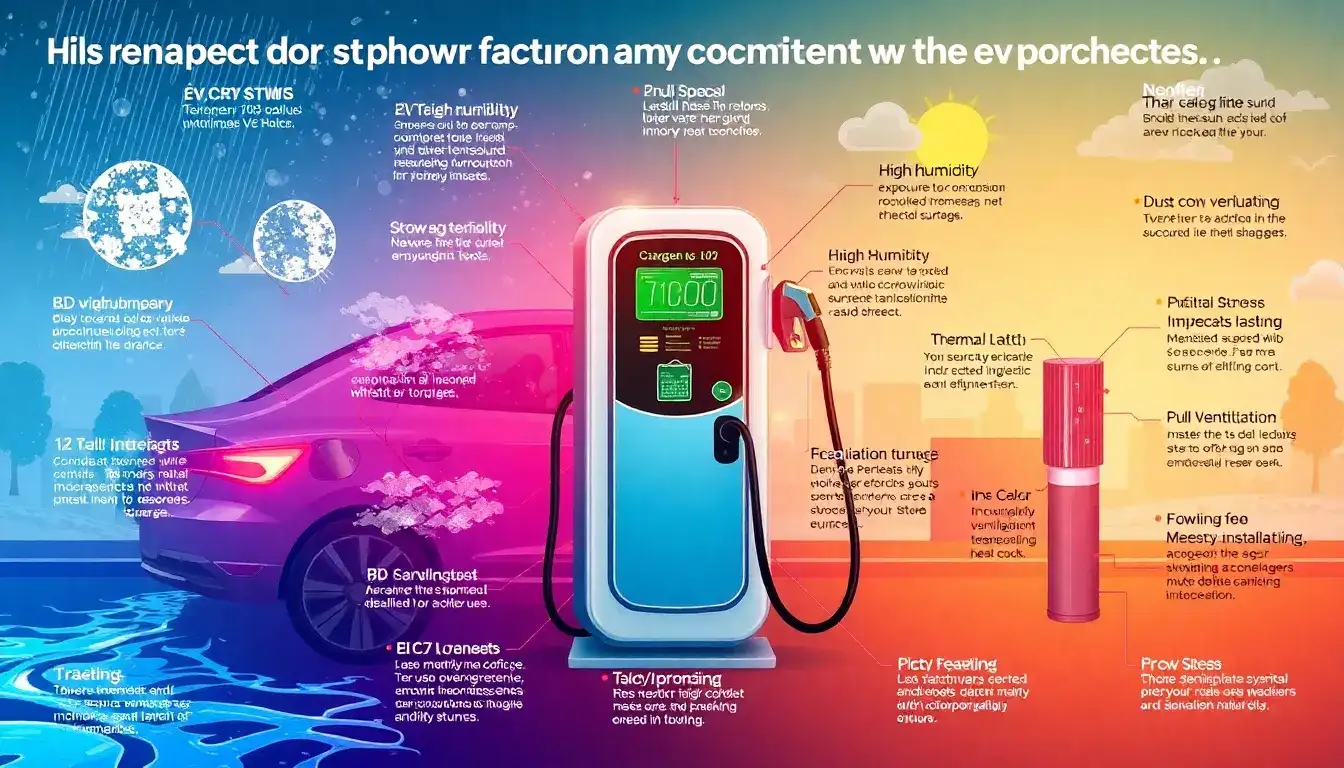
Environmental Stressors and Impacts
-
Extreme Temperatures
Prolonged exposure to intense heat or cold damages electrical components, reduces efficiency, and accelerates wear. Overheating during charging can degrade circuitry and trigger safety shutdowns. -
Moisture and Humidity
Rain, snow, or high humidity leads to corrosion, short circuits, and insulation breakdowns in connectors, cables, and internal circuitry. Improperly sealed units are especially vulnerable. -
Physical Degradation from Weather Exposure
UV radiation, ice, and temperature fluctuations weaken cables and connectors, causing cracks or brittleness over time. Frequent thermal expansion/contraction stresses materials. -
Inadequate Ventilation
Poor airflow exacerbates heat buildup during charging sessions, increasing fire risks and reducing component lifespan. Direct sunlight or enclosed installations worsen this issue. -
Electrical Surges
Environmental events like lightning strikes or grid fluctuations can overwhelm surge protection systems, damaging sensitive electronics.
Common Failure Modes
- Corrosion from moisture ingress in connectors and terminals.
- Insulation breakdown in cables due to thermal stress.
- Battery/charger overheating leading to fire hazards.
- Software malfunctions triggered by temperature extremes affecting communication systems.
Proper installation, weatherproofing, cooling systems, and certified surge protection mitigate these risks.
Original article by NenPower, If reposted, please credit the source: https://nenpower.com/blog/what-are-the-common-environmental-factors-that-cause-component-failures-in-ev-chargers/

