

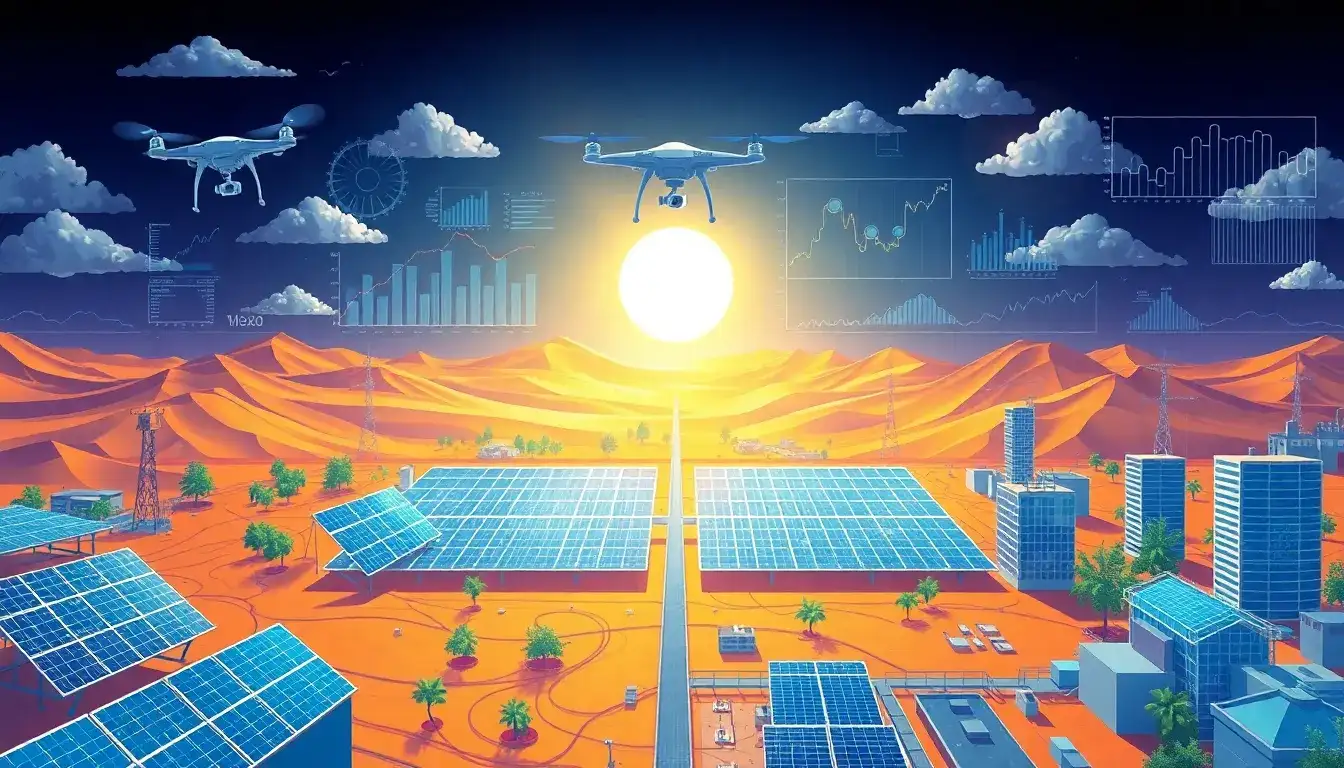
Common challenges in monitoring the performance of bifacial solar panels arise primarily due to their unique ability to capture sunlight from both their front and rear sides. This dual-sided nature introduces complexities not typically encountered with monofacial panels. Key challenges include:
1. Complex Irradiance and Albedo Measurement
Bifacial panels’ output depends heavily on both direct sunlight on the front and reflected light (albedo) received on the back. The variability of albedo caused by ground surface changes (e.g., grass, gravel, snow) and fluctuating shading conditions makes accurate irradiance measurement difficult.
- Rear irradiance is dynamic and affected by environmental factors such as shading from nearby objects or the panel’s own mounting system.
- Monitoring systems must capture the plane-of-array (POA) irradiance on both sides, which requires specialized sensors and protocols. Standard irradiance measurement methods often fail to account for the rear-side contribution adequately.
2. Soiling Loss Assessment
Measurement of soiling losses (dust, dirt, bird droppings) is complicated because soiling rates can differ on the front and rear surfaces. A bifacial panel has a single power output, making it challenging to isolate performance losses attributable to either side.
- Existing soiling measurement methodologies for monofacial panels are insufficient or unclear for bifacial modules.
- Methods like comparing clean and soiled modules or using optical sensors show inconsistent correlations with actual power losses and require costly maintenance.
3. Temperature Monitoring Challenges
Obtaining accurate back-of-module (BOM) temperature measurements is difficult because shading on the rear side can affect sensor readings. Since temperature impacts efficiency and degradation, precise thermal monitoring is critical.
- Sensor design and installation must minimize shading of rear cells to avoid measurement bias.
- Improvements such as redesigned sensor probes, stronger adhesives, and thinner cables have been implemented to reduce shading and installation complexity.
4. Shading and Installation Factors
The rear side is equally susceptible to shading, often from unexpected sources like mounting hardware or vegetation, which affects power output. Installation variables such as height, tilt, and orientation influence performance and must be optimized and monitored continuously.
5. Data Interpretation and Modeling Uncertainties
- Bifacial performance models vary widely, especially in predicting rear irradiance, module temperature, and tracking angles. This leads to significant discrepancies in yield predictions, complicating performance validation.
- Lack of standardized, universally accepted methodologies for performance monitoring results in uncertainties that can affect project economics and confidence in reported yields.
6. Environmental and Operational Variability
- Seasonal changes, weather conditions (snow, ice), and environmental factors can cause variations in reflected irradiance and performance, requiring adaptive monitoring strategies.
- Urban environments pose unique challenges with reflections from surrounding buildings altering rear-side irradiation.
Summary Table of Challenges
| Challenge | Description | Impact on Monitoring and Performance Assessment |
|---|---|---|
| Irradiance & Albedo Variability | Difficult to accurately measure both front and rear irradiance due to dynamic albedo conditions | Errors in estimating actual power generation from both module sides |
| Soiling Loss Complexity | Differing soiling rates front vs. rear, single power output complicates loss attribution | Inaccurate assessment of soiling impact and system losses |
| Temperature Measurement Issues | Rear shading affects BOM sensor accuracy | Reduced accuracy in thermal data critical for performance and safety |
| Shading & Installation Effects | Unexpected shading on rear side, installation parameters affect irradiance capture | Requires ongoing assessment to ensure optimal system performance |
| Modeling and Data Interpretation | Wide variance in modeling results and lack of consensus on methodology | Greater uncertainty in performance predictions and diagnostics |
| Environmental Variability | Seasonal snow, ice, urban reflections, and weather changes affect irradiance | Requires adaptive monitoring and correction strategies |
These challenges highlight the need for specialized monitoring equipment, sensor placement strategies, and data analysis approaches tailored to bifacial PV systems. Advanced techniques such as using calibrated bifacial reference modules, carefully designed BOM temperature sensors, and adherence to updated standards like IEC 61724-1 are critical steps to improve monitoring accuracy and reliability in bifacial solar panel performance.
Original article by NenPower, If reposted, please credit the source: https://nenpower.com/blog/what-are-the-common-challenges-in-monitoring-the-performance-of-bifacial-solar-panels/

