

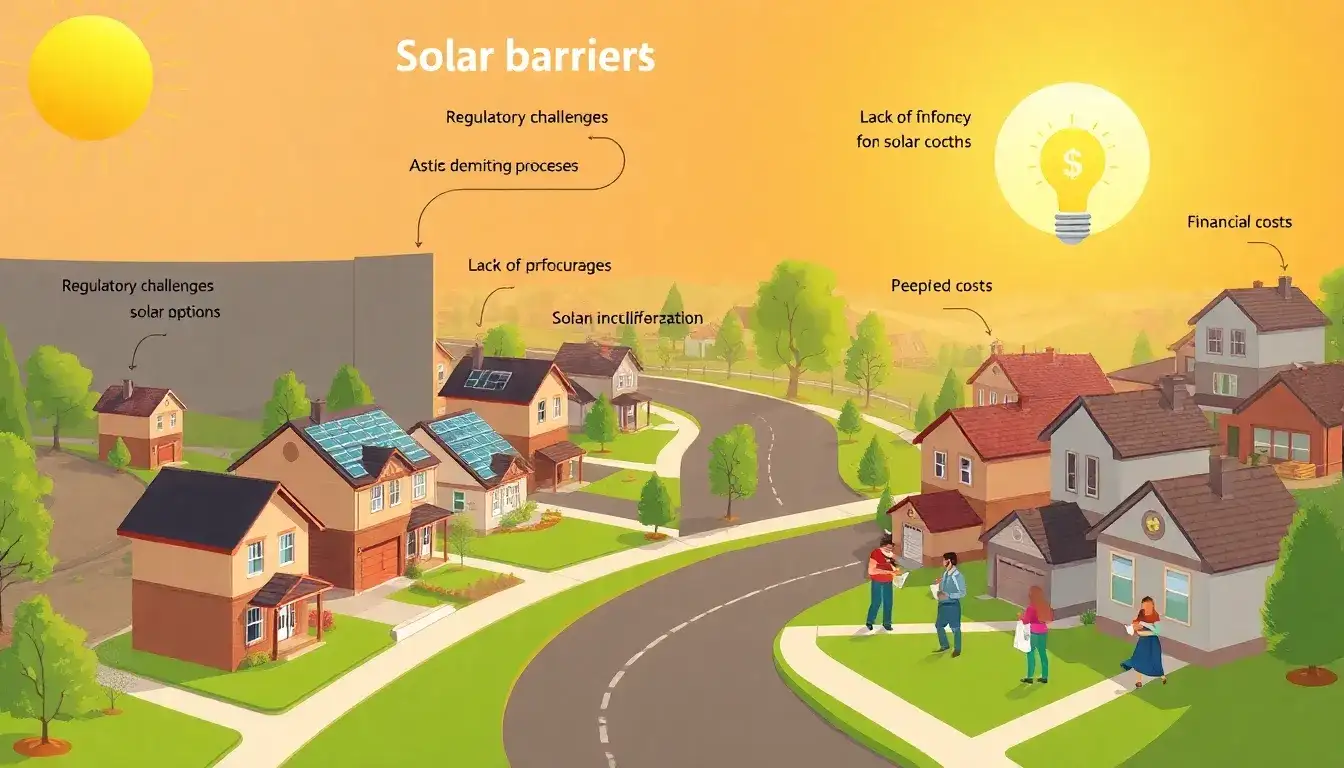
SolSmart identifies several common barriers to solar adoption in communities, which are primarily related to planning and zoning regulations. Here are some of the key barriers:
- Lack of Clear Policies: A lack of clear policies, plans, and regulations regarding solar energy use can significantly hinder solar adoption. Communities often lack specific guidelines for solar installations, creating uncertainty for potential adopters.
- Restrictive Zoning Ordinances: Outdated or overly restrictive zoning ordinances can limit where and how solar installations can occur. These regulations might not account for the unique characteristics of solar systems, such as treating them as principal structures rather than accessory uses.
- Setback Requirements: Applying principal structure setback requirements to accessory use ground-mounted solar installations can render them unfeasible. This is because these setbacks often leave insufficient yard space for such installations.
- Aesthetic and Screening Requirements: Excessive aesthetic requirements or mandates for screening solar installations can increase costs and discourage adoption. Allowing PV installations to be visible without unnecessary screening can help alleviate these barriers.
- Permitting Process Complexity: Complex and onerous permitting procedures can also discourage solar adoption by increasing the time and cost associated with solar installations. Streamlining these processes can encourage more widespread solar adoption.
By addressing these barriers through clarified policies and streamlined processes, communities can foster a more supportive environment for solar development.
Original article by NenPower, If reposted, please credit the source: https://nenpower.com/blog/what-are-the-common-barriers-to-solar-adoption-identified-by-solsmart/

