

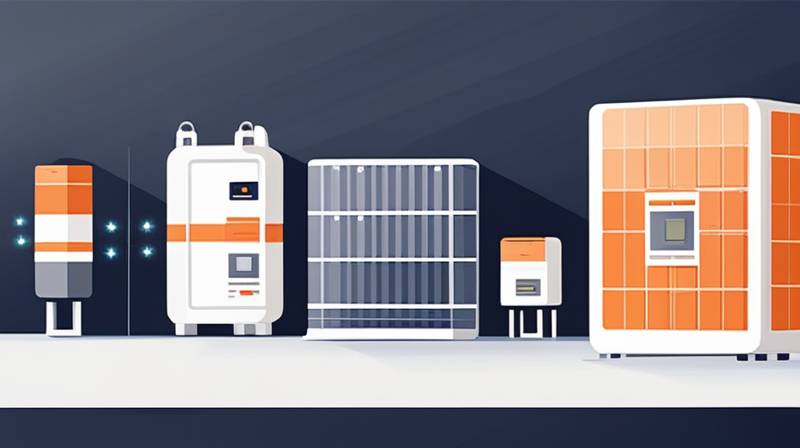
1. INTRODUCTION OF ENERGY STORAGE CLASSIFICATIONS: Energy storage companies can be categorized into various classifications based on several criteria, including 1. Technology type, 2. Application focus, 3. Market segment, 4. Storage duration. Each category serves distinct market needs and responds to varying demands for efficiency, capacity, and scalability. For instance, companies focusing on advanced battery technologies typically emphasize high energy density and quick charge/discharge capabilities, essential for applications like electric vehicles. The implications of these classifications extend to investment patterns, technological advancements, and regulatory frameworks, which collectively shape the dynamics within the energy sector.
2. TYPES OF ENERGY STORAGE TECHNOLOGIES: When looking at classifications driven by technology type, the landscape can be divided into various segments including chemical, mechanical, thermal, and electrical energy storage systems. Chemical storage encompasses batteries, such as lithium-ion and flow batteries, which store energy chemically and allow for quite versatile applications. Mechanical energy storage primarily includes technologies like pumped hydro and flywheels, designed to store kinetic or gravitational energy. Thermal energy storage is particularly appealing for coupling with renewable energy sources, allowing excess thermal energy to be collected during peak production times and used when demand spikes. Electrical storage, including capacitors and supercapacitors, offers rapid response capabilities, rendering essential services in stabilizing grids.
3. APPLICATION-ORIENTED CLASSIFICATIONS: Companies can also be categorized based on their specific application focus. This classification identifies those primarily working in grid-scale solutions, commercial applications, residential systems, and off-grid scenarios. Grid-scale energy storage systems are developed to ensure stability in power supply, enabling utilities to better handle demand fluctuations and integrate renewable sources like wind and solar power seamlessly. Commercial applications leverage energy storage for demand charge management, peak shaving, and operational cost reduction. Conversely, residential systems emphasize customizable energy solutions that facilitate home energy independence through efficient energy management. Off-grid applications cater to remote locations, providing essential power where traditional grid connections are unattainable.
4. MARKET SEGMENT CLASSIFICATIONS: The classification of energy storage enterprises can also be understood through an examination of market segments, such as startups, established firms, and government initiatives. Startups generally focus on innovative technologies and disruptive solutions, often attracting venture capital funding to propel their R&D forward. Established firms may have extensive resources and market experience, granting them an advantage in scaling operations. Furthermore, government-backed initiatives contribute to the development of important technologies through grants and public-private partnerships, playing a critical role in accelerating the energy transition process.
FREQUENTLY ASKED QUESTIONS
WHAT ARE THE ADVANTAGES OF EACH TYPE OF ENERGY STORAGE TECHNOLOGY?
Each category of energy storage technology offers unique advantages catering to diverse needs. For instance, lithium-ion batteries are renowned for their high energy density and long cycling life, making them suitable for electric vehicles and consumer electronics. Furthermore, they have seen substantial cost reductions due to advancements in manufacturing processes. Pumped hydro storage, recognized as a mature technology, provides substantial storage capacity and is capable of balancing large-scale supply and demand fluctuations. Mechanical storage devices such as flywheels deliver rapid response times critical for grid stabilization, while thermal storage solutions allow for large-scale integration of renewable resources, making them cost-effective in certain market conditions. Understanding these benefits enables stakeholders to choose the most fitting technology for their specific applications.
HOW CAN ENERGY STORAGE COMPANIES BE SUSTAINABLE?
Energy storage companies are increasingly emphasizing sustainability in their operations and product development. Strategies for fostering sustainability include utilizing environmentally friendly materials, implementing circular economy principles, and optimizing energy efficiency throughout the production and operational phases. By adopting sustainable sourcing practices, companies ensure that materials like lithium and cobalt are obtained ethically. Implementing circular economy principles involves designing products for longer life cycles, recyclability, and reusability, thereby minimizing waste. Moreover, optimizing energy efficiency not only reduces operational costs but also aligns with global climate goals. Stakeholders must consistently pursue innovations that mitigate negative environmental impacts while concurrently ensuring profitability and growth.
WHAT ROLE DO GOVERNMENT POLICIES PLAY IN ENERGY STORAGE TECHNOLOGIES?
Government policies are pivotal in the advancement and maturation of energy storage technologies. They can either propel or hinder the adoption of innovative solutions through incentives, regulations, and supporting frameworks. For instance, subsidies for renewable energy projects enhance energy storage’s viability, showcasing their indispensable nature when paired with intermittent energy sources. Additionally, regulatory initiatives can shape the operational landscape by establishing standards that influence technology development and deployment. As such, the role of public policy cannot be overstated; it drives investment into research and has a pronounced impact on market stability. In essence, cohesive policies aligned with clean energy objectives are crucial for promoting the scalability and affordability of energy storage technologies.
5. IMPORTANCE OF ENERGY STORAGE FOR RENEWABLE INTEGRATION: The connection between energy storage and renewable energy sources cannot be understated. As nations and companies pursue aggressive goals to transition to renewable energy, energy storage systems facilitate this shift by enabling effective integration. Energy storage allows for the mitigation of intermittency, thereby stabilizing supply, supporting grid reliability, and ensuring that energy produced from solar or wind sources is effectively utilized. It plays a significant role in unleashing the potential of these technologies. Without energy storage solutions, excess energy generated during peak production hours may be wasted. Energy storage thus acts as an enabler, creating a symbiotic relationship between renewables and traditional power systems while optimizing overall energy management.
6. EMERGING TRENDS IN ENERGY STORAGE Emerging technologies and innovative practices are redefining the energy storage sector. Presently, solid-state batteries are gaining attention due to their potential for higher energy densities and enhanced safety profiles compared to conventional lithium-ion counterparts. Additionally, grid-scale energy storage is seeing increased interest from utilities as it enables greater resilience and flexibility in energy systems. Trends such as decentralization, digitalization, and the advent of artificial intelligence are informing how energy storage services are offered and utilized. Digital solutions maximize every resource, creating a dynamic environment that allows for precise prediction and management of energy loads. As market dynamics continue to evolve, these emerging trends are likely to shape the operational landscape over the coming years.
7. FINANCIAL MODELS IN ENERGY STORAGE: The financial viability of energy storage technologies is a critical aspect of their widespread adoption. Various financial models, such as power purchase agreements (PPAs), energy as a service (EaaS), and community solar initiatives, foster investment and lower barriers for entry into the sector. PPAs provide a framework for customers to purchase renewable energy at stable prices, effectively reducing exposure to market volatility. EaaS models abstract the complexities of ownership and maintenance, allowing customers to access energy storage solutions without significant upfront capital outlay. Community solar initiatives enable collective investment in solar projects, thus democratizing access to renewable energy and storage systems. A detailed understanding of these models aids energy storage companies and consumers in determining sustainable paths forward that are both cost-effective and environmentally responsible.
8. FUTURE OF ENERGY STORAGE: The future of energy storage is poised for significant expansion, propelled by continued advancements in technology, decreasing costs, and governmental support. As global energy demands rise, the energy storage market is becoming an indispensable part of the transition to a more resilient and reliable energy future. Crucially, advancements in artificial intelligence and machine learning offer insights that can drastically improve energy management strategies and optimize the efficiency of storage systems. Collaborations across sectors will yield innovative solutions and rapidly increase deployment rates. With ongoing research into new materials and enhancement of existing technologies, the roadmap for energy storage is clear—it will fortify the energy landscape, forming a foundation for the future integrated renewable energy grid.
EMBRACING DIVERSIFICATION AND INNOVATION: As one evaluates the landscape of energy storage companies, the significance of diversification in technologies, applications, and financial models emerges as paramount. These classifications signify broader trends within the industry, influencing strategic responses from stakeholders, policymakers, and innovators alike. The evolution of energy storage systems extends beyond merely being ancillary components of the energy grid; they are fast becoming its backbone, enabling the integration of renewables and fundamentally altering energy consumption habits. Thus, understanding these classifications not only demonstrates their relevancy in meeting current demands but also highlights their role in shaping the future of sustainable energy solutions. The journey towards a sustainable energy landscape hinges upon continued innovation, investment, and collaborative efforts among various actors within the energy storage ecosystem, emphasizing the importance of multi-dimensional approaches to solve the challenges ahead.
Original article by NenPower, If reposted, please credit the source: https://nenpower.com/blog/what-are-the-classifications-of-energy-storage-companies/

