

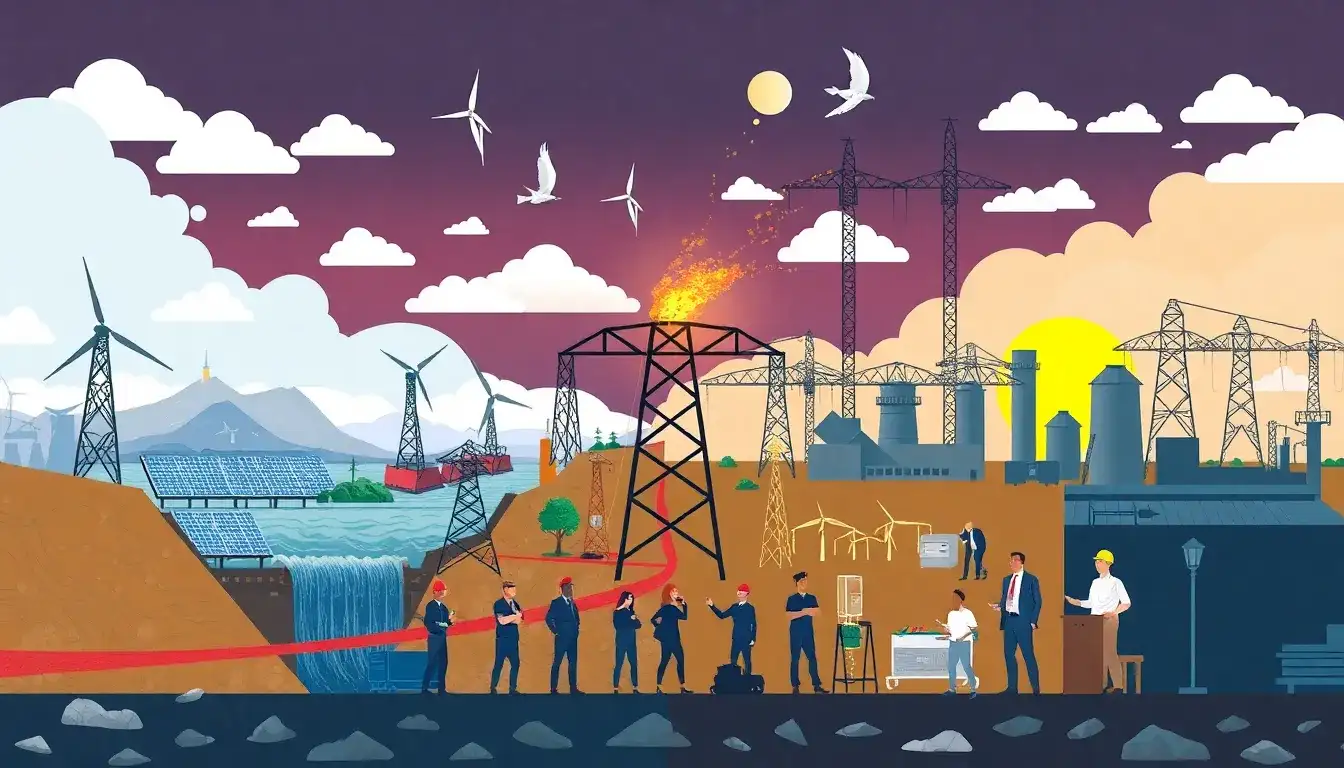
Vertically integrated utilities face several challenges when adopting utility-scale energy storage. These challenges are multifaceted and involve technical, economic, and regulatory factors.
Challenges
-
Economic Incentives and Market Structure
- Vertically integrated utilities operate under a regulated framework where they receive a fixed rate of return on investments. This structure may not provide strong incentives for energy storage, as it often relies on market price signals for economic viability.
- The lack of hourly price signals in non-competitive wholesale markets reduces opportunities for energy arbitrage, a key benefit of storage systems.
-
Investment Prioritization
- There is limited evidence of preferential investment in storage compared to other zero-emission generation sources like wind and solar. Investor-owned utilities, which include vertically integrated utilities, own a smaller share of storage capacity.
- This suggests that utilities might prioritize investments in generation technologies over storage.
-
Regulatory Environment
- The current regulatory framework often does not fully recognize the value that energy storage can provide to the grid, complicating adoption by vertically integrated utilities.
- Regulatory processes and market design can be barriers to integrating new storage technologies into existing systems.
-
Technological and Cost Challenges
- The high upfront capital costs and material supply chain issues associated with energy storage technologies like flow batteries and lithium-ion batteries pose significant challenges.
- While some emerging technologies offer promising solutions, they are still in development, and their integration into utilities’ operations may be slow due to cost and technological complexities.
-
Integration with Renewables
- As utilities increasingly incorporate renewables into their portfolios, long-duration energy storage is crucial for managing intermittency. However, the development and integration of such technologies remain challenging.
Addressing these challenges requires a combination of regulatory reforms, market incentives, and technological advancements to make utility-scale energy storage more viable and attractive for vertically integrated utilities.
Original article by NenPower, If reposted, please credit the source: https://nenpower.com/blog/what-are-the-challenges-faced-by-vertically-integrated-utilities-in-adopting-utility-scale-energy-storage/

