

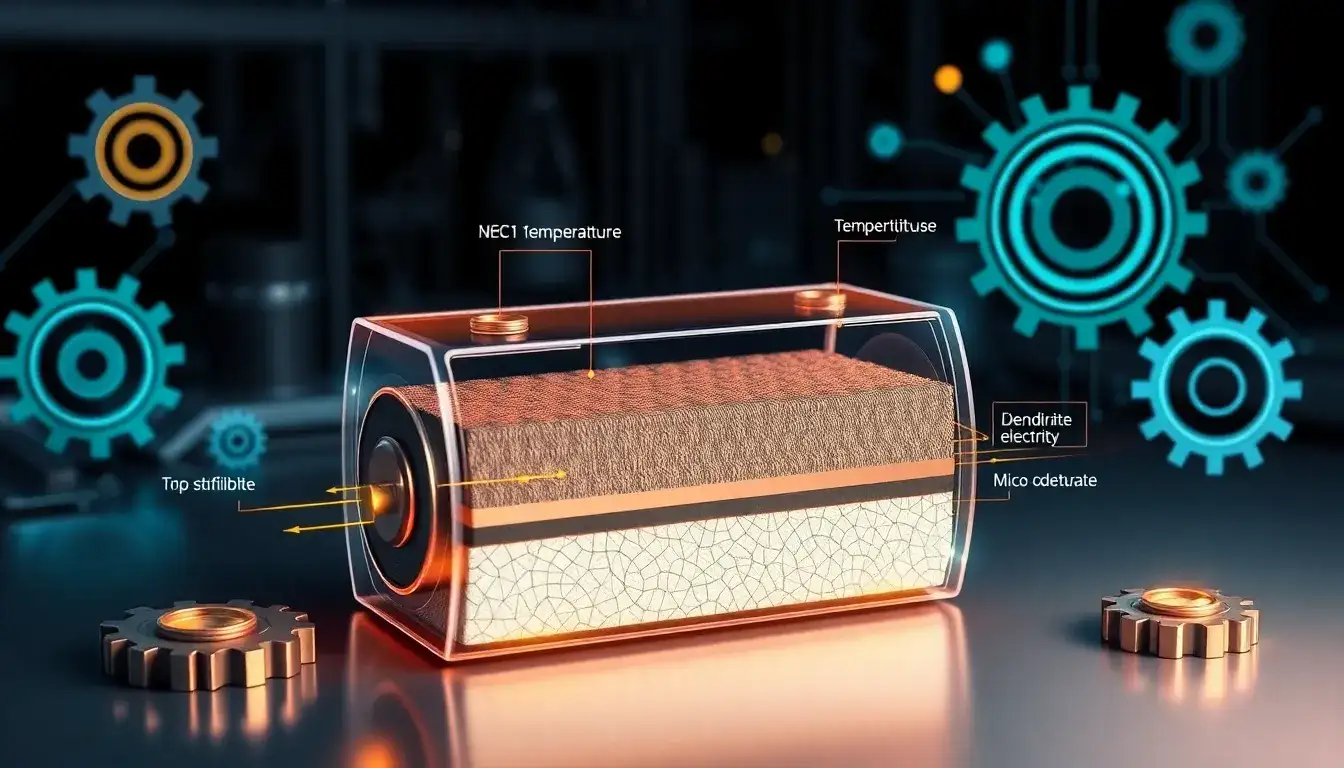
The challenges associated with using sulfide electrolytes in solid-state batteries primarily revolve around interfacial and stability issues, as well as manufacturing difficulties:
Interfacial Challenges
- Physical Contact and Interfacial Resistance: Achieving intimate and stable physical contact between sulfide electrolytes and cathode materials is particularly difficult due to their solid-solid interface. Poor contact leads to high interfacial resistance, which severely impairs battery performance.
- Chemical and Electrochemical Instability: Sulfide electrolytes often exhibit poor chemical stability and narrow electrochemical stability windows. They may undergo unwanted interfacial reactions with electrode materials, generating resistive phases or degrading the electrolyte itself.
- Unstable Interfacial Reactions: The reactions at the interface between sulfide electrolytes and electrodes can be complex, leading to the formation of interphases that are unstable and detrimental to ion transport.
Material and Processing Challenges
- Weak Air Stability: Sulfide electrolytes are sensitive to air exposure, which can lead to rapid degradation or moisture-related reactions, complicating handling and large-scale manufacturing.
- Electrode Fabrication Difficulties: Combining sulfide electrolytes with suitable binders and solvents for slurry-based electrode fabrication remains challenging, limiting the scalability of solid-state battery production.
- Limited Scalability: The overall manufacturing process is still developing due to complexities in material preparation, particle contact, and cell assembly techniques.
Mechanical and Electrochemical Performance
- Lithium Dendrite Formation: While sulfide electrolytes generally have good ionic conductivity, they must also possess sufficient mechanical strength to prevent lithium dendrite penetration, which can cause short circuits.
- Loss of Contact During Cycling: Mechanical stresses and volume changes during battery cycling can cause loss of interparticle contact, leading to increased resistance and capacity fade.
In summary, sulfide electrolytes offer attractive high ionic conductivity and moldability but face critical challenges including poor interfacial contact and stability, chemical and electrochemical instability, sensitivity to air, difficult electrode processing, and mechanical integrity under cycling. Addressing these issues is key for advancing sulfide-based solid-state batteries toward practical applications.
Original article by NenPower, If reposted, please credit the source: https://nenpower.com/blog/what-are-the-challenges-associated-with-using-sulfide-electrolytes-in-solid-state-batteries/

