

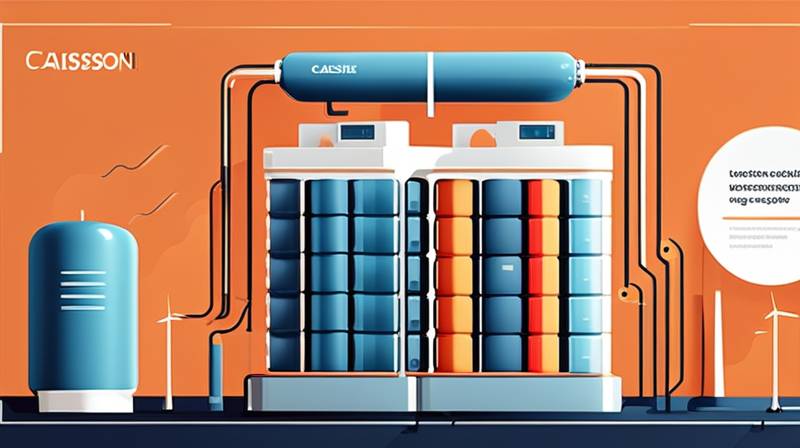
Caisson energy storage technologies represent innovative systems designed to harness and retain energy for later use. 1. Caisson technology is fundamentally based on submerged structures that can store potential energy in the form of hydraulic pressure, 2. These systems are environmentally friendly, 3. They can store large amounts of energy, and 4. The integration of this technology with renewable sources has vast potential. The caisson structures operate by utilizing the principles of buoyancy and water pressure, allowing them to effectively convert kinetic energy from excess generation periods into stored potential energy. This stored energy can later be converted back to electricity during periods of high demand, making it an integral asset in the transition to sustainable energy systems. A key advantage of this technology is its minimal environmental impact as it relies on water as the main medium for energy storage, thus reducing the need for large land areas or damaging ecosystems.
1. UNDERSTANDING CAISSON ENERGY STORAGE
Caisson energy storage systems blend the principles of civil engineering and fluid dynamics to create a unique solution for energy management. Essentially, a caisson is a waterproof structure that, when submerged, can harness significant levels of water pressure. This technique capitalizes on the weight of water above these structures, which acts as a medium to store energy efficiently. In operational terms, the caisson can be filled with water during periods of excess electricity generation from renewable sources like wind or solar. This influx of water increases the internal pressure, thus storing energy in a physical form that can later be released when demand spikes.
Technically, the efficiency of this process is crucial, and it is dependent on several factors, including the design of the caisson, the size, and the materials used. Maintenance and durability are also paramount, as the structures must withstand prolonged water exposure without suffering integrity loss. Innovative materials that resist corrosion and erosion are typically employed. Through these advancements, caisson energy storage can capable sufficient to meet significant power demands, providing an array of services from load levelling to frequency regulation in power systems.
2. ADVANTAGES OF CAISSON ENERGY STORAGE TECHNOLOGIES
In the landscape of energy storage solutions, caisson energy systems stand out for multiple reasons. Firstly, these systems are capable of storing immense quantities of energy compared to traditional battery systems. By utilizing water’s density and the principles of hydrodynamics, caisson technologies can hold energy in a cost-effective manner. This is particularly essential for utilities aiming to integrate more renewable energy sources into their grids. Furthermore, as caisson systems can be constructed deep underwater, their footprints on land are minimal, which also tends to generate public acceptance for new installations.
Another significant advantage associated with caisson energy storage is the environmental sustainability it offers. Unlike fossil fuel-based energy systems, caisson storage does not emit greenhouse gases during operation. The technology inherently supports renewable energy’s fluctuating nature by providing a reliable method to store excess energy without relying on rare materials or facing significant ecological concerns. Indeed, the life cycle of caisson technology, from construction through operation, tends to be less harmful than other conventional methods, making it a proactive choice for modern energy systems looking to embrace sustainability.
3. TECHNICAL CHALLENGES AND SOLUTIONS
Despite the significant advantages, caisson energy storage technologies face certain technical hurdles. One of the primary challenges is related to design complexity. The sophisticated nature of these structures requires advancements in engineering and architectural design to ensure they can withstand the immense pressures associated with deepwater storage. Innovations in computer modeling and material science are necessary to enhance the design process, leading to more reliable and efficient structures. Emerging technologies, such as 3D printing, could revolutionize the way caissons are manufactured, allowing for custom designs that maximize efficiency based on specific environmental conditions.
Another challenge is the integration with existing energy systems. Many current energy networks are not optimized for such a novel method of storage that operates predominantly underwater. Transitioning to a system that incorporates caisson technology requires significant investment and coordination among various stakeholders, from energy companies to local governments. Achieving interoperability between traditional and modern energy sources remains a barrier to widespread adaptation. However, pilot programs and governmental incentives can foster experimental processes that may facilitate this integration. Continued research and collaborative development will be essential in navigating the initial hurdles of widespread caisson technology deployment.
4. FUTURE PROSPECTS OF CAISSON ENERGY STORAGE
The future landscape of energy storage may see caisson technologies playing a pivotal role in fostering energy transition efforts around the globe. As worldwide energy demand increases, the need for efficient and sustainable storage solutions becomes ever more critical. The application of caisson systems can offer a feasible strategy for managing the innate variability associated with renewable energy production. Furthermore, with the global push toward decarbonization, caisson energy storage embodies the principles of green technology, thus aligning with international climate targets.
Moreover, collaborative efforts between governmental agencies, research institutions, and private enterprises could catalyze technological advancements that enhance the performance of caisson systems. Potential legislative support, focused on renewable energy incentives, could lead to increased investment in this field, allowing it to evolve and mature into a mainstream energy solution. This collaborative model ensures that caisson technology not only provides energy storage benefits but also contributes to community resilience during energy transition phases. By harnessing such collaborative efforts, the implementation and development of caisson technologies can propagate both locally and globally, creating a robust framework for future energy needs.
FREQUENTLY ASKED QUESTIONS
WHAT IS THE DIFFERENCE BETWEEN CAISSON ENERGY STORAGE AND TRADITIONAL BATTERY STORAGE?
The distinction between caisson energy storage and traditional battery storage is fundamentally based on the methodologies used to store energy. Caisson systems utilize the principles of hydraulic pressure, harnessing stored water in submerged structures. In contrast, traditional batteries convert electrical energy into chemical energy for storage, relying on electrochemical reactions. Capacity is another significant differentiator; caisson energy systems can store far larger quantities of energy than conventional batteries, making them particularly suitable for large-scale applications. Caisson technologies are engineered for long-term energy storage, while batteries often cater to short-duration needs. Furthermore, caisson systems present a lower environmental impact, given that they primarily use water as the storage medium, avoiding the ecological repercussions associated with mining rare materials for batteries. Therefore, while both technologies serve critical functions in the energy storage landscape, they do so through vastly different mechanisms and applications.
HOW ARE CAISSON ENERGY STORAGE SYSTEMS DEVELOPED AND IMPLEMENTED?
The development and implementation of caisson energy storage systems require the concerted efforts of engineers, architects, and energy experts alike. To begin, detailed feasibility studies are conducted to evaluate potential locations, focusing on geographic and hydrographic data to identify suitable underwater environments. This involves assessing the structural integrity of the site and analyzing any ecological ramifications that could arise from the construction. Once a site is chosen, engineers focus on the design phase, utilizing advanced software to create models that simulate operational scenarios.
After confirming the design, a rigorous construction plan unfolds. The structures must be created using durable materials resistant to environmental wear, such as high-strength concretes. As construction progresses, proper integration with existing energy management infrastructure is vital. Establishing communication protocols and ensuring functionality alongside other energy systems allows caisson technology to deliver its full potential. Subsequent to construction, ongoing monitoring is indispensable; advanced sensors can provide data on performance and structural integrity, guiding necessary upgrades or maintenance. Overall, the development of caisson energy storage is a multifaceted process that requires significant planning, collaboration, and operational oversight.
WHAT ARE THE COST IMPLICATIONS OF CAISSON ENERGY STORAGE SYSTEMS COMPARED TO OTHER ENERGY STORAGE METHODS?
When evaluating the cost implications of caisson energy storage systems versus other energy storage methodologies, several factors must be taken into account. While the initial capital expenditure for constructing caisson systems can be higher due to the complexity of design and engineering required, these structures offer longer operational lifespans and lower maintenance costs. Caisson systems can efficiently store energy at a large scale, thus reducing the cost per unit of stored energy significantly over time when compared to traditional battery systems, which may require frequent replacements.
Moreover, the levelized cost of electricity (LCOE) from caisson systems tends to be more competitive as they scale up, allowing operators to spread fixed costs across large quantities of energy stored and discharged. Additionally, when the environmental benefits are considered—such as reduced greenhouse gas emissions and lower ecological impacts—the overall value proposition of caisson energy storage becomes more compelling. Ultimately, while initial costs are a consideration, the long-term economic and environmental benefits presented by caisson technologies lend credence to their inclusion in future energy strategies.
Caisson energy storage technologies represent a progressive stride toward achieving sustainability goals in energy management. As demand surges and the global energy landscape evolves, these systems emerge as a viable solution with unparalleled capacity and efficiency. The implications of their dual advantages of environmental sustainability and technical robustness serve to highlight their importance in contemporary energy discourse. By addressing key challenges and exploring future prospects within this domain, it becomes clear that caisson technologies hold significant potential in contributing to a greener, more reliable energy future. Collaboration and innovation in this field can not only inform advancements in energy storage but also pave the way for comprehensive strategies aimed at improving resilience against climate fluctuations. This technology, while still developing, shows promise as an integral component of a multifaceted approach to global energy storage needs, ensuring that as the demand grows, innovative solutions like caisson energy systems will play a fundamental role in meeting those challenges head-on.
Original article by NenPower, If reposted, please credit the source: https://nenpower.com/blog/what-are-the-caisson-energy-storage-technologies/

