

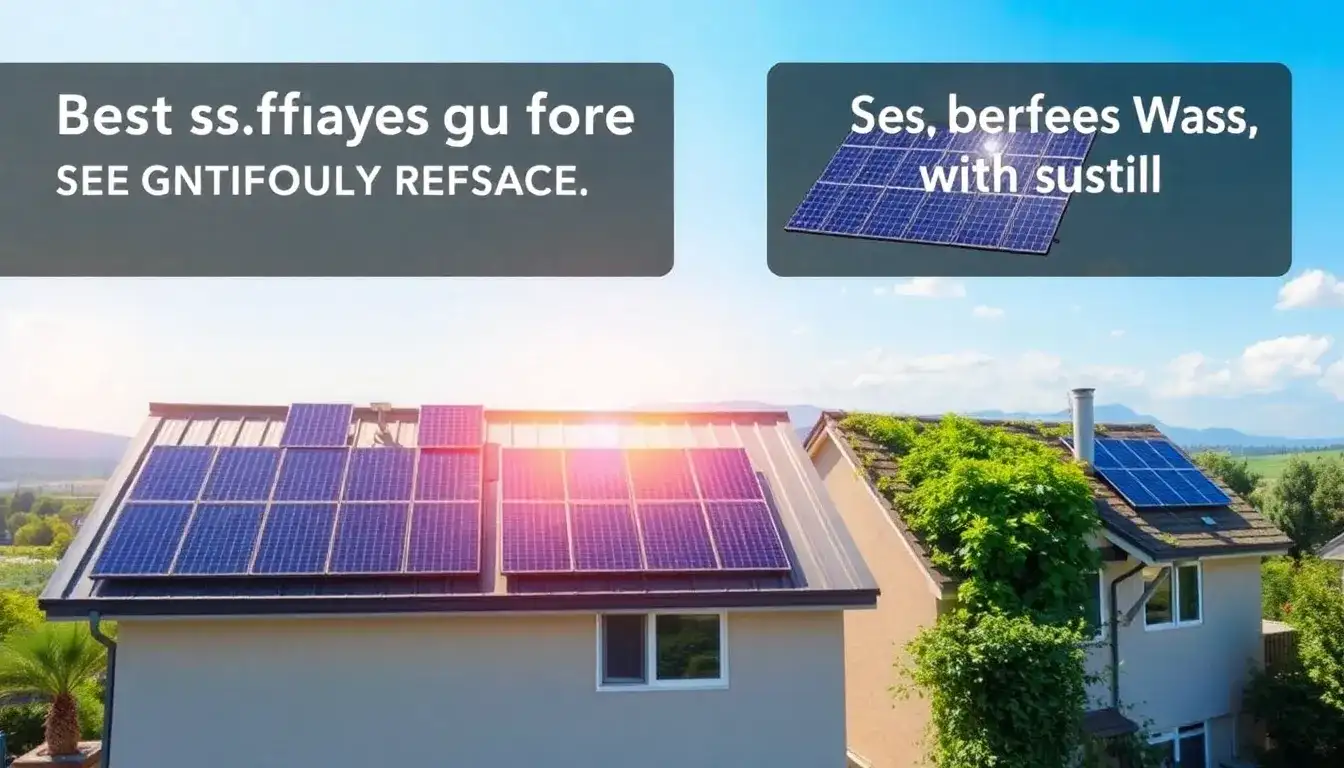
Best Types of Roofs for Bifacial Solar Panels
Bifacial solar panels are most effective when they can capture reflected sunlight from both sides. However, traditional residential rooftops are not ideal for bifacial panels due to limited space and the proximity to the roof surface, which restricts reflected light from reaching the rear of the panels. The best types of roofs or setups for bifacial solar panels typically involve configurations that allow for reflected sunlight to be utilized effectively:
- Cool Roofs: These roofs have reflective coatings that can increase the energy yield of bifacial solar panels. A study found that bifacial panels above cool roofs had an 8.6% higher energy yield compared to monofacial panels. Cool roofs can also help reduce building cooling costs by reflecting sunlight and keeping the roof surface cooler.
- Large Ground-Mounted Systems: These systems provide enough space for bifacial panels to absorb reflected light from surfaces like grass, gravel, or reflective materials, maximizing their efficiency.
- Canopies and Awnings: These structures can be made with bifacial panels to generate energy from both sides while providing partial shade. They are particularly useful for areas where traditional rooftop installations are not feasible.
- Reflective Ground Surfaces: Installing bifacial panels over surfaces with light-colored materials or reflective coatings can enhance efficiency by increasing the amount of reflected sunlight captured by the panels.
In summary, bifacial solar panels work best in settings where there is ample space for sunlight reflection, such as ground-mounted systems or specially designed canopies, and when used with cool or reflective surfaces.
Original article by NenPower, If reposted, please credit the source: https://nenpower.com/blog/what-are-the-best-types-of-roofs-for-bifacial-solar-panels/

