

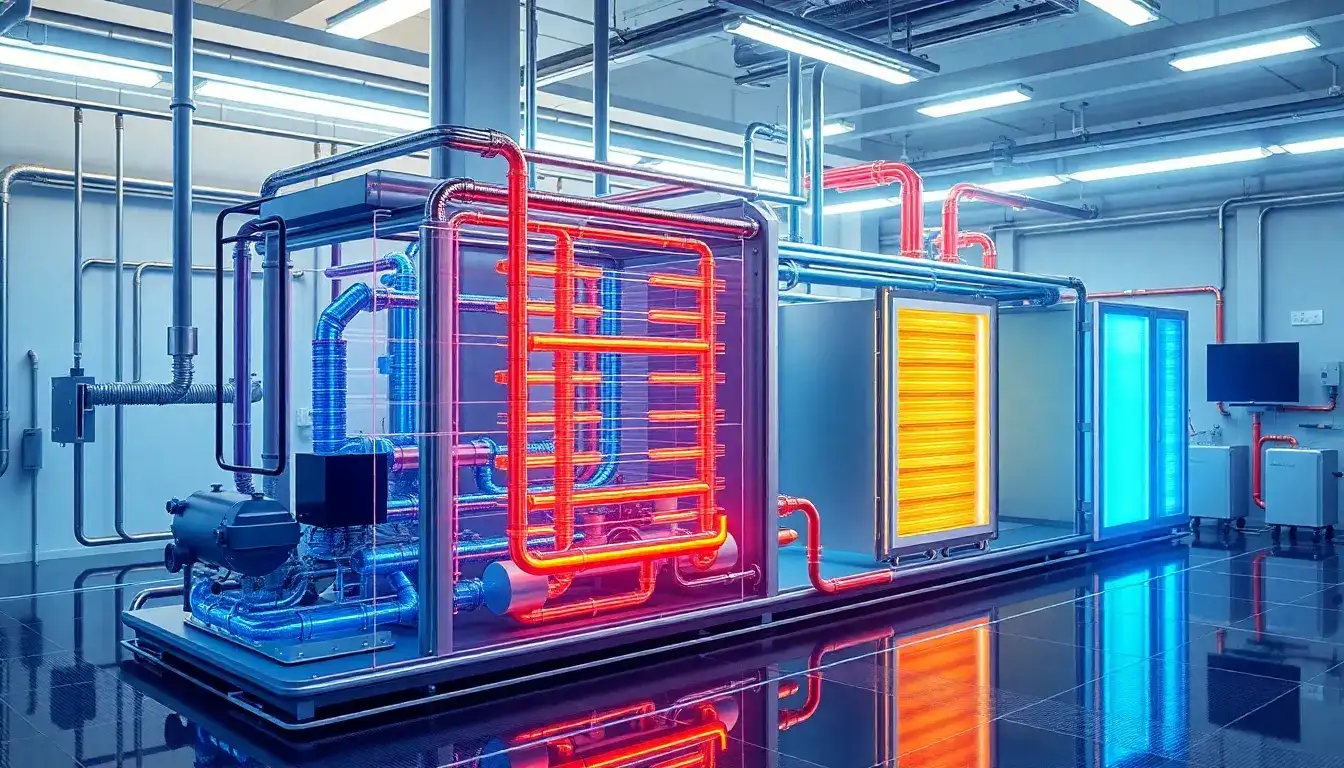
Thermal Management Strategies for Flow Batteries
1. Liquid Cooling
Liquid cooling is highly effective for managing thermal energy in flow batteries. This method involves circulating a coolant (such as water or a specialized fluid) around the battery components to absorb heat. Liquid cooling can maintain a uniform temperature, which is crucial for maximizing battery performance and lifespan.
2. Air Cooling
Air cooling is a cost-effective alternative and can be suitable for smaller installations. It involves using fans or natural convection to dissipate heat. While less efficient than liquid cooling, air cooling can be sufficient for applications with lower cooling demands.
3. Hybrid Cooling Systems
Combining liquid and air cooling methods can provide flexibility and efficiency. This approach allows for the use of liquid cooling in high-demand situations and air cooling for lower demand periods, optimizing energy consumption and performance.
4. Temperature Control and Monitoring
Implementing a robust temperature control and monitoring system is essential. This involves sensors and control systems to maintain optimal temperatures and prevent overheating, which can lead to reduced efficiency and increased risk of failure.
5. Insulation and Design Optimization
Optimizing the design of the battery system to minimize heat generation and improve heat dissipation can significantly enhance thermal management. This includes using materials with high thermal conductivity and designing the system layout for efficient airflow or coolant circulation.
6. Dielectric Immersion Cooling
Although primarily associated with other battery types, dielectric immersion cooling—where battery components are submerged in a non-conductive liquid—could also be explored for flow batteries if adapted appropriately. This method offers excellent temperature uniformity and high efficiency.
Implementation Considerations
- Scalability: Consider solutions that can scale with the size of the flow battery installation.
- Energy Efficiency: Optimize thermal management systems to minimize additional energy consumption.
- Environmental Adaptability: Ensure systems can operate efficiently in various environmental conditions.
By integrating these strategies, flow battery systems can achieve optimal performance, safety, and longevity.
Original article by NenPower, If reposted, please credit the source: https://nenpower.com/blog/what-are-the-best-thermal-management-strategies-for-flow-batteries/

