

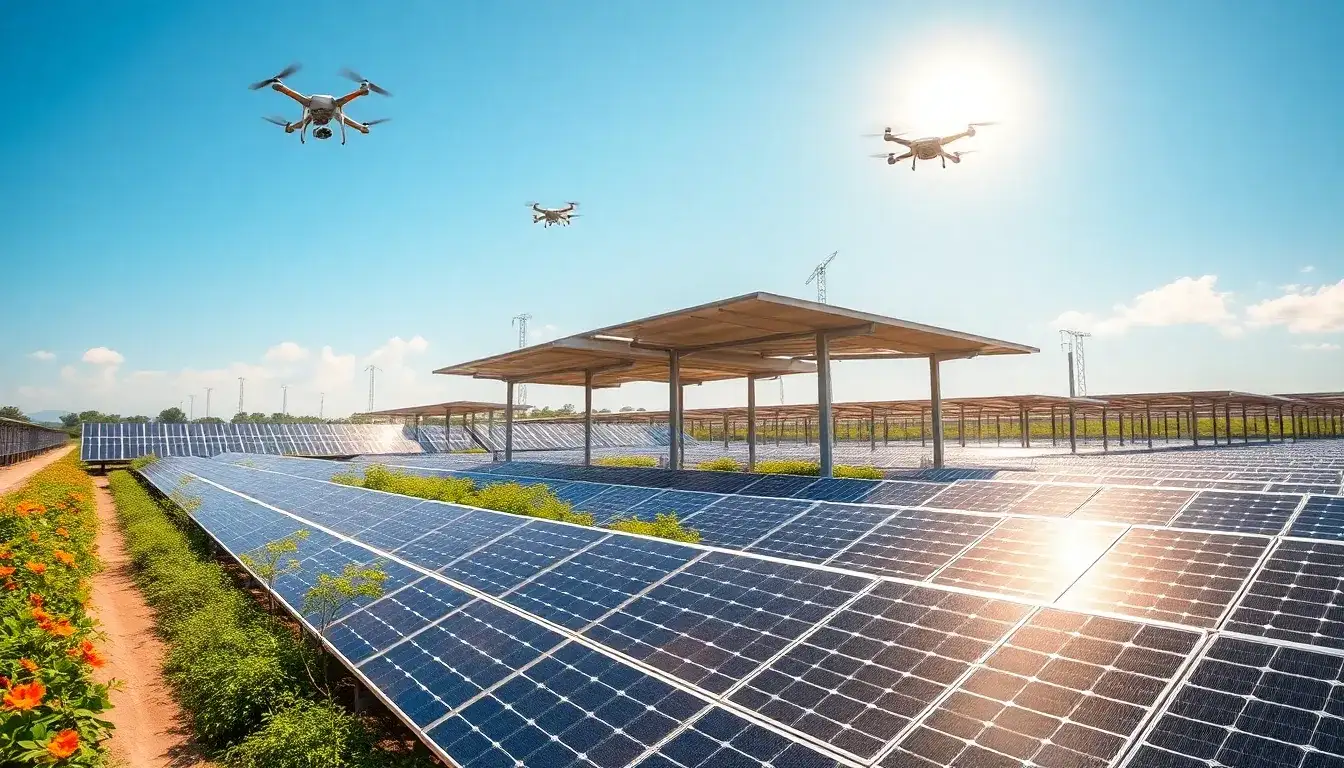
To minimize the impact of high temperatures on solar panels, follow these best practices:
1. Optimize installation and airflow
Ensure proper spacing between panels and mounting surfaces to allow natural airflow for passive cooling. Install panels at an optimal angle and orientation to balance sunlight exposure and heat dissipation.
2. Choose panels with a low temperature coefficient
Select solar panels with a low temperature coefficient (e.g., -0.3%/°C instead of -0.5%/°C) to reduce efficiency losses in high heat.
3. Use passive cooling techniques
Employ heat sinks, reflective coatings, or light-colored mounting surfaces to reflect excess heat. Ensure adequate ventilation around panels to prevent heat buildup.
4. Consider active cooling systems
For extreme climates, use water-cooling systems (spraying/misting) or forced-air circulation to lower panel temperatures, though these methods may increase costs.
5. Prioritize material innovations
Opt for advanced designs like bifacial solar panels that absorb light from both sides, reducing temperature sensitivity, or N-type cells (if available) for better heat tolerance.
6. Maintain cleanliness
Regularly clean panels to prevent dust or debris from trapping heat and reducing efficiency.
7. Monitor environmental factors
Avoid installations near heat-reflecting surfaces (e.g., dark roofs) and ensure shade-free positioning to balance light exposure and heat management.
Key Metrics:
- Optimal temperature: ~25°C (77°F).
- Efficiency loss: Typically 0.3–0.5% per °C above 25°C.
- Critical threshold: Panels can reach 66°C (150°F+) in direct sunlight, necessitating proactive cooling.
Original article by NenPower, If reposted, please credit the source: https://nenpower.com/blog/what-are-the-best-practices-to-minimize-the-impact-of-high-temperatures-on-solar-panels/

