

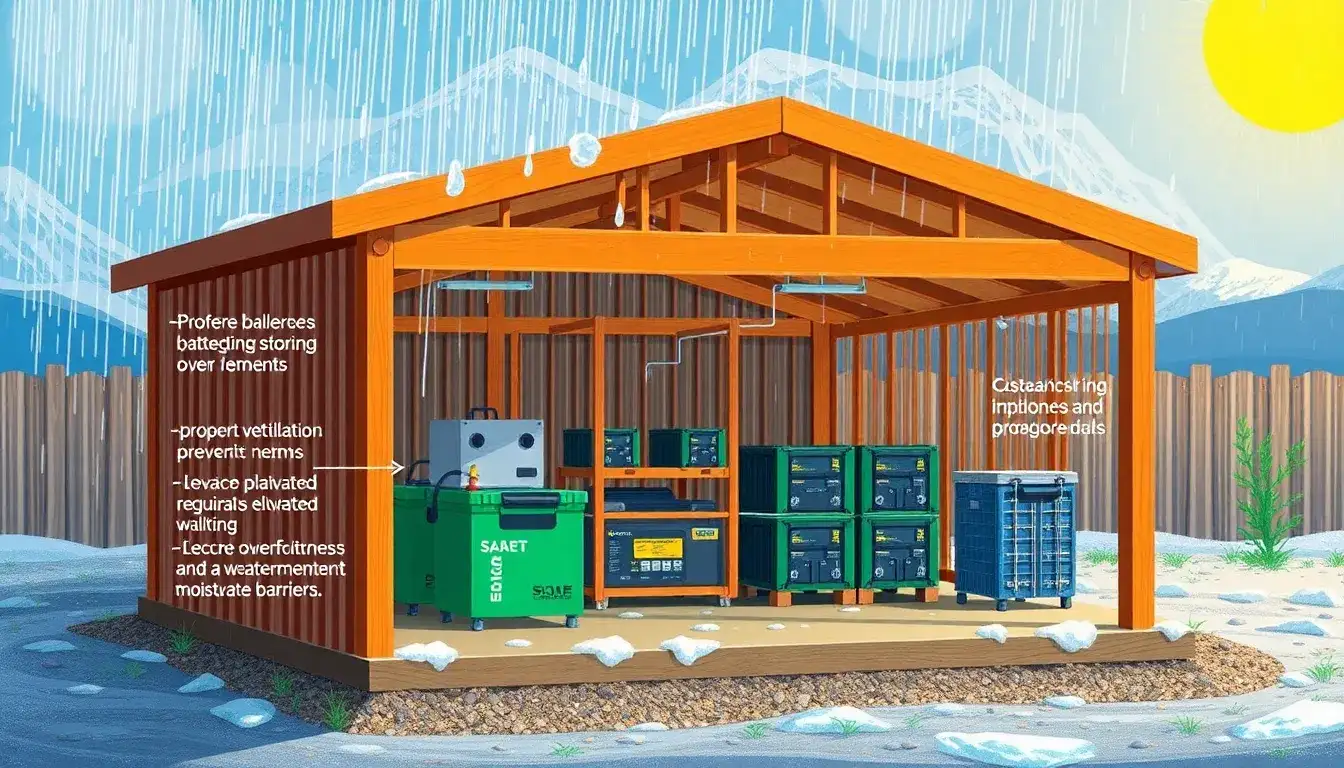
Storing solar batteries during extreme weather requires careful planning and execution to ensure their longevity and safety. Here are some best practices for storing solar batteries in such conditions:
Best Practices for Storing Solar Batteries During Extreme Weather
1. Installation Location
- Elevated and Protected Areas: Install batteries in well-protected, elevated areas to minimize the risk of flooding. This ensures that the batteries are safe from water damage.
- Avoid Direct Sunlight: Protect the batteries from direct sunlight, as excessive heat can degrade their performance and lifespan.
2. Safety and Emergency Access
- Fire Suppression Systems: Ensure that the installation area has access to fire suppression systems and is designed with fire-rated materials.
- Emergency Access: Ensure that first responders and maintenance personnel have easy access to the batteries in case of emergencies.
3. Temperature Management
- Optimal Operating Temperature: Most batteries perform optimally at temperatures between 40°F and 90°F. Protect them from temperature extremes to maintain efficiency and prolong lifespan.
- Thermal Insulation: Use insulation or earth-sheltered enclosures to maintain stable temperatures.
4. Regular Maintenance
- Monitoring Systems: Install monitoring systems to track battery performance and identify any issues promptly.
- Depth of Discharge (DoD): Manage the depth of discharge based on the battery type to avoid deep discharges, which can reduce battery lifespan.
- Charging and Discharging: Balance charging and discharging to prevent overcharging or undercharging, both of which can harm the battery.
5. Preparation for Extreme Weather Events
- Flood Planning: Determine the 500-year flood level and ensure the batteries are installed above this level to avoid flood damage.
- Wind Protection: Secure outdoor installations against strong winds by using robust containers or shelters.
6. Local Regulations and Incentives
- Compliance with Local Codes: Familiarize yourself with local regulations and building codes before installation.
- Incentives: Explore local incentives for solar energy storage that can help offset costs.
By following these best practices, you can effectively store and maintain solar batteries during extreme weather conditions, ensuring their longevity and optimal performance.
Original article by NenPower, If reposted, please credit the source: https://nenpower.com/blog/what-are-the-best-practices-for-storing-solar-batteries-during-extreme-weather/

