

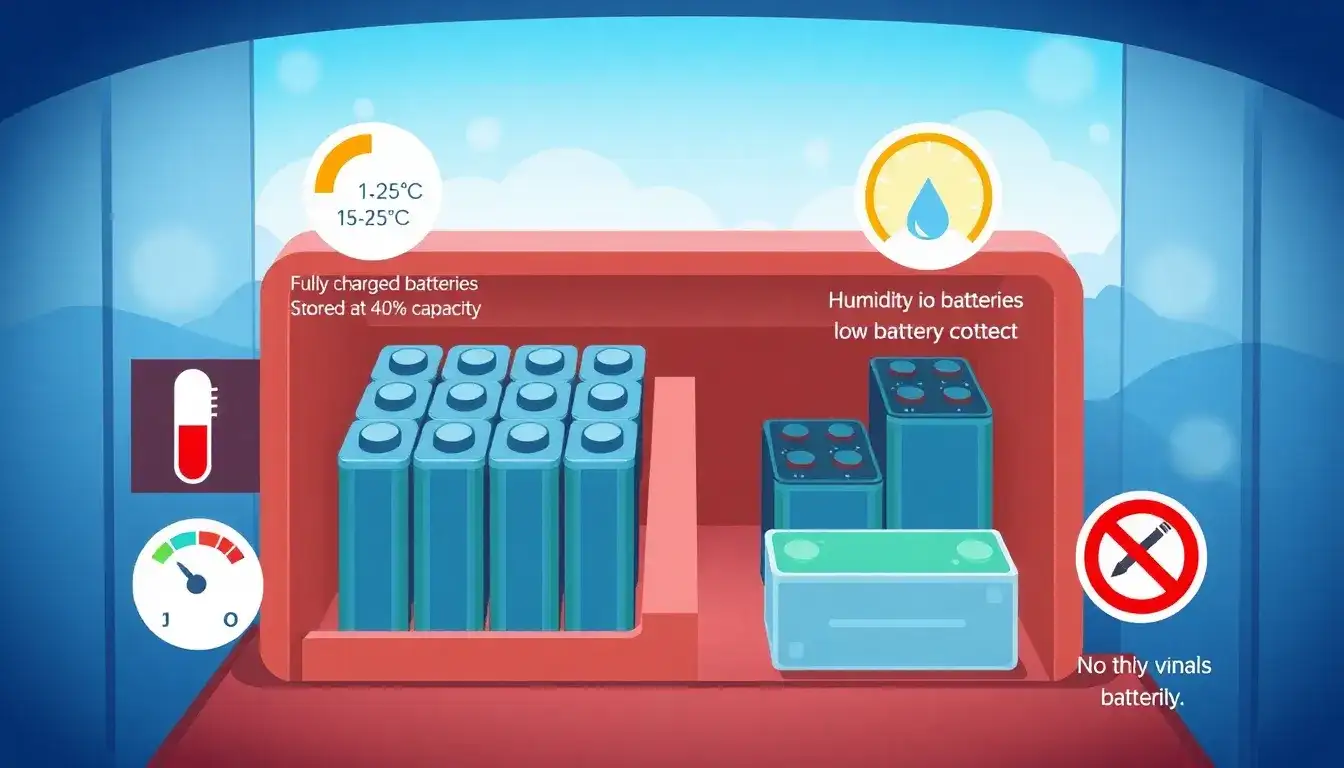
Best Practices for Storing Lithium-Ion Batteries
1. Charge Level
- Optimal Charge for Storage: Store lithium-ion batteries at a charge level between 40% and 60%. This reduces stress on the cells and helps extend battery life.
- Avoid Full Charge: Never store lithium-ion batteries when they are fully charged, as this can lead to overcharging and reduce their lifespan.
2. Storage Environment
- Dry and Well-Ventilated Area: Store batteries in a dry, well-ventilated place at room temperature (ideally between 10°C and 30°C).
- Avoid Extreme Temperatures: Ensure the storage area is away from direct sunlight, heaters, or any ignition sources.
- Avoid Refrigeration: Do not store batteries in a refrigerator, as this can cause internal condensation when brought back to room temperature, potentially leading to safety risks.
3. Isolation and Protection
- Fireproof Containers: Use lithium-ion battery fireproof safety bags or other fireproof containers when storing batteries to mitigate fire risks.
- Prevent Contact: Ensure batteries are not touching each other during storage to prevent accidental short circuits.
- Protect Terminals: Cover battery terminals with electrical insulating material to prevent accidental shorts.
4. Safety Precautions
- Remove from Devices: Before long-term storage, remove lithium-ion batteries from devices to avoid any accidental discharge or electrical stress.
- Monitor and Inspect: Regularly inspect stored batteries for signs of damage or aging, such as swelling or leakage.
- Access to Fire Extinguishers: Ensure there is easy access to a fire extinguisher rated for electrical fires nearby the storage area.
5. Regular Maintenance
- Charge Maintenance: For long-term storage, recharge batteries to 40-60% capacity every few months to maintain cell health and stability.
- Safety Education: Educate individuals handling lithium-ion batteries on proper storage practices and how to identify damaged batteries.
Original article by NenPower, If reposted, please credit the source: https://nenpower.com/blog/what-are-the-best-practices-for-storing-lithium-ion-batteries-when-not-in-use/

