

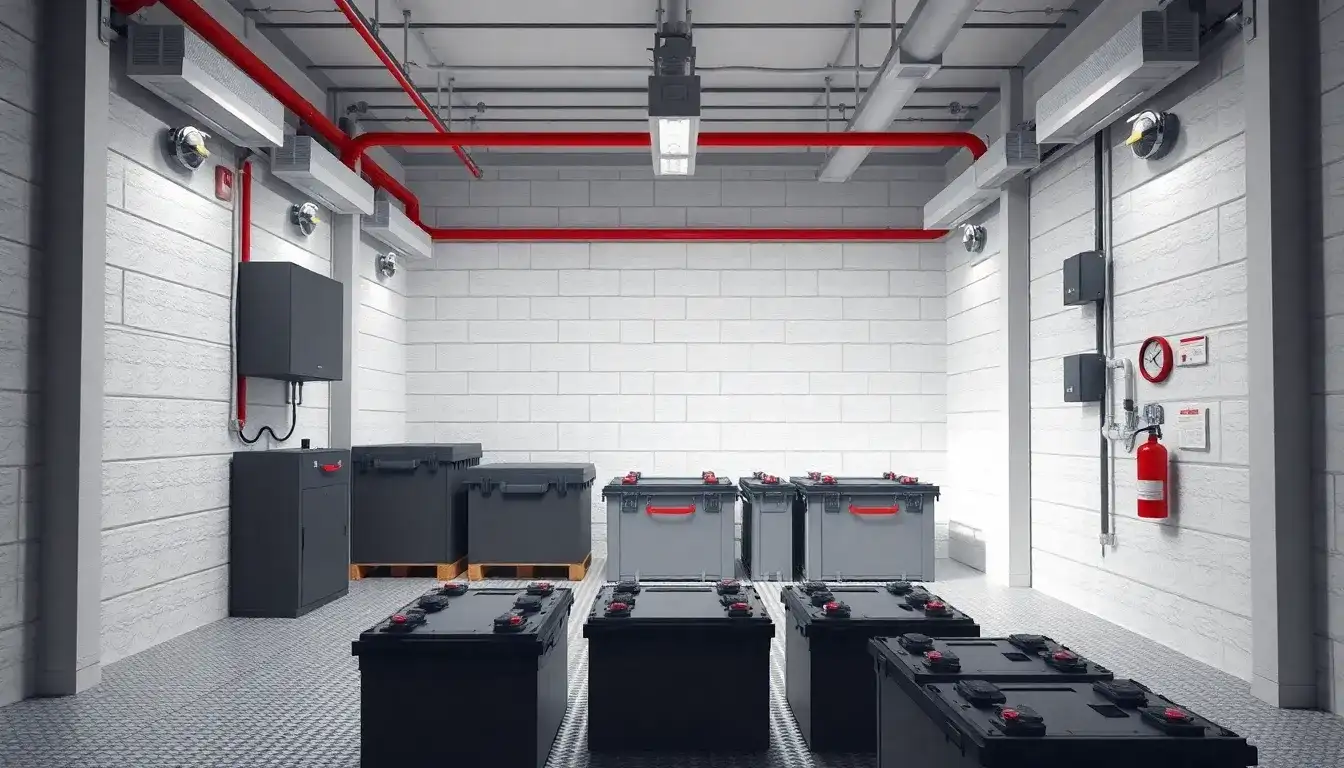
Key Best Practices for Lithium-Ion Battery Storage
- Charge Level:
Store batteries at a partial charge, ideally between 40% and 60% capacity. Avoid storing fully charged or fully depleted batteries as this stresses the cells and increases risk of degradation or thermal events. - Temperature Control:
Keep batteries in a cool, dry, and well-ventilated place with stable temperatures. Ideal storage temperature is around room temperature or slightly cooler, approximately 10°C to 30°C (50°F to 86°F). Avoid extreme temperatures, temperature fluctuations, and damp conditions. Do not store batteries in refrigerators or freezers to prevent condensation damage. - Physical Separation and Containment:
Store batteries so they are not touching each other to prevent short circuits. Use metal cabinets or chemical storage cabinets to isolate batteries. Fireproof safety bags or fireproof containers are highly recommended to contain any thermal events and reduce fire spread risk. - Storage Environment:
Reserve a specific area only for lithium-ion battery storage, away from heat sources and direct sunlight. The area should be dry and have good air circulation to dissipate heat. - Remove Batteries from Devices:
Remove lithium-ion batteries from devices if they will not be used for more than a few days to prevent device-related electrical faults or stress. - Regular Monitoring for Long-Term Storage:
For storage longer than one month, inspect batteries every three months, recharge to maintain 40-60% state of charge, and perform occasional charge-discharge cycles to keep the cells active and stable. - Avoid Unsafe Charging Practices:
Never charge batteries unattended or inside vehicles. Designate a specific charging area with quality chargers to reduce risk during charging, which can also trigger thermal runaway if done improperly.
Summary Table of Best Practices
| Aspect | Recommendations |
|---|---|
| Charge Level | Store at 40-60%, avoid fully charged or depleted cells |
| Temperature | Cool, dry, well-ventilated; ideal 10–30°C (50–86°F) |
| Physical Separation | Batteries not touching, use metal or fireproof containers |
| Storage Environment | Dedicated area, away from heat and sunlight |
| Battery Removal | Remove from device when not in use for >3 days |
| Long-Term Storage | Inspect quarterly, recharge, cycle occasionally |
| Charging Practices | Never unattended, use quality charger in designated area |
By following these practices, the risk of thermal runaway can be significantly reduced while preserving battery life and safety in storage.
Original article by NenPower, If reposted, please credit the source: https://nenpower.com/blog/what-are-the-best-practices-for-storing-lithium-ion-batteries-to-prevent-thermal-runaway/

