

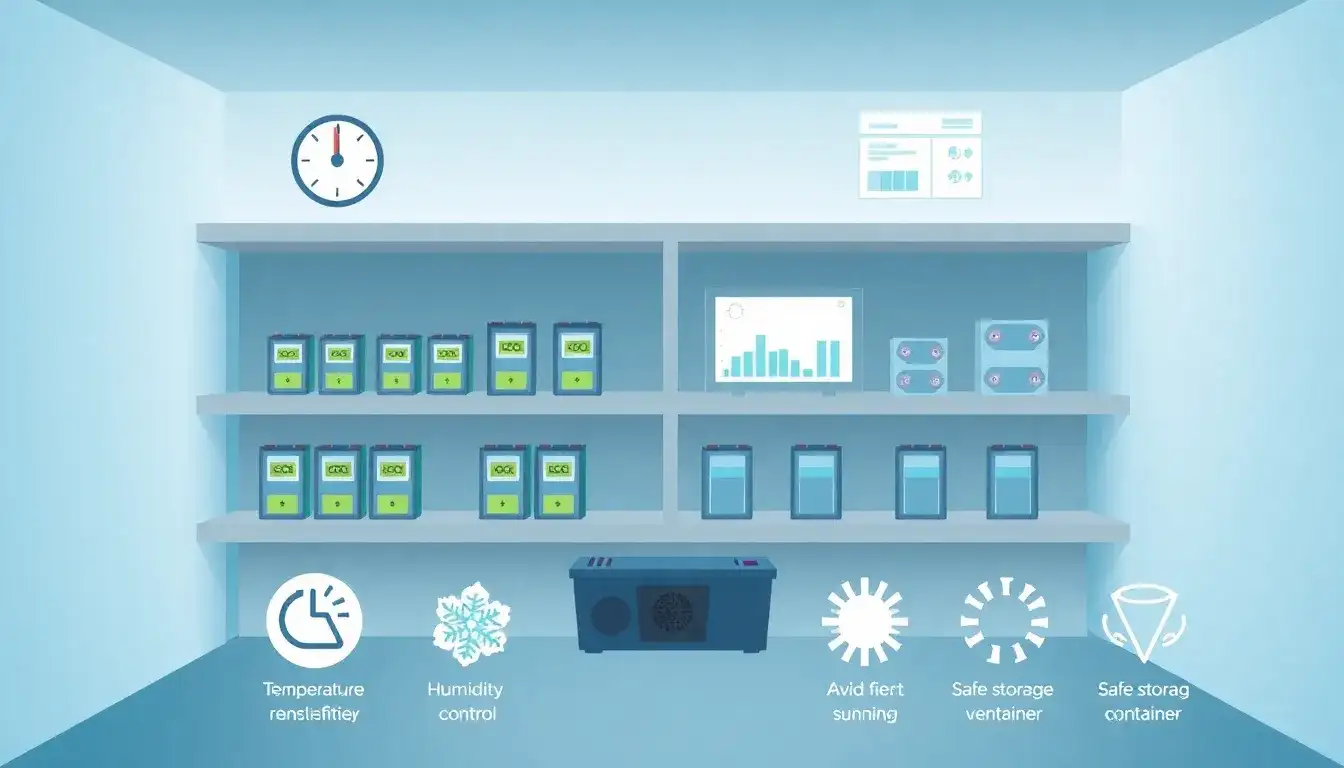
The best practices for storing lithium-ion batteries to prevent degradation and enhance safety focus on controlling temperature, charge level, physical conditions, and using proper containment. Key recommendations include:
Temperature Control
- Store batteries in a cool, dry, and well-ventilated place away from direct sunlight, heat sources, and frost to prevent thermal stress that accelerates degradation. Ideal storage temperature is around room temperature or lower but not in a refrigerator due to condensation risks when brought back to room temperature.
- Avoid excessive heat and cold as lithium-ion batteries are sensitive to extreme temperatures which reduce their lifespan and safety.
Charge Level
- Remove batteries from devices before storage to avoid unnecessary drain or damage.
- Store lithium-ion batteries at roughly 40-60% charge capacity or about 3.8 volts per cell, which is roughly 60-70% state of charge. Avoid storing fully charged batteries since this stresses the cells and accelerates capacity loss.
- Use chargers with a “storage mode” to bring batteries to the optimal storage voltage if the battery or charger supports this feature.
- Avoid overcharging batteries. Unplug chargers once batteries reach about 80-100% charge to prevent thermal runaway risks.
Physical Safety and Organization
- Store batteries so they do not touch each other to prevent short circuits or physical damage, preferably in dedicated storage areas or metal cabinets designed for battery safety.
- Use fireproof battery storage bags or fireproof containers for added safety, especially for larger quantities of batteries.
- Contain potential leaks with drip trays or bunded cabinets as damaged lithium-ion batteries can leak electrolyte, posing fire hazards.
General Handling and Storage Practices
- Place batteries in storage if unused for more than three days to avoid damage or hazardous conditions.
- Ensure storage areas are away from ignition sources, mechanical equipment, or open flames to minimize fire risk.
- Follow manufacturer recommendations and use certified chargers matched to the battery type and capacity to reduce risks of malfunction during charging and storage.
By following these best practices—moderate temperatures, partial charge storage, isolated and fireproof containment, and careful charging control—lithium-ion batteries will maintain longer usable life and reduce safety hazards during storage.
Original article by NenPower, If reposted, please credit the source: https://nenpower.com/blog/what-are-the-best-practices-for-storing-lithium-ion-batteries-to-prevent-degradation/

