

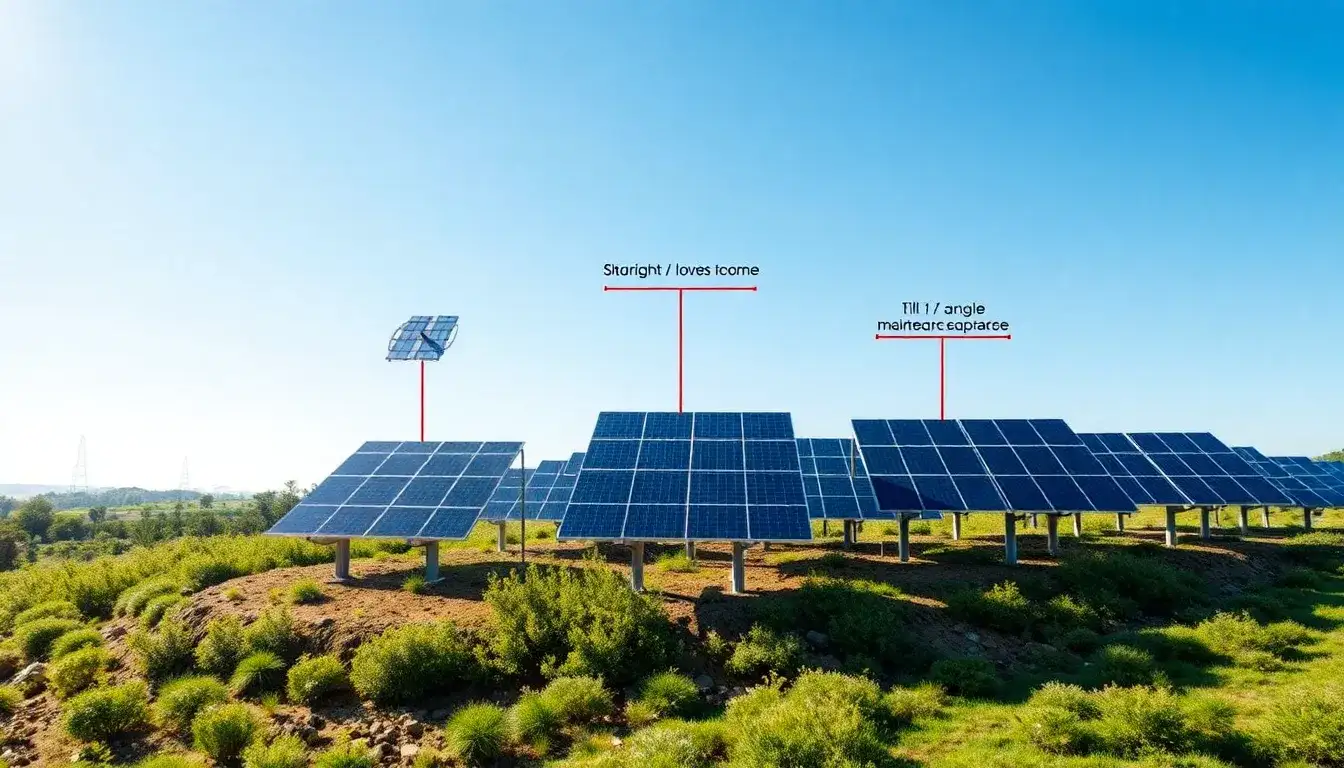
Optimizing the height and clearance of bifacial solar panels is crucial to maximizing their energy yield by enhancing rear-side light capture and airflow. Here are the best practices:
Best Practices for Optimizing Height and Clearance of Bifacial Solar Panels
- Elevate Panels Higher Than Traditional Ones
Bifacial panels should be installed at a height of at least 1 meter (3.3 feet) above the ground or roof surface. This elevation allows more reflected light to reach the rear side of the panels, which significantly boosts energy production. It also helps reduce shading on the lower edges of the panels, which can otherwise limit rear-side irradiance. - Maintain Adequate Clearance on Roof Installations
For sloped or flat roof setups, keep a clearance of 10–15 cm (4–6 inches) between the back of the panel and the roof surface. This spacing promotes airflow beneath the modules and enhances light reflection onto the rear surface, contributing to better cooling and higher efficiency. - Consider Ground Coverage Ratio and Row Spacing
The height works together with row spacing to avoid shading and maximize rear-side irradiance. A ground coverage ratio (GCR) of about 0.3 to 0.5 is recommended. Wider spacing between rows (at least 2.5 meters apart or more depending on latitude and solar angles) ensures more light reaches the ground and reflects off surfaces back to the panel’s rear side. - Increase Module Height to Improve Backside Radiation
Research indicates that raising module height between approximately 0.5 to 1.2 meters greatly increases backside irradiation and thus energy gain from the bifacial effect. Higher mounting allows light to reflect from a larger area beneath and around the panel. - Optimize Surface Albedo and Surroundings
The effectiveness of increased panel height and clearance depends on high-albedo surfaces underneath or around the panels—such as white roofing, light-colored ground, gravel, or low vegetation—which reflect more light onto the rear side. Avoid shaded or dark soil areas that absorb light and reduce rear illumination.
In summary, raising bifacial solar panels to about 1 meter above the ground, maintaining sufficient clearance on roofs, and ensuring optimal row spacing to prevent shading are key strategies to optimize rear-side irradiance and overall energy yield. Enhanced airflow and use of reflective surfaces underneath further improve panel performance.
Original article by NenPower, If reposted, please credit the source: https://nenpower.com/blog/what-are-the-best-practices-for-optimizing-the-height-and-clearance-of-bifacial-solar-panels/

