

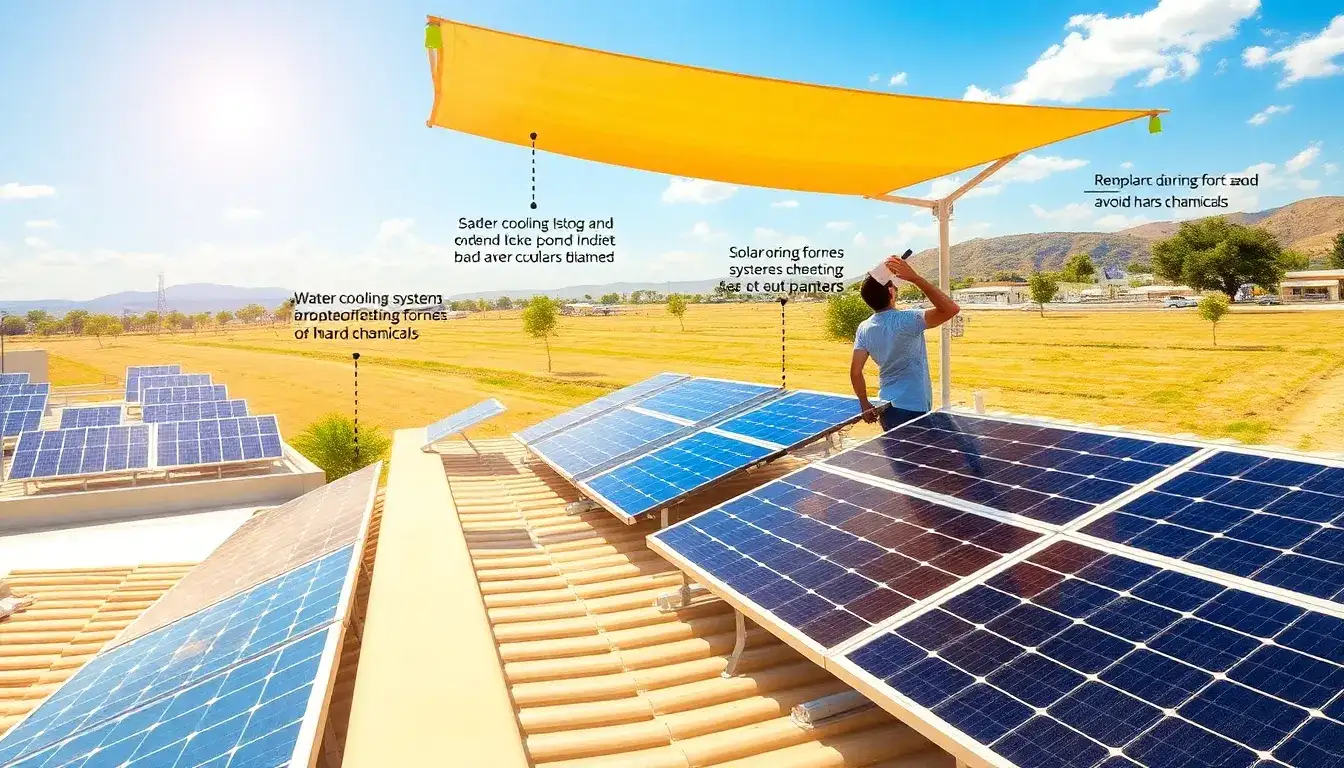
Maintaining solar panel efficiency in hot climates involves addressing the natural decrease in panel performance caused by high temperatures while capitalizing on abundant sunlight. Here are the best practices based on expert insights and technological advances:
Understanding the Challenge of Heat on Solar Panels
- Solar panels typically operate best at around 25°C (77°F). Above this temperature, efficiency drops by approximately 0.3-0.5% per degree Celsius due to increased electrical resistance in the photovoltaic cells.
- In extreme heat (panels reaching 50–65°C or higher), efficiency can decline by up to 10-25%, although panels still generate electricity effectively and continue to provide strong output overall.
- Heat stress also affects other system components such as inverters and wiring, potentially shortening their lifespan.
Best Practices for Maintaining Efficiency in Hot Climates
1. Optimize Panel Installation for Cooling
- Mounting Panels Above the Roof: Elevating panels a few inches above the roof surface allows airflow underneath, helping to dissipate heat naturally and reduce operating temperature.
- Strategic Spacing & Orientation: Proper spacing between panels and optimal tilt angles enhance sun exposure and airflow, preventing heat buildup and maximizing sunlight capture.
2. Use Advanced Panel Materials and Designs
- Thermally Conductive and Reflective Backsheets: Panels with reflective (often white or light-colored) backsheets and thermally conductive materials reduce heat absorption.
- Anti-Reflective Glass Coatings: These coatings increase light transmission while minimizing heat accumulation on the panel surface.
- Phase-Change Materials: Some cutting-edge solar panels use materials that absorb excess heat during the day and release it at night, stabilizing panel temperatures.
3. Cooling Technologies and System Design
- Natural Passive Cooling: Designing frames with ventilation channels promotes chimney-like airflow cooling without additional energy consumption.
- Active Cooling (if applicable): Some installations may use active cooling systems to maintain panel temperature, though these are less common in residential settings and add complexity.
4. Regular Maintenance to Prevent Efficiency Loss
- Dust and Debris Removal: Hot, dry climates often accumulate dust that blocks sunlight. Keeping panels clean improves light absorption and prevents heat retention caused by dirt layers.
- Shade Management: Minimize shading from trees, buildings, and roof obstacles as shade impacts efficiency more than heat does.
5. Select Panels with Low Temperature Coefficients
- Panels with a low temperature coefficient (e.g., around -0.3% to -0.38% per °C) lose less efficiency as temperatures rise and are better suited for hot environments.
6. Protect and Monitor Electrical Components
- Position inverters and wiring in shaded or cooler locations to prevent heat stress and prolong component life.
- Use system monitoring to detect performance drops related to temperature or shading issues promptly.
Summary Table of Key Practices
| Practice | Benefit |
|---|---|
| Elevated mounting for airflow | Reduces panel surface temperature significantly |
| Reflective & thermally conductive materials | Lower heat absorption and improved cooling |
| Anti-reflective coatings | Maximize light capture, minimize heat buildup |
| Regular cleaning | Prevents dust-induced efficiency drops |
| Shade reduction | Maintains output as shade impacts more than heat |
| Low temperature coefficient panels | Better efficiency retention in heat |
| Shaded location for electronics | Prevents heat stress and component failure |
By combining these strategies—optimized installation techniques, smart material choices, regular maintenance, and proper equipment selection—solar panels in hot climates can maintain high efficiency and longevity despite elevated temperatures, often achieving energy yields 15-20% higher than poorly adapted setups. Even with heat-related efficiency losses, the abundant sunlight in hot regions ensures strong overall solar energy production.
Original article by NenPower, If reposted, please credit the source: https://nenpower.com/blog/what-are-the-best-practices-for-maintaining-solar-panel-efficiency-in-hot-climates/

