

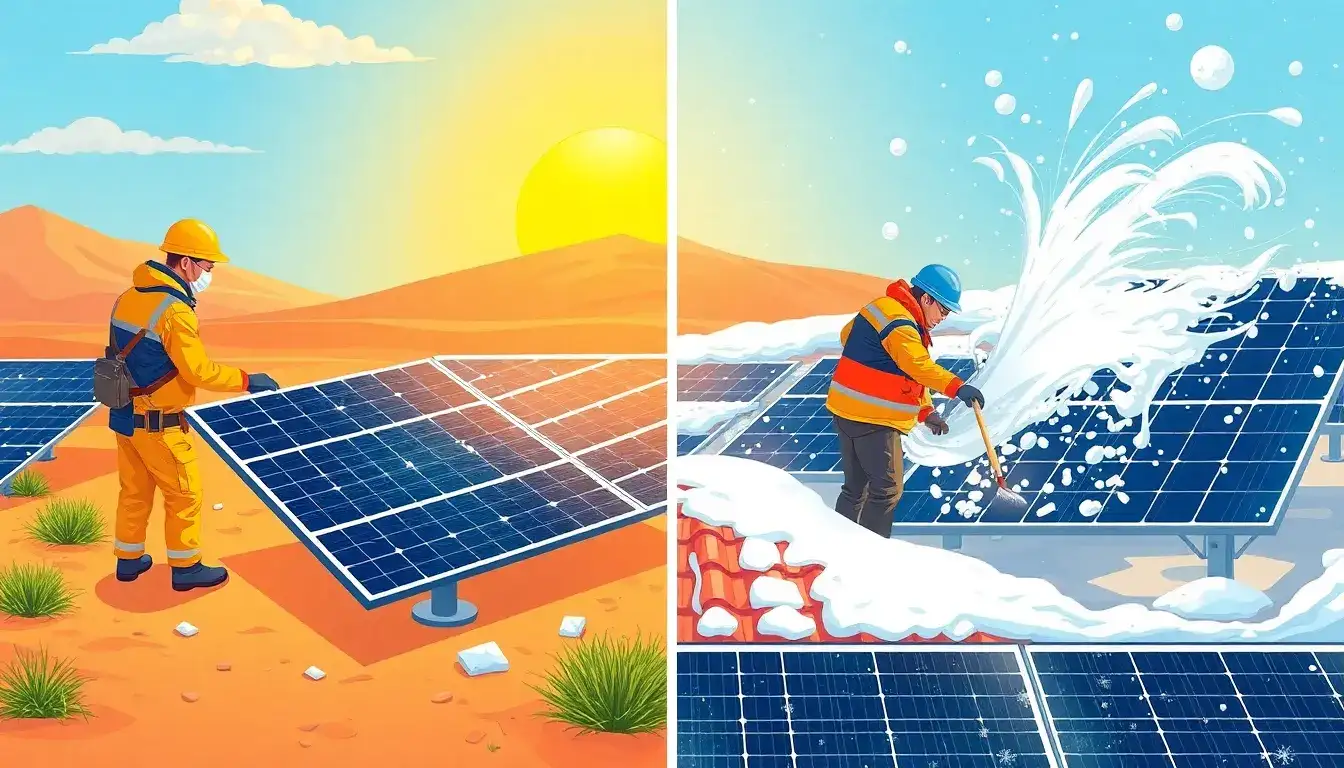
The best practices for maintaining solar batteries in extreme temperatures focus on controlling the battery’s operating temperature to preserve capacity, performance, and lifespan. Both high and low temperatures can significantly damage solar batteries and reduce their service life. Here are the key recommendations based on expert sources:
Best Practices for Maintaining Solar Batteries in Extreme Temperatures
1. Maintain Optimal Temperature Range
– The ideal operating temperature range for most solar batteries is approximately 59°F to 77°F (15°C to 25°C).
– Temperatures above or below this range can cause capacity loss, decreased life expectancy, and potential safety risks such as thermal runaway in lithium-ion batteries.
2. Thermal Management Systems
– Use active cooling or heating mechanisms to regulate internal battery temperatures, especially in harsh climates.
– Examples include electric heating pads or integrated heating elements for cold climates, and cooling fans or heat sinks for hot environments.
3. Proper Ventilation and Cooling
– Ensure battery installations have sufficient airflow to dissipate heat generated during charging and discharging cycles.
– Avoid placing batteries in direct sunlight or enclosed spaces without adequate ventilation to prevent overheating.
4. Battery Placement and Housing
– Install batteries in shaded, well-ventilated areas to reduce exposure to direct solar radiation and ambient heat.
– Use insulated and climate-controlled enclosures for extreme temperature regions. For example, specialized modular units with climate control can maintain stable conditions and protect battery systems from wide temperature fluctuations.
– For colder climates, insulate batteries to retain heat and prevent freezing, which can drastically reduce battery capacity and lifespan.
5. Avoid Deep Discharges in Cold Conditions
– Cold temperatures reduce battery capacity and can shorten battery life, so preventing deep discharges in cold weather helps maintain battery health.
6. Monitor and Manage Charging
– Adjust charging parameters in extreme temperatures to avoid overcharging or excessive heat buildup, which can degrade battery chemistry.
These practices work collectively to protect solar batteries from the detrimental effects of extreme heat and cold, thereby maximizing their efficiency and operational life. Proper design and management of thermal environments are critical, especially in harsh climates where temperatures fluctuate widely.
Original article by NenPower, If reposted, please credit the source: https://nenpower.com/blog/what-are-the-best-practices-for-maintaining-solar-batteries-in-extreme-temperatures/

