

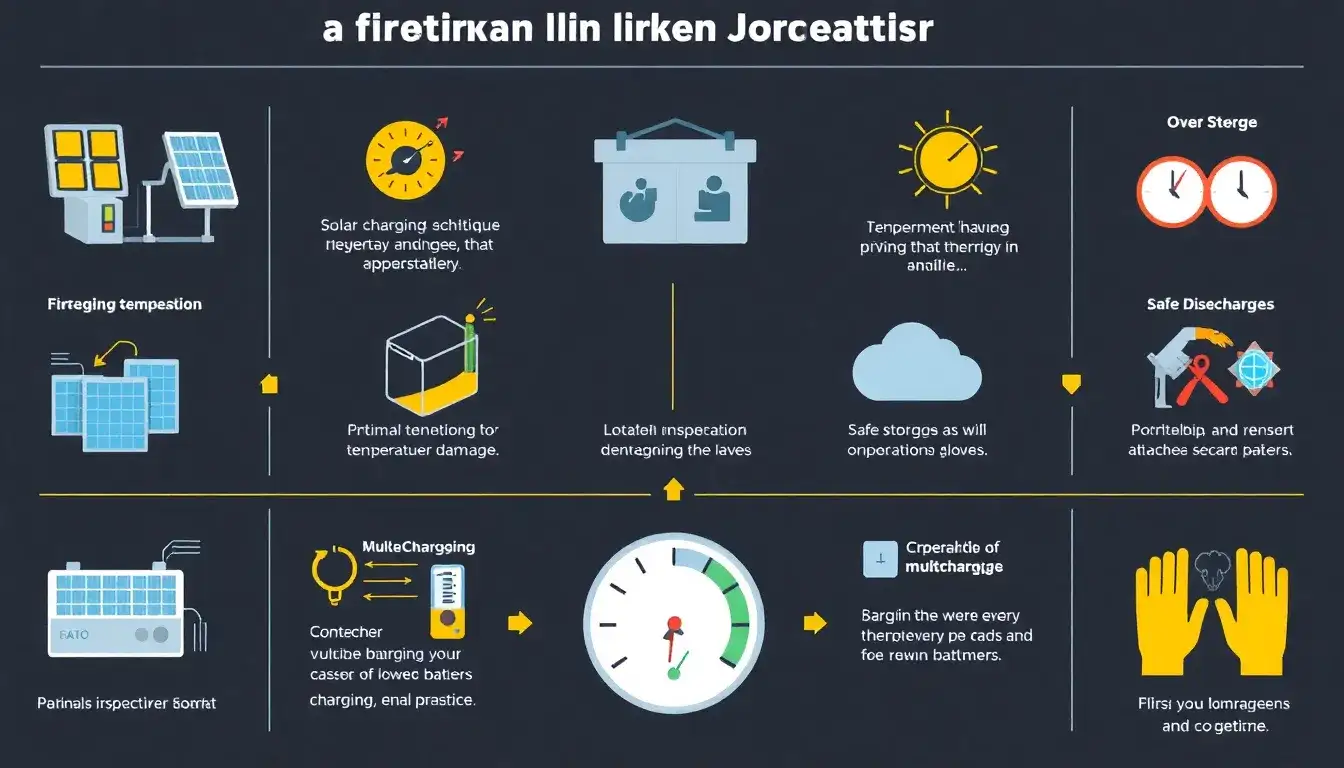
Best Practices for Maintaining Lithium-Ion Solar Batteries
1. Optimize Charging Parameters
- Charging Rates and Voltage: Adhere to the manufacturer’s recommended charging rates and voltage settings to prevent overcharging or undercharging, which can reduce battery life.
- Avoid Deep Discharges: Design your system to keep the depth of discharge (DoD) below 50% to minimize strain on the battery.
2. Temperature Regulation
- Environmental Conditions: Store and operate batteries in a cool, dry environment. Extreme temperatures can damage the battery, so ideally maintain a temperature range between 40°F and 77°F (4°C to 25°C).
- Thermal Management: Consider using temperature compensation or thermal management systems to maintain optimal conditions, especially in temperature-controlled environments.
3. State of Charge Management
- Storage SOC: When storing batteries for extended periods, charge them to about 40-60% of capacity to minimize degradation.
- Regular Charging: If batteries are stored for more than six months, charge them to about 50% of capacity at least once every six months.
4. Regular Use and Cycling
- Active Use: Regular cycling can help maintain cell health. Avoid prolonged periods of inactivity, as this can lead to capacity loss in lithium-ion batteries.
- Load Management: Distribute loads evenly to prevent sudden high power draws that can stress the battery.
5. Safety and Maintenance Checks
- Safety Precautions: Always disconnect batteries before maintenance and use protective gear like gloves and safety glasses.
- Monitoring: Use battery management systems (BMS) for real-time monitoring of voltage, current, temperature, and state of charge.
6. Storage Conditions
- Storage Area: Ensure the storage area is well-ventilated and protected from ignition sources or direct sunlight.
- Non-Conductive Containers: Store batteries in non-conductive or fireproof containers to prevent accidental short-circuiting.
7. Cleaning and Inspection
- Cleaning: Regularly clean the battery exterior with a soft cloth to prevent dust accumulation.
- Inspection: Check for damage or corrosion regularly and replace any damaged components promptly.
By following these best practices, you can significantly extend the lifespan of your lithium-ion solar batteries while ensuring they remain efficient and reliable.
Original article by NenPower, If reposted, please credit the source: https://nenpower.com/blog/what-are-the-best-practices-for-maintaining-lithium-ion-solar-batteries/

