

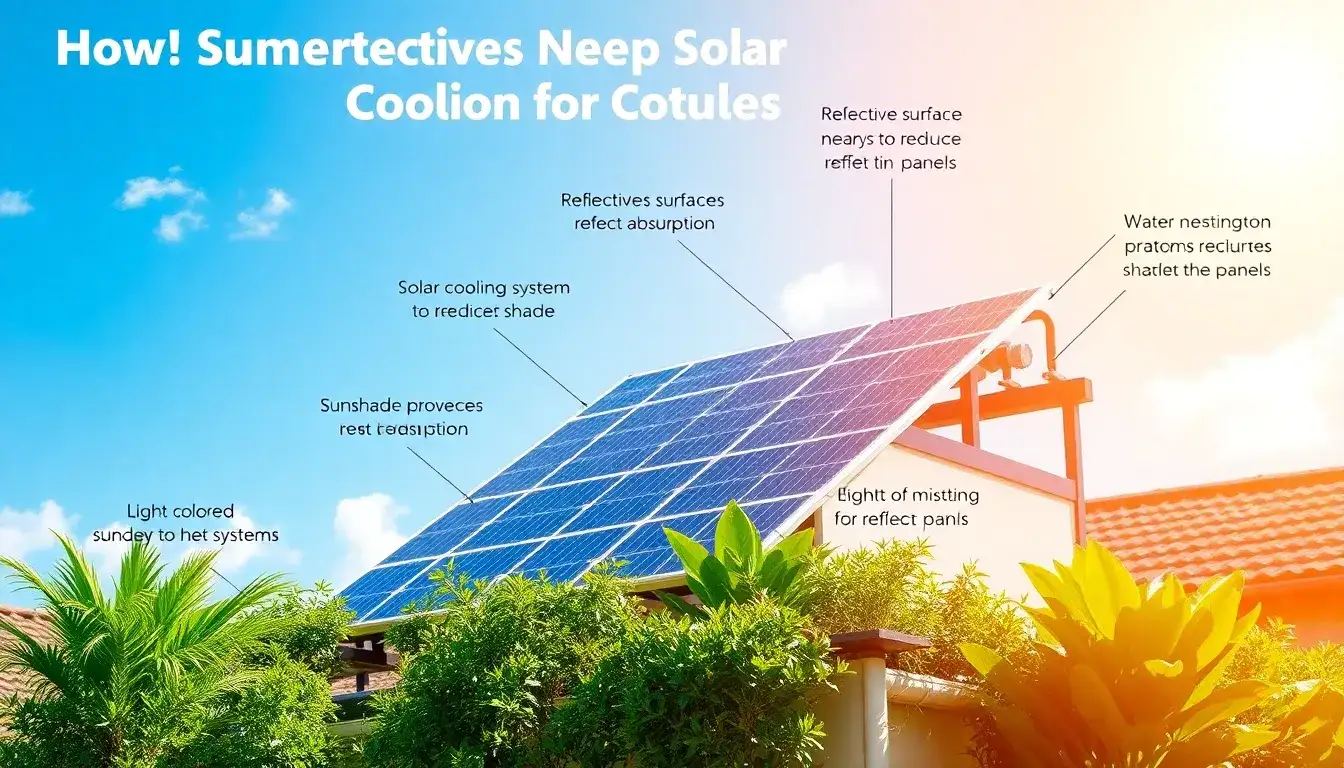
Best Practices for Cooling Solar Panels in Hot Climates
1. Choose High-Efficiency Solar Panels
- Single Crystal or Double-Sided Cells: These panels are designed to perform better at high temperatures due to their favorable temperature coefficients, minimizing efficiency loss as temperatures rise.
2. Optimize Panel Orientation and Tilt
- Direction: Position panels slightly to the east or west to avoid intense noon sunlight.
- Tilt Angle: Ensure a tilt that allows for better airflow under the panels to enhance heat dissipation.
3. Ensure Sufficient Ventilation
- Spacing: Leave enough space between the panels and the installation surface for air circulation.
- Ground Mounting: Install panels higher off the ground to maximize air circulation.
4. Shading Management and Strategic Placement
- Minimize Shading: Avoid obstacles like trees or buildings that can cast shadows on panels.
- Create Strategic Shade: Use afternoon shade to prevent overheating when necessary.
5. Use Heat Reflective Coatings
- Apply Coatings: Use heat reflective coatings on the back of panels to reduce heat absorption and maintain lower operating temperatures.
6. Implement Cooling Systems
- Active Cooling: Use water-based cooling systems or fans to actively reduce panel temperatures.
- Passive Cooling: Utilize natural ventilation techniques by ensuring sufficient space for air circulation.
7. Regular Maintenance
- Cleaning: Regularly clean panels to remove dust and debris that can exacerbate heat absorption.
- Inspections: Perform routine inspections to check for signs of heat stress or damage.
8. Advanced Panel Designs
- Thermally Conductive Materials: Incorporate materials that enhance heat dissipation.
- Anti-Reflective Coatings: Use coatings that maximize light absorption while minimizing heat buildup.
By implementing these strategies, you can significantly improve the performance and lifespan of solar panels in hot climates.
Original article by NenPower, If reposted, please credit the source: https://nenpower.com/blog/what-are-the-best-practices-for-keeping-solar-panels-cool-in-hot-climates/

