

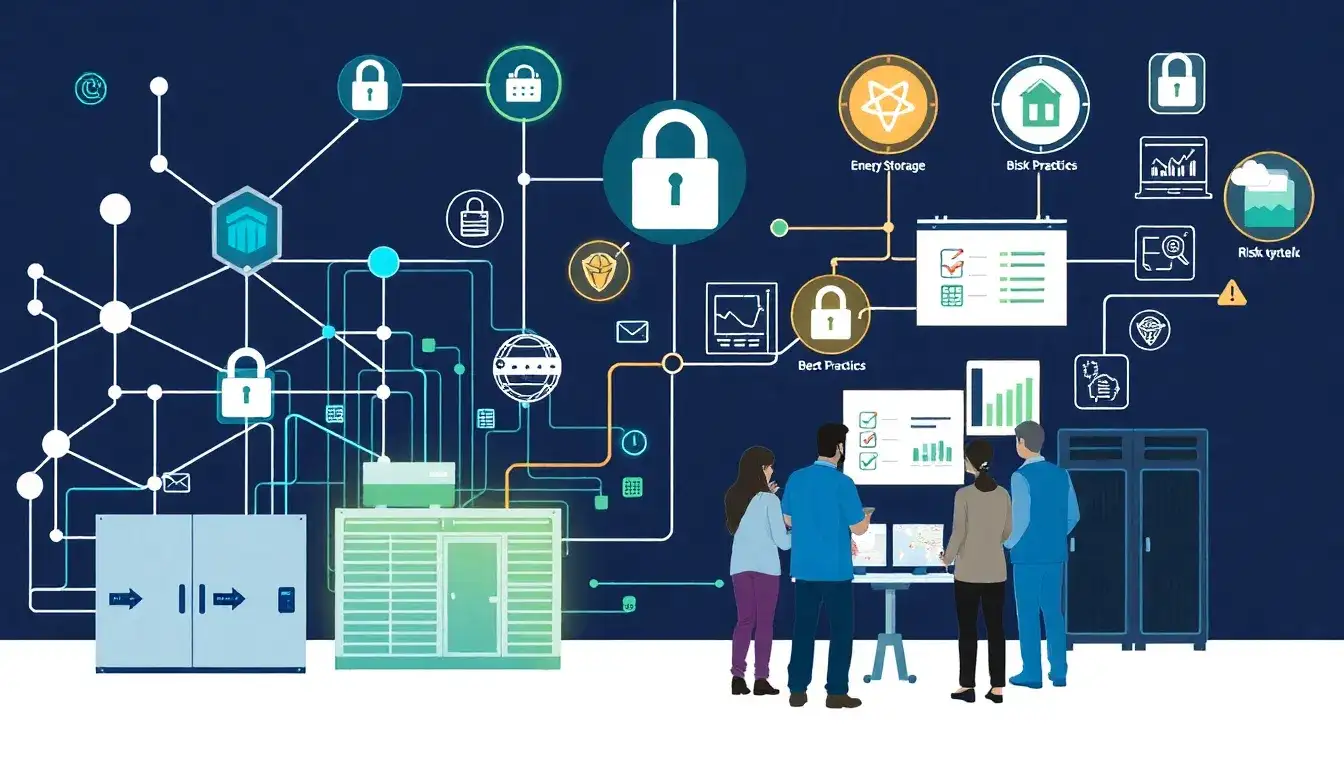
Conducting cybersecurity risk assessments on energy storage systems is crucial to identify and mitigate potential threats. Here are some best practices for such assessments:
Best Practices for Cybersecurity Risk Assessments
1. Conduct a Comprehensive Cybersecurity Self-Evaluation
- Tool Usage: Utilize tools like the DHS US-CERT Cyber Security Evaluation Tool (CSET) or the Electricity Subsector Cybersecurity Capability Maturity Model (ES-C2M2) to systematically evaluate network security and identify vulnerabilities.
- Internal vs. External Assessment: Perform these evaluations either with an internal team or by hiring outside contractors to provide a broader perspective.
2. Identify Potential Risks and Threats
- Risk Assessment Frameworks: Employ risk management frameworks to categorize and prioritize potential risks based on their likelihood and impact.
- Threat Modeling: Develop threat models to identify high-value assets, potential attack vectors, and vulnerabilities in energy storage systems.
3. Evaluate System Configurations
- System Complexity: Consider the complexity of the system configuration, including cloud dependencies and remote access capabilities.
- Connection Types: Assess the type of connections (e.g., read-only vs. two-way) and their implications for security.
4. Monitor Supply Chain Risks
- Component Origin: Consider the risks associated with components sourced from foreign suppliers, such as pre-installed backdoors or malicious firmware.
- Vendor Trustworthiness: Evaluate the trustworthiness of vendors and their security practices.
5. Develop Incident Response Plans
- Response Strategies: Create plans for responding to and mitigating potential breaches, emphasizing minimizing attack scope and impact.
- Training and Drills: Conduct regular training and drills to ensure preparedness across the organization.
6. Implement Secure Communication Protocols
- High Availability Networks: Design networks for high availability, ensuring control and monitoring systems are secure and reliable.
- Data Encryption: Ensure all communications, especially those involving control signals, are encrypted to prevent eavesdropping and tampering.
7. Maintain Baseline Data
- Normal Operations Data: Collect data on normal system operations to facilitate the detection of anomalies that might indicate a breach.
- Regular Audits: Conduct regular security audits and penetration testing to identify vulnerabilities before they are exploited.
8. Integrate Cybersecurity into System Design
- Design Principles: Incorporate cybersecurity principles into the design phase of energy storage systems to prevent vulnerabilities from the outset.
- OT vs. IT Integration: Ensure operational technology (OT) systems, which monitor and control physical processes, are integrated securely with information technology (IT) systems.
By following these practices, energy storage system operators can enhance their cybersecurity posture and reduce the risk of cyber-physical threats.
Original article by NenPower, If reposted, please credit the source: https://nenpower.com/blog/what-are-the-best-practices-for-conducting-cybersecurity-risk-assessments-on-energy-storage-systems/

