

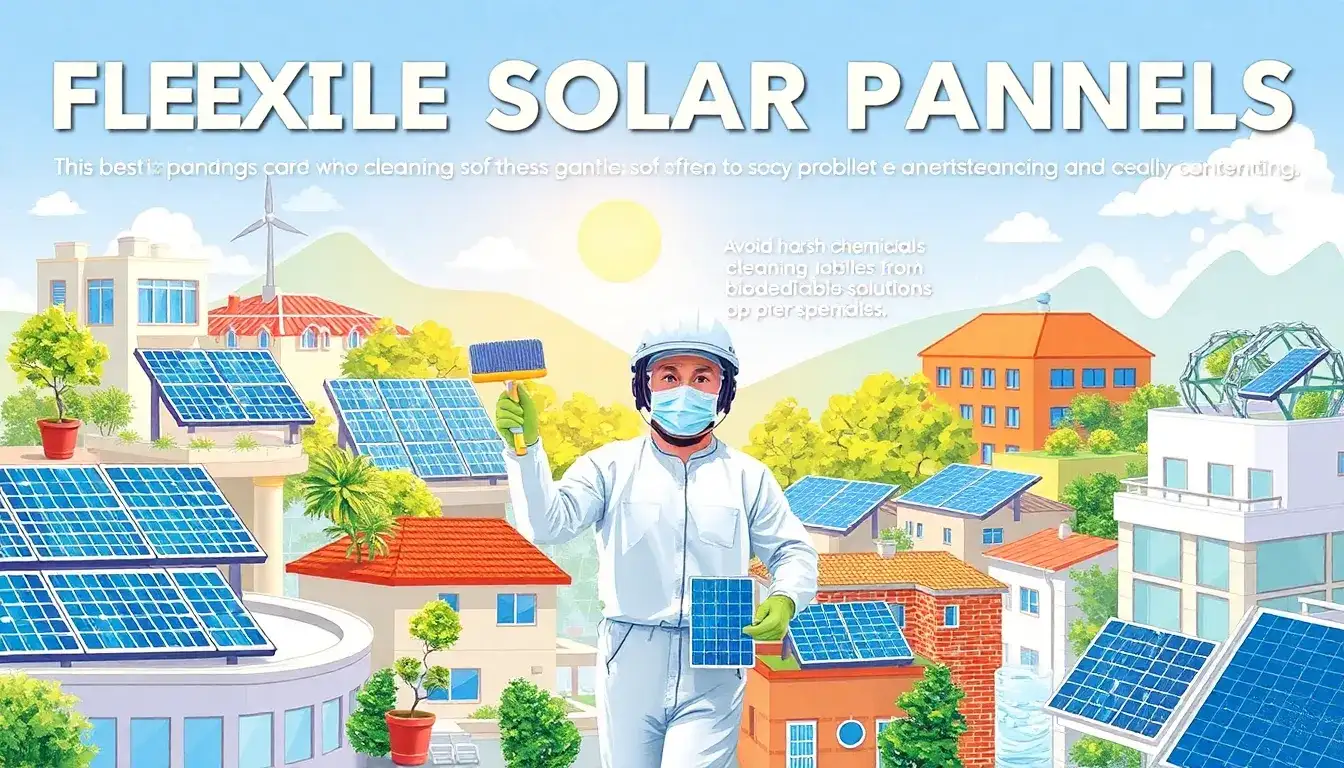
The best practices for cleaning flexible solar panels focus on maintaining efficiency and longevity without damaging their delicate surfaces. Here’s a comprehensive guide based on expert recommendations:
Preparation and Timing
- Turn off the solar panel system before cleaning to avoid electrical hazards.
- Clean panels during cooler periods like early morning or late evening. Avoid cleaning under full sun as hot panels can suffer thermal shock and water/cleaning solutions tend to evaporate quickly, causing streaks.
- Ensure safe access if panels are installed on rooftops or elevated areas, using stable ladders or safety harnesses if necessary.
Cleaning Materials to Use
- Use soft cloths, soft-bristled brushes, or non-abrasive sponges to gently remove dirt and debris without scratching the panel surface.
- Prepare a cleaning solution with mild detergent or neutral soap mixed with water. Avoid harsh chemicals and abrasive cleaners, which can damage the polymer coatings of flexible panels.
- For grease or oily residues, a small amount of denatured alcohol (methylated spirit) can be applied carefully.
- Use plenty of fresh water for rinsing to remove soap residues completely, preventing dirt attraction and efficiency loss.
- A squeegee with a plastic blade and a long handle can help remove water and soap without scratching.
Cleaning Process
- Inspect panels first for visible damage such as cracks, discoloration, or loose connections before cleaning.
- Gently remove loose debris (dust, bird droppings, salt deposits) with a soft brush or blower.
- Apply the mild soapy water with a soft cloth or sponge and gently scrub the surface to remove grime.
- Allow the cleaning solution to sit on stubborn stains for a few minutes before scrubbing.
- Thoroughly rinse with fresh water to eliminate any detergent residue.
- Dry panels with a soft, clean cloth to prevent water spots.
Additional Maintenance Tips
- Regular inspections of structural installation and electrical connections are recommended to maintain system integrity.
- If oxidation or contaminants build up over time, hand-polishing with fine scratch remover products like Novus #2 or ReJex can restore surface clarity. Avoid power polishers as they can burn the panel surface.
- Some users apply protective coatings (e.g., Plexus, Novus Plastic Cleaner #1) to shield the surface and improve cleanliness, though these can make panels slippery.
- Monitor power output before and after cleaning to determine ideal cleaning frequency, as even slight dust can reduce efficiency by up to 20%.
What to Avoid
- Do not use pressure washers or abrasive tools; the high pressure and rough surfaces can damage the panels.
- Avoid cleaning in extreme temperatures (too hot or too cold), which can harm panel materials.
- Do not use harsh chemicals or abrasive cleaners as they degrade coatings and panel surfaces.
By following these guidelines—using gentle cleaning agents and tools, cleaning at appropriate times, inspecting panels for damage, and maintaining electrical and structural components—you can effectively clean flexible solar panels and help ensure their long-term performance and durability.
Original article by NenPower, If reposted, please credit the source: https://nenpower.com/blog/what-are-the-best-practices-for-cleaning-flexible-solar-panels/

